

Singapore semiconductor stocks poised to ride AI boom as key links in supply chain: analysts

Yong Jun Yuan
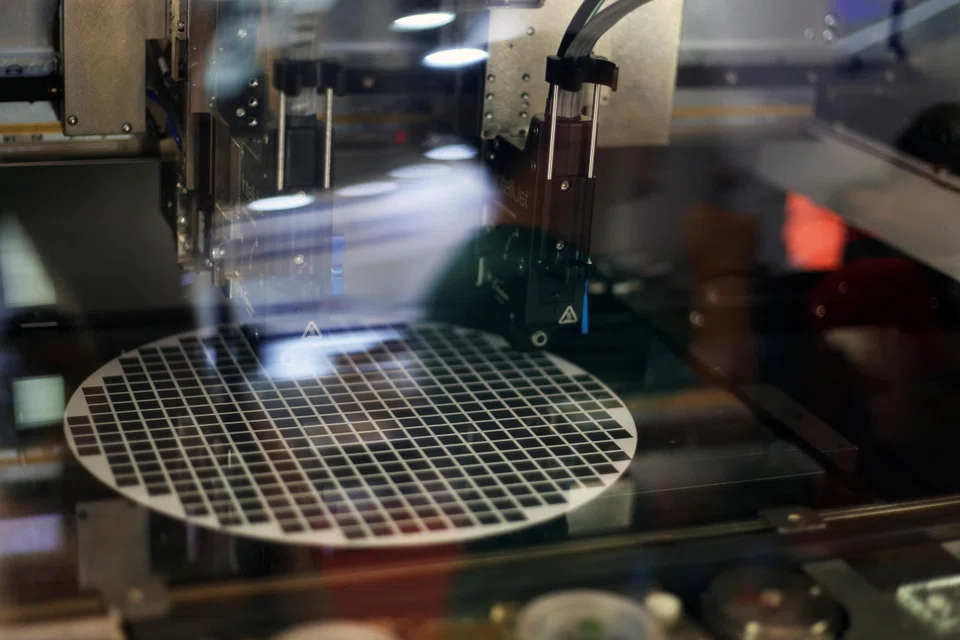
SINGAPORE-LISTED semiconductor companies are drawing attention from analysts as under-the-radar beneficiaries of the artificial intelligence (AI) boom.
While these Singapore players may not produce the chips that power artificial intelligence (AI) applications, their roles in chip supply chains could make them less obvious beneficiaries of the AI trend.
In the outlook for the second half of the year, DBS Group Research equity analysts said AI could breathe new life into the recovery in tech counters.
In particular, DBS analysts picked out equipment manufacturer UMS Holdings as a potential beneficiary. The company supplies components and provides sub-assembly services to key client Applied Materials, which provides materials engineering solutions to the semiconductor industry.
While UMS’ order momentum has slowed, the report is hopeful that the company could see a stronger second half of 2023 and a recovery in 2024.
“It is also a beneficiary of its new customer diversification strategy and trade diversification through its new Penang plant,” they said.
For the first three months of this year, UMS saw a 5 per cent decline in revenue to S$80.8 million. Net profit fell 10 per cent to S$17.4 million.
Along with UMS, Maybank Securities analyst Jarick Seet believes Frencken Group could benefit from an increased demand for AI chips as it supplies clients such as Applied Materials and ASML. The latter produces lithography systems that are used to produce semiconductors.
Frencken’s revenue has taken a hit due to a slowdown in the semiconductor industry as well. In the first quarter of this year, Frencken saw its semiconductor segment’s revenue decline 24 per cent year on year to S$57.9 million.
Seet noted that Frencken was impacted by low utilisation and excess capacity, as its largest customer in Asia still had high inventory levels after the slowdown.
Still, he said, the strong demand for AI chips could hasten the normalisation of inventory levels, which Frencken currently expects to happen in the fourth quarter of this year.
Seet also cited test equipment maker AEM Holdings as a key beneficiary of the AI boom, as it provides system level tests on more advanced chips – such as those being used for AI applications.
HSBC global research also said AEM could be an indirect proxy to artificial intelligence as it diversifies from key client Intel and brings its testing solutions to high bandwidth memory chipmakers, whose memory chips are used in AI servers.
“As AEM’s product platform consolidates multiple test processes, we believe that increasing device complexity and higher test costs are likely to drive new customer contracts for the company,” HSBC’s report said.
The report added that the company is at an inflection point in the second half of this year, given PC restocking in the global supply chain, as well as a recovery in its key customer’s shipments and new customer contributions in the first quarter of next year.
With PC inventories being depleted, manufacturers’ sales to distributors should improve relative to end-market demand, which could drive a recovery in test demand for AEM in the second half of 2023, HSBC said.
The company could also raise its revenue guidance in this year’s third quarter ahead of a key customer ramping up a new platform in the fourth quarter, it added.
Although these companies may indirectly benefit from exposure to AI chips, Phillip Securities head of research Paul Chew cautioned that semiconductor companies continue to face cyclical headwinds due to the weak macroeconomic environment.
He also expects continued weakness in earnings due to slower end-market demand for devices such as smartphones and PCs, as well as excess inventory.
Chew noted, however, that there are other structural factors that could lift component suppliers in the medium term.
“There is increased outsourcing of supply chains to South-east Asia and continued improvement in their capabilities and increased capital spending to move up the value chain,” he said.
Seet noted that 2023 will “probably” be a bad year for semiconductor counters, although their weaker financial performance has likely already been factored into their share prices.
“Due to the AI boom, investors are now expecting a faster recovery; but that has not yet been seen,” he said, adding that he will be paying attention to these companies’ inventory levels and key clients.
DBS analysts also noted that the downside for these technology stocks appears “limited” as the Singapore tech sector is currently trading at about 11 times forward earnings, close to their 2019 trough, which suggests investor caution.
“A less direct or obvious linkage to the ongoing AI-hype could also be another factor why we did not see a commensurate rally among the technology stocks here,” they said.






