

Tencent goes hands-on to reshape US$10 billion global games empire
The company is ubiquitous in China via its WeChat ecosystem and WeChat Pay
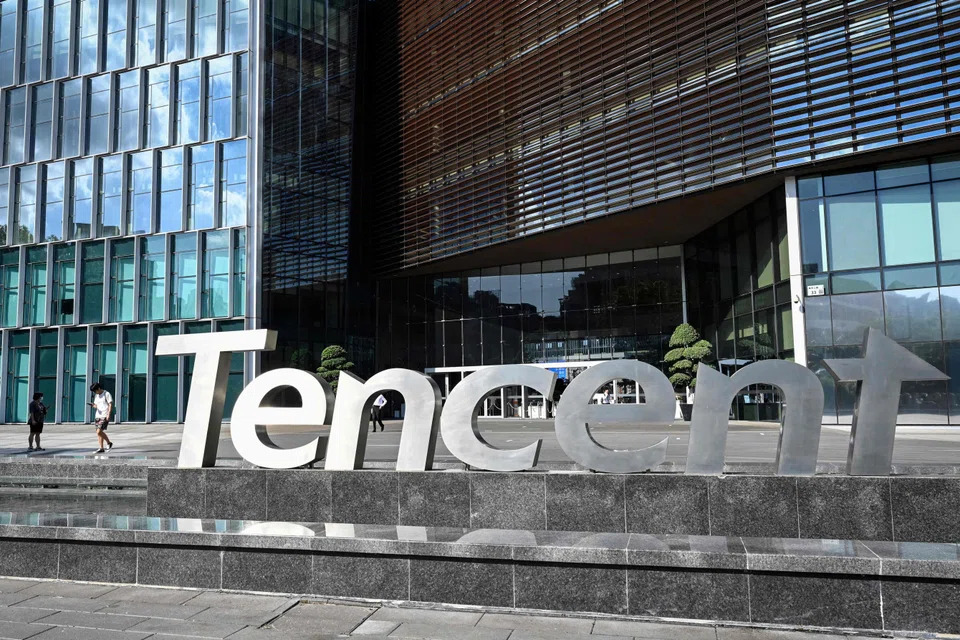
[BEIJING] This year, Tencent Holdings’ gaming business scored record sales, defying an industry slowdown with international hits such as zombie horror Dying Light: The Beast.
The sales bonanza, at a time when many rivals are struggling to sustain profitability, reflects a multiyear push by Tencent veteran Michelle Liu to use a hands-on approach to craft blockbuster games.
Under Liu, Tencent , long a passive investor in successful game companies such as League of Legends developer Riot Games and Supercell Oy of Clash of Clans fame, has become more assertive in steering acquisitions such as Dying Light series maker Techland and Norway’s Funcom.
By building on its signature dealmaking to actively share expertise and resources, the company has built an international gaming behemoth that generated US$10 billion in revenue over the past year, surpassing the likes of Electronic Arts.
“If they could already achieve everything on their own, what would they need me for?” Liu, the 52-year-old chief executive officer of Tencent Games Global, said. These days, her staff of 1,000 keeps in close contact with 20 or so global studios that Tencent has acquired, offering support from game conception and development to distribution. “Tencent has a lot of experience with data analysis, benchmarks and criteria.”
The past year has seen her portfolio deliver three standout hits, starting with last December’s Path of Exile 2 from Grinding Gear Games, which has racked up 6.8 million sales before its final version is out. This summer’s Dune: Awakening from Funcom and September’s debut of The Beast from Techland both earned about two million sales, according to Sensor Tower data.
Each shows Tencent’s overarching strategy of tapping already popular intellectual property and seeking to develop so-called evergreen titles, with potential to keep players returning for more with regular updates.
Liu’s more assertive approach brings Shenzhen-based Tencent’s international work closer in line with its domestic operations. The company is ubiquitous in China via its WeChat ecosystem and WeChat Pay, the default means for countless businesses and individuals to transact, and it leverages that presence to tout big new game launches. It also sets high standards for its in-house studios, which have kept titles such as Honor of Kings perennially at the top of the highest-grossing charts. But overseas, Tencent used to be more timid and less demanding.
In the September quarter, Tencent booked a record 63.6 billion yuan (S$11.7 billion) in sales from games, with the overseas business growing a remarkable 43 per cent. Tencent is the exception in the struggling US$190 billion games industry.



A post-pandemic glut of content has led to several high-profile flops, such as Sony Group’s Concord in 2024, making it tough for franchises without established brand equity, like Nintendo, to thrive. Rivals such as Microsoft and Amazon.com have meanwhile pared back their video-game divisions to fund AI infrastructure investments.
Tencent, now 27 years old, made a global splash with its 2011 bet on Los Angeles-based Riot Games for US$400 million, less than two years after the initial release of League of Legends. That multiplayer online battle arena game continues today, with more than 100 million active players and a constant cycle of new updates to keep them playing, much like Fortnite.
A year after Riot, Tencent grabbed a minority stake in Fortnite creator Epic Games, which develops the Unreal Engine for 3D graphics and animation. Epic’s UE is widely used for games with high-end graphics, such as last year’s Tencent-backed Black Myth: Wukong, and to render realistic scenery in film and video productions such as Amazon’s Fallout.
A former college teacher and now a 25-year industry veteran, Liu joined Tencent in 2013 and took on her current role focused on international expansion in 2018. That came just as Beijing’s regulators called a halt on new game approvals at home, and the urgency for international growth to offset challenges at home has remained ever since.
She began rewriting the playbook with new studios almost as soon as she got into the chair. One of her biggest moves came two years ago when Tencent scooped up Poland’s Techland. Industry observers initially baulked at the US$1.6 billion deal for the game developer, whose marquee Dying Light series had fallen into a rut. Liu deployed what she calls a strike team, embedding Tencent personnel, including on-site support, to work directly with the studio to improve processes and rigour.
“We can always count on an extra point of view that helps us to improve the game,” Techland founder Pawel Marchewka said in an interview at the Gamescom conference in Germany in August. Marchewka, who is the same age as Liu and one of Poland’s best-known entrepreneurs, said he appreciated the frank discussions and the technical expertise. Tencent helped his company build a data team from scratch, allowing better insight into player feedback, Liu said.
Tencent’s support includes nudging studios to make tough decisions. Also at Gamescom, Funcom CEO Rui Casais spoke of the guidance he received from the Chinese parent company, which urged him to narrow focus on the most promising projects.
“When Tencent came in, they said, ‘Look, you are spreading your attention.’ You have a great IP that you have secured, you should really focus on that and drop the other things,” Casais said. Funcom scored its fastest-selling game with Dune: Awakening this summer, and yet the company in October announced a restructuring, layoffs and the closing of its shooting-game division.
Liu compares the relationships she manages with developers to battle-hardened marriages, where both sides need to make compromises and reach mutually beneficial decisions. Just weeks before the release of Dying Light: The Beast, she hosted Marchewka at Tencent’s Shenzhen headquarters, where they hashed out the game’s pricing strategy. They settled on US$60, the longtime industry standard that they believed reflected the game’s quality, even though a discount looked like the safer bet.
“I fundamentally don’t care who’s calling the shots,” Liu said. “Whatever makes the most sense for our projects to succeed, that’s the way to do it.”
The Beast delivered the highest-rated game in the franchise’s 10-year history and sold almost as well as Borderlands 4, a game released around the same time with a much larger marketing budget.
Tencent has also been encouraging studios in its portfolio to work together. It recently curtailed a plan by UK-based Sumo Group, another billion-dollar acquisition, to transition into original game development, instead arranging for it to help Canada’s Digital Extremes create seasonal content for its decade-old online game Warframe. The tie-up between the two Tencent groups helped doubled the production pace for Warframe content, boosting sales, Liu said.
Juno Shin, one of Liu’s chief lieutenants, runs a 30-person team to support early-stage studios. “It is not a push, it’s a pull,” Shin said. “We 100 per cent stay away from creative intervention. However, creative people do not always know how to do finance or production or hiring.”
Liu’s focus today is on the next update for Path of Exile 2, which has drawn favourable comparisons to the Diablo series and has the potential to be a long-lived, ever-evolving title – if its creators and Tencent can perfect the evergreen recipe. BLOOMBERG
Decoding Asia newsletter: your guide to navigating Asia in a new global order. Sign up here to get Decoding Asia newsletter. Delivered to your inbox. Free.
Share with us your feedback on BT's products and services
TRENDING NOW

Easy to rent out, hard to sell: Are buyers losing interest in Singapore’s one-bedroom condos?
GovTech retrenches another 38 staff in second round of layoffs

Stocks to watch: Seatrium, CapitaLand Investment, Keppel DC Reit, Suntec Reit, CLCT, TSH Resources

World’s largest offshore wind platform by Seatrium consortium on track to be completed by 2028

