Timeline: Creative Technology’s milestones through the years

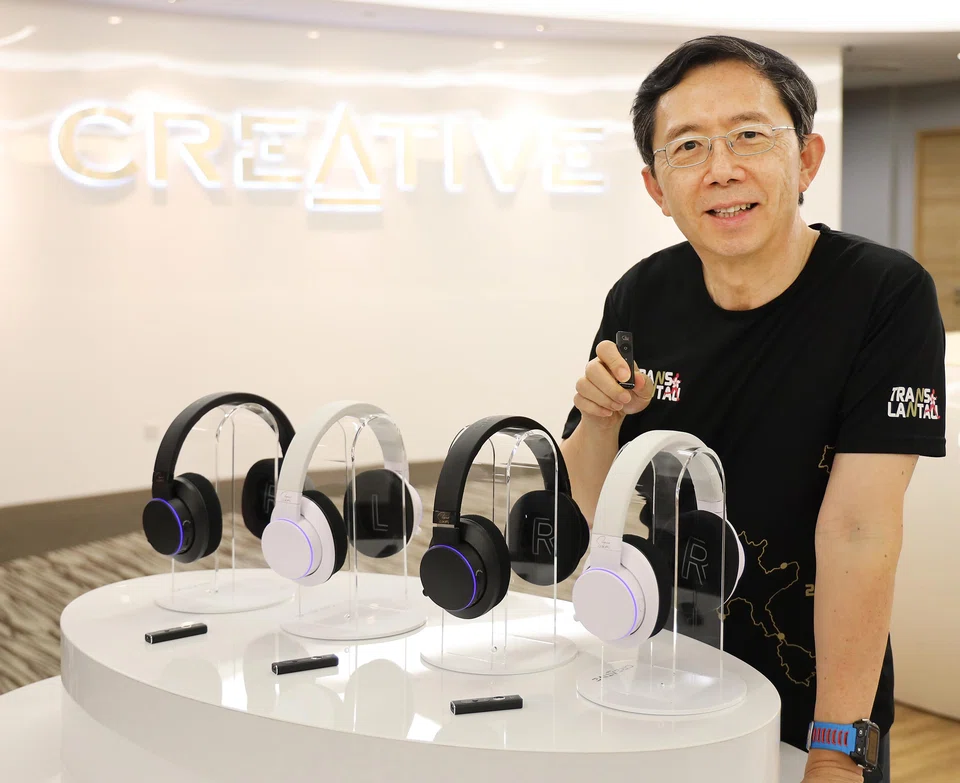
ONCE a well-known tech player known for its innovative sound cards and music players, Creative has slowly been forgotten.
Below are some of the company’s milestones over the years:
1983:
Creative is incorporated as a limited company on Jul 18 by Sim Wong Hoo and co-founders Ng Kai Wa and Chay Kwong Soon.
1984:
The company releases its first computer, the Cubic 99. Also known as the Talking Computer, it has a vocal synthesiser that allows users to record and playback words in English and Mandarin.
1989:
Creative launches the Sound Blaster, a sound card attached to PCs that could produce quality sound. Following the launch of the product at US computer expo trade show Comdex, Creative receives orders for Sound Blaster cards at a rate of one in three minutes. It later shifts 10,000 units per month.
1992:
The company debuts on the Nasdaq stock exchange with an initial public offering of 4.8 million shares at US$12 apiece. It raises US$37.5 million for the company’s expansion plans, while its founders receive US$13.5 million.
1994:
Creative debuts on the mainboard of the Stock Exchange of Singapore on Jun 15. As part of the listing, the company raises a further US$230 million in capital.
1995-1996:
Co-founders Ng and Chay resign from the company. Ng says that he wants to start his own company with fewer constraints on the areas of research and development (R&D) that he wishes to pursue.
Ng later becomes director of Creative in 2005. He is also chairman and chief executive officer of broadband access IP telephony supplier InnoMedia.
1996:
Creative registers its first full-year net loss for the year ended June, amid a futile search to create a product to match Sound Blaster’s success. Sim says the company has “grown too fast” and lost sight of its profitability.
The company also announces an investment of up to S$186 million in R&D of multimedia and communications technologies over a five-year period.
2000-2004:
In January 2000, the company launches the Nomad line of music players that has 6GB of storage and plays back compressed audio formats like MP3 and WMA.
At the age of 45, Sim becomes Singapore’s youngest billionaire.
However, while Creative’s Nomad predates Apple’s iPod by nearly two years, it struggles for traction as the dot-com bubble bursts. By 2004, the iPod has a market share of 54 per cent while Creative is a distant second with 16.5 per cent of market share.
2006:
Creative sues Apple for infringements of its patent on its music player. Apple countersues and the case is eventually settled with Apple paying a one-time licensing fee of S$158 million to Creative.
2007:
After recording a net loss of US$118.2 million for FY2006, the company announces in June that it will delist from the Nasdaq to save costs. It notes that the company’s daily trading volume on the Nasdaq is just 10 per cent of its global average volume.
The company also scales back its operations and cuts 2,700 jobs.
Meanwhile, it produces the first electronic Chinese dictionary to be approved by the Singapore Examinations and Assessment Board for use in national exams.
2012:
Creative in February launches an Android-based tablet built on a processor the company develops. The Creative hanZpad platform is designed with China’s vast education market in mind as hype grows around digital classrooms and textbooks. The company’s stock almost doubles in the month of the tablet’s launch.
2018:
In January, the company launches Super X-Fi Headphone Holography, a virtual surround system that wins the ‘Best of CES (Consumer Electronics Show)’ award by consumer technology site AVS Forum. The technology sparks interest among investors, and Creative’s share price surges by more than 500 per cent over the next two months.
2022:
Creative marks six years of consecutive losses. In its latest FY2022 earnings, the company posts a net loss of US$11 million and revenue of US$61.3 million.