

TSMC eyes smaller tech gap between US and Taiwan chipmaking fabs
The company is accelerating the buildout of its capacity in Arizona due to strong demand
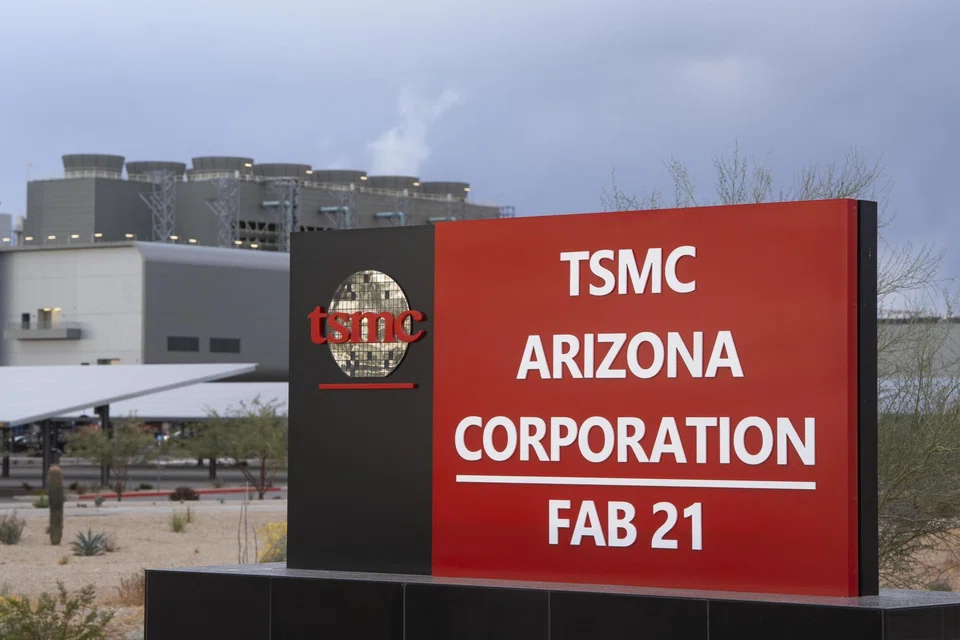
[TAIPEI] Taiwan Semiconductor Manufacturing Company (TSMC) will try to accelerate the transfer of its advanced chipmaking expertise to the US in the future, though it will still develop and maintain its most cutting-edge fabrication techniques at home.
“The most leading-edge technologies will be run in Taiwan because of practical reasons,” chief financial officer Wendell Huang said on Thursday (Jan 15). “When they get stabilised, then we can try to accelerate for the technology to move overseas.”
Speaking after TSMC reported strong results and an ambitious spending plan that reverberated across European and US stock markets, Huang affirmed the company’s strong conviction in the “mega trend of artificial intelligence (AI) demand”. He pointed to TSMC’s plan for a record capital expenditure budget of more than US$52 billion this year, saying the company is stepping up its investment to relieve AI-induced supply constraints.
The Hsinchu-based chipmaker to Nvidia and Apple has pledged to invest US$165 billion to build up capacity in the US, and is likely to increase its commitment beyond that level as part of a trade deal between Taiwan and the US. But dating back to the Biden administration, US officials have also repeatedly demanded TSMC move its latest tech to America as part of bipartisan efforts to bulk up a domestic supply chain.
Taiwanese officials and TSMC, meanwhile, have said that the chipmaker will keep its best technology at home.
Currently, there is a gap of several years between what TSMC is making in Taiwan and in the US, though the production yields and execution at the first Arizona factory, albeit at a more mature fabrication node, are comparable to its high standards in Taiwan. The CFO said that even with expedited transfers, it would still take at least a year for TSMC to bring the newest technology abroad for mass production.


The company, Asia’s most valuable, is accelerating the buildout of its capacity in Arizona due to strong demand.
“We are expanding in the US, accelerating where it is possible,” Huang said. North American customers such as Nvidia and Advanced Micro Devices now account for 75 per cent of TSMC revenue. The company has completed the shell of its second factory in Arizona and now plans to start mass production in the second half of 2027, “a few quarters earlier than originally expected”, according to Huang.
There have been no discussions about potential investments in Intel, Huang said. Trump administration officials last year floated the idea of the Taiwanese company operating some Intel fabs, lending its advanced know-how to help the US chipmaker struggling to catch up. BLOOMBERG
Decoding Asia newsletter: your guide to navigating Asia in a new global order. Sign up here to get Decoding Asia newsletter. Delivered to your inbox. Free.
Share with us your feedback on BT's products and services
TRENDING NOW

Government to bring forward raising of retirement age, give employers more financial support to create flexi-load jobs

If Europe goes to war, the fallout will be felt in East Asia

Indonesia stocks suffer worst plunge in nearly 30 years as MSCI proposes standalone status

Vietnam’s northern provinces, not Hanoi or Ho Chi Minh City, are powering near 10% GDP growth

