

TSMC shows smaller, faster chips without a pricey new tool from ASML
The global giant makes chips for Nvidia, Apple and Google
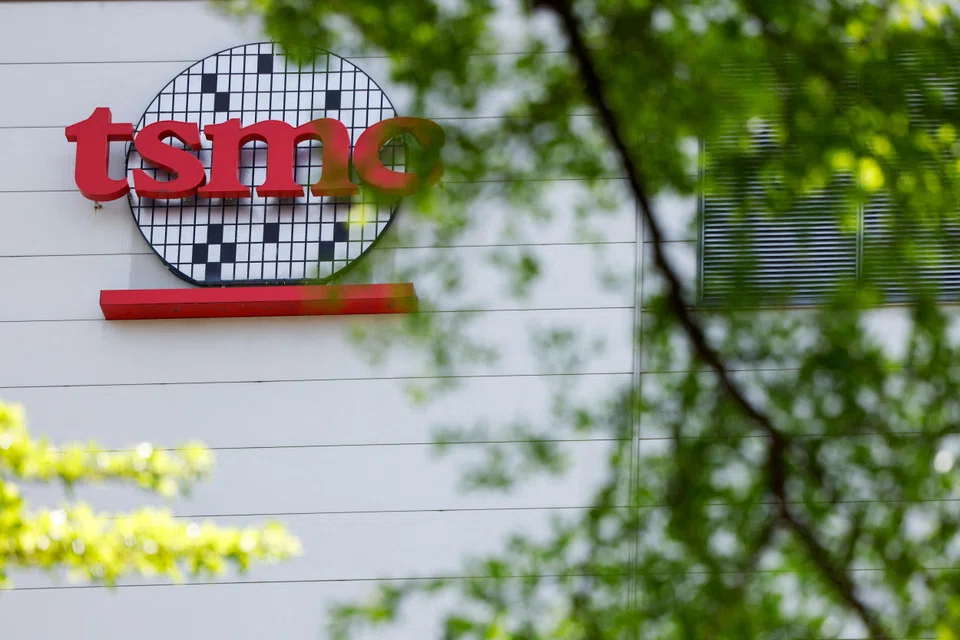
[SANTA CLARA] Taiwan Semiconductor Manufacturing Company (TSMC) on Wednesday (Apr 22) showed its newest generation of chip manufacturing technology, saying it expects to be able to create smaller, faster chips without requiring expensive new machines from ASML.
TSMC, the global giant that makes chips for Nvidia, Apple and Google, among many others, showed two improvements of chipmaking technology: One called A13, which will go into production in 2029 and likely be used for artificial intelligence chips, and one called N2U, a more affordable option that can be used to make chips for phones and laptops, as well as AI chips.
For all of the technologies TSMC showed on Wednesday, it is planning to squeeze more gains out of its existing extreme-ultraviolet lithography (EUV) machines from Dutch supplier ASML, rather than move to a newer generation of “high NA” EUV machines, which, at US$400 million each, are roughly double the cost of the older machines.
“This is where I think our R&D has done exceptionally well in terms of leveraging existing EUV technology while setting an aggressive technology scaling roadmap,” said Kevin Zhang, deputy co-chief operations officer and senior vice-president. “This is definitely a strength.”
But the gains from smaller and faster chips are modest, and TSMC also showed plans for new technologies in stitching complex AI chips together, which is where analysts expect companies such as Nvidia to get the most performance gains in the coming years.
Where current AI offerings such as Nvidia’s Vera Rubin, which will come out this year and is made by TSMC, have two large computing chips and eight stacks of high-bandwidth memory, TSMC on Wednesday said that by 2028, it will have the ability to stitch together 10 large chips and 20 memory stacks.
Named after Intel CEO Gordon Moore, his eponymous law predicted that computing power would roughly double every two years while at the same time get cheaper. In recent years, some, such as Nvidia’s CEO Jensen Huang, have said that it no longer holds true.
TSMC is effectively extending Moore’s law through the company’s technology that stitches multiple chips together, according to Dan Hutcheson, vice-chair of TechInsights.
“Moore’s law is morphing from a monolithic, single die in a package to multi-die in a package,” he said. “And that allows the power and performance gains.”
But stitching together chips brings challenges of its own. The chips get hot as they operate, and the different materials used to package them together expand at different rates, creating a fresh set of challenges for chip designers.
Large chip packages can bend and crack, which were issues for Nvidia’s Rubin AI processor, according to Ian Cutress, chief analyst at consultancy More Than Moore.
“(TSMC) are not addressing directly how they are solving those challenges,” Cutress said. REUTERS
Decoding Asia newsletter: your guide to navigating Asia in a new global order. Sign up here to get Decoding Asia newsletter. Delivered to your inbox. Free.
Share with us your feedback on BT's products and services






