

Temasek delays annual report till Sept
Its portfolio companies have been impacted by global lockdowns and changes to working arrangements
Singapore
SINGAPORE'S state investor Temasek Holdings will delay its annual reporting to September from July this year, citing disruptions amid the Covid-19 pandemic.
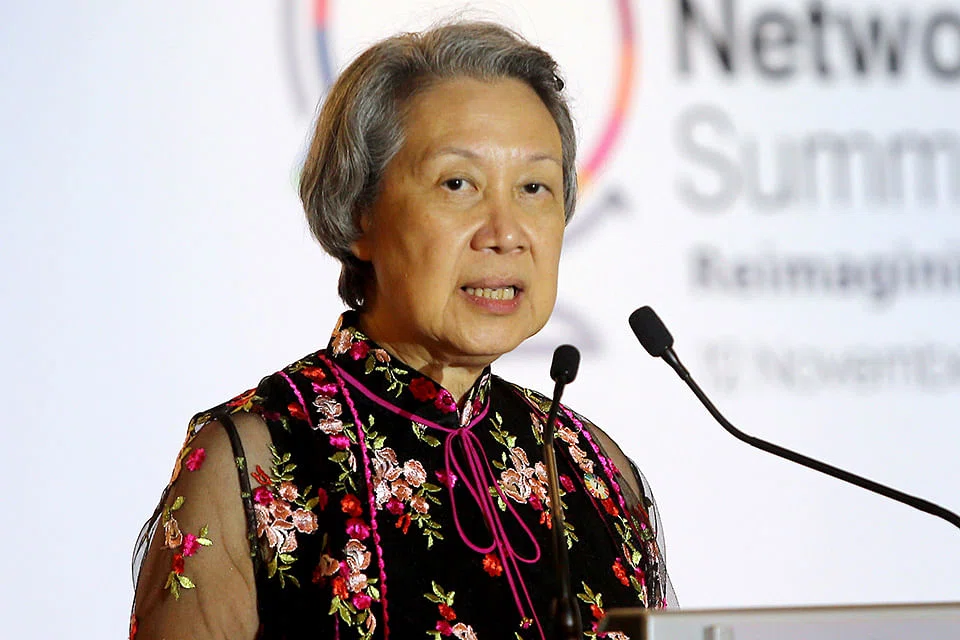
In a Facebook post on Thursday, executive director and chief executive Ho Ching said: "This year, Covid has delayed the financial reporting for many companies, especially those with operations all over the world. Many Temasek portfolio companies have businesses that span the globe. To accommodate this delay of global consolidation for financial reporting, Temasek's own annual reporting will be delayed."
As at March 31, 2019, Temasek had a net portfolio value of S$313 billion. Its geographical exposure includes a 26 per cent exposure to Singapore and another 26 per cent to China, 15 per cent to North America, 10 per cent to Europe, and 14 per cent to Asia ex-Singapore and China.
When contacted, Temasek told The Business Times (BT) on Thursday that it remains committed to its annual disclosure exercise.
"Various exchanges and regulators around the world, and here in Singapore, have extended company reporting dates as a consequence. Likewise, Temasek and our portfolio companies have been impacted by global lockdowns and the resulting changes to working arrangements.
"Temasek, which has to consolidate the financials of our investee companies across our global portfolio, will also experience a similar delay in providing our financial disclosures," the firm said.
Separately, Singapore's sovereign wealth fund GIC responded to a query from BT on Thursday and said that the pandemic has "delayed slightly" the compilation of its financial results. It expects to publish its annual report by end-July.
In her post on Thursday, Ms Ho said that Temasek has been working to build both a "resilient portfolio for the long term" as well as a "fortress balance sheet in the event of a downturn". The investment firm has been in a net cash position since 2007/2008, just before the global financial crisis hit.
"Although we didn't anticipate a Covid-19 pandemic, the economic indicators had become worrisome since last year," said Ms Ho. "Clearly, Covid is now a bigger problem than we had expected."
In addition, she highlighted that Temasek has been contributing to the Singapore Budget - first through the net investment income (NII), and later through net investment returns (NIR) framework.
Under the NII framework, up to half of Temasek's dividends could be used for budget spending. From 2016, Temasek has been included in the NIR framework - which allows the use of up to half of Temasek's expected long-term returns for budget spending.
"Over the last five years, since Temasek contributions were switched to the NIR framework, the NIR contributions from Temasek, GIC and the Monetary Authority of Singapore (MAS) form the largest source of spending power," Ms Ho said.
She added that NIR contributions from these three entities have amounted to more than 20 per cent of government operating revenues over the last five years, up from around 15 per cent when Temasek was on the NII framework, and are "more than corporate income tax from businesses, more than personal income tax collected from taxpayers, more than revenue from GST, more than betting taxes, customs and excise duties, road tax and various other other forms of taxes or fees".
In Singapore's Budget for FY2019, the three largest sources of operating revenue were corporate income tax at S$16.8 billion, personal income tax at S$12.2 billion and goods and services tax at S$11.2 billion.
The single largest revenue contributor was, however, net investment returns, at S$17.1 billion. This amount comprises up to 50 per cent of the NIR on the net assets of GIC, MAS and Temasek and up to 50 per cent of the NII derived from past reserves from the remaining assets.
Separately, Ms Ho added that Temasek will continue to work towards carbon neutrality, not just by investing in carbon solutions, but also by working with existing and new portfolio companies to support their transition to a carbon neutral world.
With additional reporting by Angela Tan






