Ten years on, Singapore's Asia Genesis hedge fund plans comeback
Top-performing trader reopens 'all-weather' global macro fund; seeks to train world-class Singaporean traders
Singapore
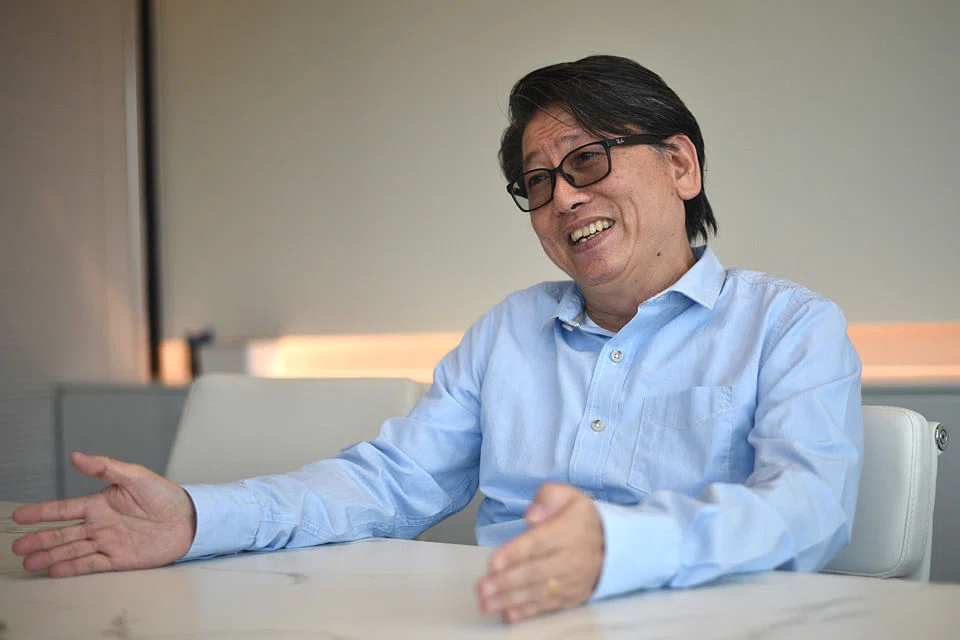
LOCAL hedge fund manager Chua Soon Hock is back in business after a 10-year hiatus.
Mr Chua, now 60, used to run the top-performing Asia Genesis Japan Macro Fund (JMF) from 2000 to 2009, overseeing US$761 million in assets.
He was its key trader, delivering a net return of 18.7 per cent annually over the fund's 10-year life. Then he retired quietly.
Now he's preparing his encore. The new Asia Genesis Macro Fund will start trading with US$50 million to US$100 million initially, bankrolled by Mr Chua and two of his buddies.
They are legendary trader James Loh who had a hand in building the regional trading businesses of UBS and Barclays, and Penjing Asset Management founder Ronnie Wu, a pioneer in the Asian fund-of-hedge-funds industry.
In fact, the trio had talked about working together five years ago, but Mr Chua dropped the idea after his wife fell ill with terminal cancer.
"She had cancer so I called it off. Now she's better... I have a lot of energy and I'm also a bit bored," Mr Chua told The Business Timesrecently at Asia Genesis Asset Management's new office in Great World City.
The outfit comprises just five traders now, Mr Chua included.
Mr Loh and Mr Wu are non-executive advisers. The goal for the new fund is to achieve a net return of more than 10 per cent every year, with hardly any down month.
Mr Chua has done it before. The JMF achieved an annualised return of 26 per cent in its last seven years.
He said: "Like in the past, I hope my macro fund will be an all-weather one, making money in bull, bear and range markets with low downside volatility. This is what institutional investors want, not cowboys."
The fund's strategy of choice is "global macro", a hedge fund style that shot to fame in the 1990s when George Soros made a billion dollars betting against the British pound.
Macro managers take a view on the market and place their bets through equity, fixed income, futures or currency trades.
However, many macro funds have failed to produce consistent positive returns.
Mr Chua said: "Usually people prefer to make a lot of profit in one or two trades, but if you do that, you can incur quite serious losses...
"We don't go for home runs. We are not looking for big profits in a trade. We look for many good risk-reward trades. We impose high standards on ourselves in terms of risk control."
His team does not use algorithms to spot trading opportunities. Neither does he try to beat automated platforms at their game of high-frequency trading.
He explained: "My strength as a discretionary trader is understanding the market psychology of my trading products well. Each product is like a girlfriend to me...
"Most machines are programmed to capture something very specific. But we are a lot more broad-based, though we focus on specific products and specific strategies."
Mr Chua is putting his skills to the test at a time when investors worldwide are yanking money out of hedge funds at record pace.
The mood seems brighter in Singapore, where 364 hedge funds oversee US$51.7 billion in assets, up 11 per cent from a year ago, according to Eurekahedge.
Asian hedge funds based in Singapore returned clients an average of 11.4 per cent, net of fees, in 2019 after losing 5.4 per cent in 2018, according to Eurekahedge data.
Over a longer time period, Singapore's top-performing hedge fund based on a five-year annualised return of 17.8 per cent was the Sanchi Credit Value Fund which focuses on credit strategies, according to Preqin.
The top global macro hedge fund was the Quantedge Global Fund, which has a five-year annualised return of 11.6 per cent, said Preqin.
Many funds are structured with a long bias, including macro funds.
But after a 10-year bull run, the market is headed for an inevitable meltdown as volatility has remained very low despite underlying stresses building up, Mr Chua observed.
Hedge funds with a track record of operating flexibly in various seasons could win more clients in this mature bull market, Mr Chua believes: "Like lubricant we will not be caught in major risk events or when the unexpected happens."
That said, he is reminded by his own experience: "Bull markets usually last longer than we think.
"The stock market is just a reflection of the market capitalisation of the top companies. These companies are run by extremely dedicated, talented people who understand big changes in the world. So when you bet on bear markets you are generally betting against them. You need to be very sharp and detect the right timing. Not easy, but I enjoy that."
If the Asia Genesis Macro Fund does not earn a positive return in any year, it will charge no management fee. The fund will also liquidate all its positions before each year-end, to be fully in cash for audit purposes.
This unique measure meant that the JMF was able to be a liquidity provider to clients who faced a cash crunch during the 2008-2009 Great Financial Crisis, recalled Mr Chua.
Mr Chua got his start in proprietary trading in 1983, when he was hired by sovereign wealth fund GIC.
He called it a lucky break: "That year, Dr Goh Keng Swee decided to try out non-scholars so I was very fortunate as a non-scholar to get into the trading team working under Mr Ng Kok Song, the legendary fund manager of GIC. I didn't know what I was getting into...That was the start."
Now, Mr Chua hopes his own shop will be a platform to train more Singaporean traders.
"I like to think we have a good, really decent chance to produce world-class traders," he said, notwithstanding the inherent disadvantages that Singaporeans may have.
He explained: "When it comes to risk-taking, making a lot of independent decisions, sticking out their neck, being flexible, able to do a lot of U-turns, taking initiative, I think it's really lacking (in the graduates from our universities).
"It's well known we have a kiasu, kiasi, kiabo, kia chenghu (afraid of losing, dying, having nothing, and the government) environment... If you want to be socially correct or to keep looking over your shoulder, that implies you don't have real conviction or courage. Conviction and courage require sacrifices and many times, being against the wind."
Of course, a trader is a risk-taker but he's a risk-manager as well. Having to traverse this duality on a daily basis is what makes the business so interesting to Mr Chua.
It's like a paradox of life, he said: "This thing is always playing around - when to have courage and when to switch to being very cautious."
There are rules his traders follow. Good risk-managers should never allow a trade to get anywhere near its stop-loss limit, he believes.
Skillful operators should exit bad trades with very little loss or even a small profit. "This is how I managed the JMF... I reduce my time risk, so I work harder. We will take many, many low-risk trades and work diligently as labourers to get our returns."
Mr Chua used to clock long and intensive hours while running the JMF: "It's a lot of alertness, flexibility and hard work. I believe this is the ultimate competitive edge that no machine can fight."
Humility is another trait he prizes in traders: "In discretionary trading you are always making active decisions. Key parts of your developed personality will show up clearly. If ego is not controlled, you cannot be consistent.
"I think consistency of excellent performance requires humility, which is the contrary of ego."