Tesla fares well on environmental risks, not so great for social and governance issues: Phillip Capital

Janice Lim
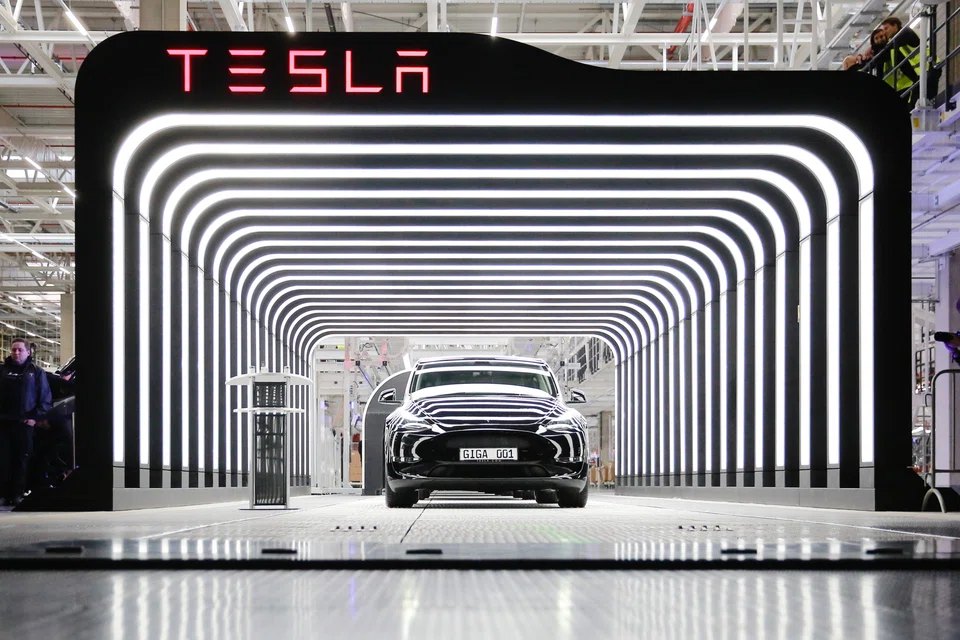
TESLA's recycling initiatives, use of solar panels and electrification of their heavy-duty trucks may have earned the company high marks on the environmental front, but wealth management firm Phillip Capital has found its management of social and governance issues lacking.
In a January 2022 report detailing Tesla's environmental, social and governance (ESG) scorecard and how these metrics might be material to the company’s financial value, Phillip Capital stated that the electric-vehicle manufacturer needs to be more transparent about disclosing its measures to mitigate biodiversity loss and the impact of climate change, and that it should invest more resources to ensure product safety and regulatory compliance.
Nevertheless, the report also stated that Tesla has done fairly well in mitigating the negative impact on the environment, with systems to reduce waste, energy and water consumption.
ENVIRONMENT
The good:
- The company's suppliers are required to follow stringent international standards and provide evidence that sustainability best practices have been integrated to their operational systems;
- The company secured a deal with the world's largest lithium mining company to avoid the risk of resource depletion that could affect production levels;
- It installed a battery recycling facility and achieved a 92 per cent recycling rate for battery cell materials, thereby reducing its operating costs, extraction of raw materials and impact on the environment;
- It came up with a new sustainable extraction process that increases the extraction efficiency of lithium — a key material for its car batteries — possibly reducing lithium costs by 33 per cent;
- It utilises municipal wastewater from a treatment plant that is carried to the industrial park in the northern Nevada Desert, where one of its factories is located;
- It uses hybrid cooling towers, has eliminated quench tasks in casting and introduced cascade rinsing systems to reduce water consumption and eliminate water-intensive production processes for its newly-opened factory in Berlin;
- It has electrified its heavy-duty trucks and greatly reduced fleet fuel emissions: Before this, Tesla's trucks accounted for only 1.1 per cent of the US vehicle fleet, but put out 17 per cent of US vehicle emissions because of their weight and heavy use (Tesla, 2020);
- It has installed solar panels at its Nevada factory;
- It has localised production and supply chains in North America, Europe and China to reduce value chain emissions.
The bad:
- No disclosures on climate-related regulatory risk management;
- No disclosures on strategy-aligned metrics that assess climate-related risks and opportunities;
- No definitive carbon-reduction targets and commitment to net-zero emissions;
- The company is using batteries containing cobalt, which is scarce and toxic, as well as nickel, which generates a huge amount of waste material, but is planning to change them to lithium-iron-phosphate.
SOCIAL
The good:
- Employees are encouraged to openly communicate with their supervisors when they want to raise issues;
- The company prohibits discrimination based on social attributes such as age, race and gender, although there have been allegations of workplace discrimination and harassment;
- It upholds a zero-tolerance policy on child or forced labour and human trafficking by its suppliers;
- It works directly with the mine and not a middleman;
- It claims to address sustainability issues such as biodiversity impact, energy consumption and human rights management directly with its suppliers;
- It ensures that all cobalt suppliers in Congo source exclusively from responsible minerals-assurance process conformant refiners
The bad:
- The company is not part of any collective bargaining agreement or other labour contract applicable to their employees, except in jurisdictions which mandate employees to participate in industrial unions;
- Its employees were retrenched or had their compensation cut in 2020 because of the Covid-19 pandemic;
- There have been several fatalities resulting from failures in Tesla's systems as well as battery faults;
- Its product safety is below industry average;
- It recalled almost half a million vehicles over safety issues in 2021, which is an alarming rate that requires monitoring;
- Environmental groups have claimed that its Berlin factory endangered drinking water supply and wildlife in the area, and have mounted protests on these issues;
- It has been accused of income inequality and discrimination, and poor work conditions in the mining industry;
- It has been using shared resources like salt baths in the mining of lithium, which would impact native communities and biodiversity if depleted.
GOVERNANCE
The good:
- There have been no reported cases of anti-competitive behaviour;
- The company conducts third-party audits every year on its systems and supply chains;
- It has developed a complete energy and transportation ecosystem and installing new technology in its production line to reduce waste and water.
The bad:
- The company was fined 12 million euros (S$17.53 million) by the German authorities for allegedly failing to make public notifications and to fulfil obligations to retrieve old batteries;
- The construction of its Berlin factory was delayed by several disputes, which could have been avoided if they had certain operational and developmental policies and processes in place;
- It has not made disclosures on climate mitigation strategies relating to its energy and transportation ecosystem;
- It does not disclose recycling rates of raw materials, except for end-of-life batteries.