Tesla is no longer the top EV seller – why is it losing ground around the world?
Its global vehicle deliveries drops 9% in 2025
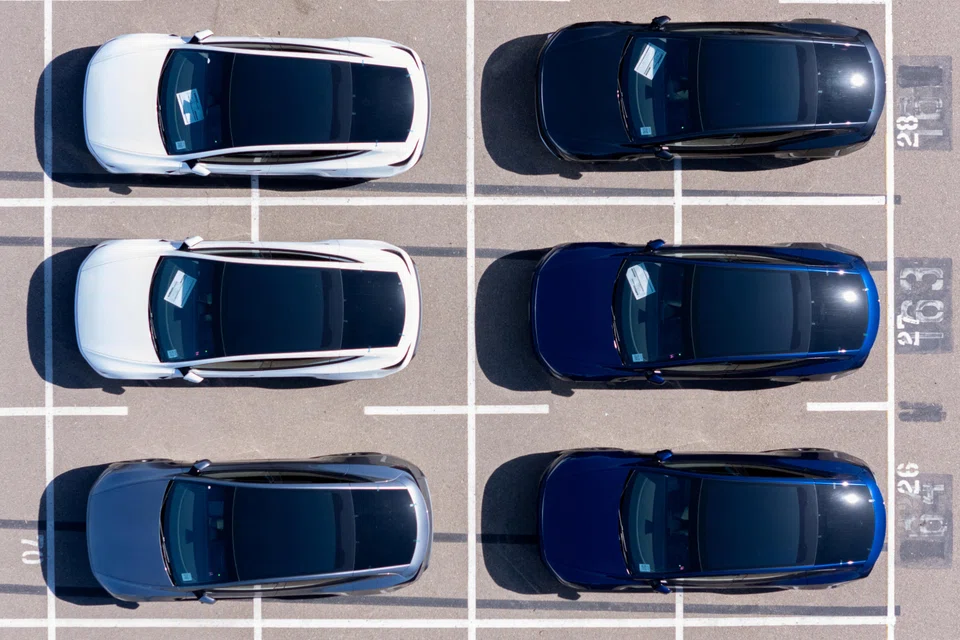
TESLA is facing a difficult road ahead after deliveries of its fully electric vehicles (EVs) declined for a second year in a row and were overtaken by Chinese rival BYD on an annual basis for the first time.
The US EV maker is struggling with heightened competition, the loss of federal purchase incentives in its home market, and backlash to the polarising politics of chief executive officer Elon Musk. Fundamentally, the company is lacking a truly new, affordable vehicle to revitalise its ageing line-up.
Analysts have grown more sceptical about the outlook for sales in 2026. Nonetheless, investors remain buoyant, keeping Tesla’s market capitalisation hovering around US$1.5 trillion. The value they ascribe to the firm is increasingly rooted in Musk’s vision of a future filled with autonomous vehicles and a “robot army”, rather than the human-driven EVs in the here and now.
What’s happened to Tesla’s sales?
Its global vehicle deliveries shrank by 9 per cent last year. The drop was partly due to disruption from a redesign of the Model Y SUV, as Tesla paused output at each of its assembly plants to retool its production lines.
Sales in Europe – Tesla’s weakest major market by Musk’s own admission – slumped. From January to November, the number of new Teslas registered across the region plunged by 28 per cent year on year, according to the European Automobile Manufacturers’ Association – even as the wider market grew. Industrywide battery-electric vehicle sales in Europe were up 27 per cent.
In China, the world’s biggest EV market, Tesla was in reverse gear for much of last year. Shipments from its Shanghai plant – which are destined for both domestic customers and for export – declined year on year in eight out of the first 11 months of 2025, according to the China Passenger Car Association.
It wasn’t all bad news. Tesla’s global third-quarter sales hit a record as US drivers rushed to buy electric cars before the expiry of a US$7,500 federal subsidy on Sep 30. But the end of this tax credit is expected to weigh on consumer demand moving forward.
Why is Tesla losing ground in the EV market?
Musk has stuck to a less-is-more approach to Tesla’s line-up. For years, the company only sold five models – the Model S (which debuted in 2012), Model X (2015), Model 3 (2017), Model Y (2020) and the Cybertruck (2023) – and not all of these are available globally.
BYD, by contrast, has a substantially larger line-up and most of its vehicles are cheaper than Tesla’s most popular offerings, the Model Y and Model 3 sedan. The Chinese automaker has delivered more battery-electric vehicles globally for five straight quarters. That’s without BYDs being available in the US and also amid intense competition in China.
A sub-US$30,000 car has long been seen as key to further sales growth for Tesla. After a diversion with the expensive Cybertruck – a pickup that’s fallen well short of the CEO’s volume expectations – the “more affordable” vehicles promised by Musk ended up being cheaper, simplified versions of the Model 3 and Model Y. Their starting price is closer to US$40,000.
It’s unclear whether Tesla will make more radical adjustments to its line-up anytime soon. In the meantime, it risks looking increasingly out of step with competitors’ fresher designs. Tesla was long a trendsetter with its EVs – something that’s now drawing more regulatory scrutiny amid growing complaints over the electrically controlled door handles the company popularised.
How have politics factored into Tesla’s slump?
Some consumers have been turned off by Musk’s politicking: his close links to President Donald Trump and the Republican Party during the 2024 election campaign, his subsequent work gutting federal agencies as the government’s efficiency czar, and his cheering of far-right politicians in Europe.
After Musk’s bromance with Trump broke down, Republican lawmakers didn’t spare Tesla when voting to eliminate federal EV tax credits as part of a sweeping tax-and-spending law. They also abolished the penalties for automakers that fail to meet federal fuel-economy standards.
Tesla sells regulatory credits in the US and elsewhere that help other car manufacturers comply with such emissions rules. In the third quarter, this revenue stream shrank 44 per cent year on year.
What is Tesla doing to try to recover?
Aside from introducing the stripped-down Model 3 and Model Y, Tesla has expanded into India, opening its first showroom in Mumbai in July. But initial appetite in the nascent EV market appeared to be underwhelming.
Reflecting India’s high tariffs on vehicle imports, the entry-level Model Y is priced closer to US$70,000, putting it out of reach for the vast majority of the country’s drivers.
Looking to regain market share in China, Tesla is making changes to try to keep pace with competitors’ tech-filled cars. It also rolled out a six-seat Model Y at a starting price of US$47,200, comparable to rival EVs with three-row seat configurations.
What’s the outlook beyond EVs?
Musk has been hyping up what he sees as the company’s true calling: self-driving cars and humanoid robots.
He’s said that the Optimus robot has the potential to be “the biggest product of all time” and will eventually account for 80 per cent of Tesla’s value. Musk has also been building anticipation for the Cybercab to ultimately underpin a driverless ride-hailing network. The prototype of the two-seat compact car unveiled in 2024 had no steering wheel or pedals.
But there’s currently a huge gap between ambition and execution. After roughly a decade of Musk predicting Teslas should soon be able to drive autonomously, the company finally launched its robotaxi service in June in a modest invite-only debut.
Months later, consumers can still only summon rides from small numbers of cars in Austin and the San Francisco Bay area, and there are safety supervisors in the front seats.
Both autonomous vehicles and bipedal robots are a long way off from starting to “move the financial needle”, as Musk put it during an earnings call in April. Even so, shareholders approved a new pay package for him that’s potentially worth US$1 trillion if he reaches certain “Mars-shot” milestones, to incentivise him to stick around and bring his vision to reality. BLOOMBERG
Decoding Asia newsletter: your guide to navigating Asia in a new global order. Sign up here to get Decoding Asia newsletter. Delivered to your inbox. Free.
Share with us your feedback on BT's products and services