

Tesla says China plant continues to make cars; no halt notice
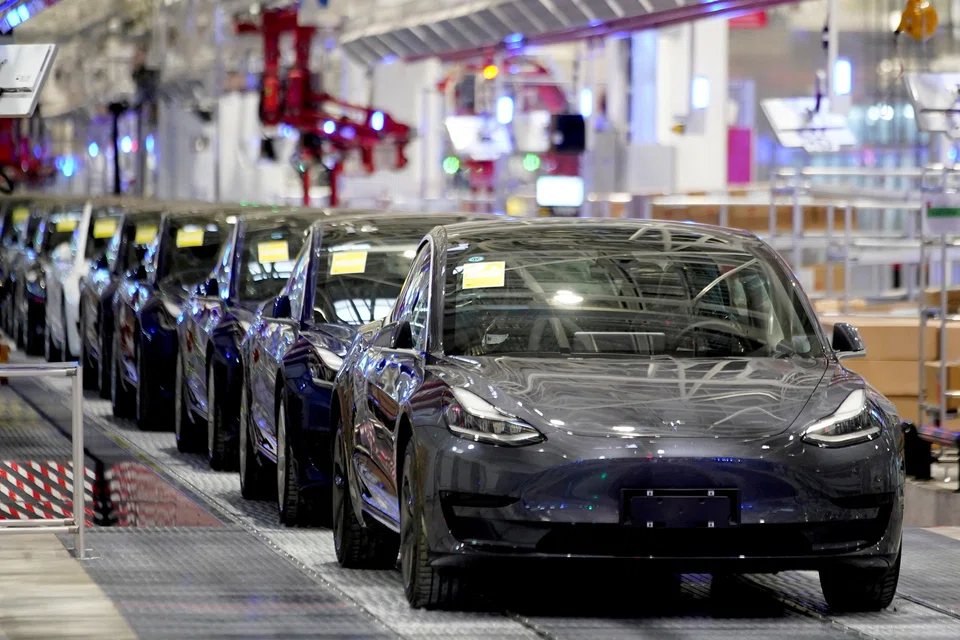
TESLA hasn’t halted output at its Shanghai factory, though it is experiencing some disruption to logistics amid the city’s long-running Covid-19 lockdown, a spokesperson for the US carmaker said Tuesday (May 10).
Reuters reported earlier that output had halted, prompting Tesla to issue a statement saying it had received no notice of any Shanghai plant cessation and pointing out that some vehicles are still being made.
Tesla’s China factory was shuttered for 3 weeks in April as Shanghai was plunged into lockdown in an attempt to halt community spread of Covid-19. The plant started up again in late April under a so-called closed loop system whereby workers live on site and are tested regularly.
Prior to the pandemic-induced halt on Mar 28, Tesla workers in Shanghai were working 3 shifts covering 24 hours, 7 days a week. The workers in the current closed-loop system have been doing 12-hour shifts, 6 days a week.
One of the problems stems from a shortage of wire harnesses from Aptiv, which had to stop shipping supplies from a plant that supplies Tesla and General Motors after infections were found among its employees, Reuters said.
Tesla’s Shanghai factory, which in regular times pumps out around 2,100 cars a day, remains challenged by component shortages, other people familiar said last month. The US automaker only has inventory for just over 2 weeks based on its current closed-loop schedule and logistics are a major problem for many other parts. BLOOMBERG
Decoding Asia newsletter: your guide to navigating Asia in a new global order. Sign up here to get Decoding Asia newsletter. Delivered to your inbox. Free.
Share with us your feedback on BT's products and services
TRENDING NOW

Once staunchly pro-China, Malaysian Chinese businesses are now distancing themselves from Beijing
The middle power moment arrives in South-east Asia – but not for Asean

DBS, OCBC, UOB face rate hike reality check

Vietnam’s northern provinces, not Hanoi or Ho Chi Minh City, are powering near 10% GDP growth

