

The GLP example: how technology aids its ESG strategy


Singapore
SINGAPORE-BASED global real estate logistics provider and investment manager, GLP, has found that modern technologies have improved its ability to better capture data and turn it into actionable insights - aiding its environmental, social and governance (ESG) strategy.
For example, within its logistics parks, GLP has adopted smart-meter systems to automate the collection of data on energy and water consumption, so that it can monitor real-time data and make improvements.
And, in its data centres, its proprietary data centre infrastructure management system provides an integrated framework to intelligently link information technology and facility management with performance-related metadata, to optimise cooling and power usage effectiveness.
"While there are new and improved technologies to capture data, what you do with the data is just as important as capturing it accurately," says Meredith Balenske, head of ESG at GLP.
"The underlying issue is how to turn data into actionable insights and a big part of our work is to better analyse the data and improve decision-making across the supply chain."
And so, analytics play a key role. For example, GLP has started to develop ESG management systems to help it collect and analyse detailed information relating to energy, waste, water and other key performance indicators (KPIs).
"By having a more complete view of all the relevant risks and opportunities, we believe this can help us track our progress and, through the portal, we can generate reports for customers and investors," Balenske notes.
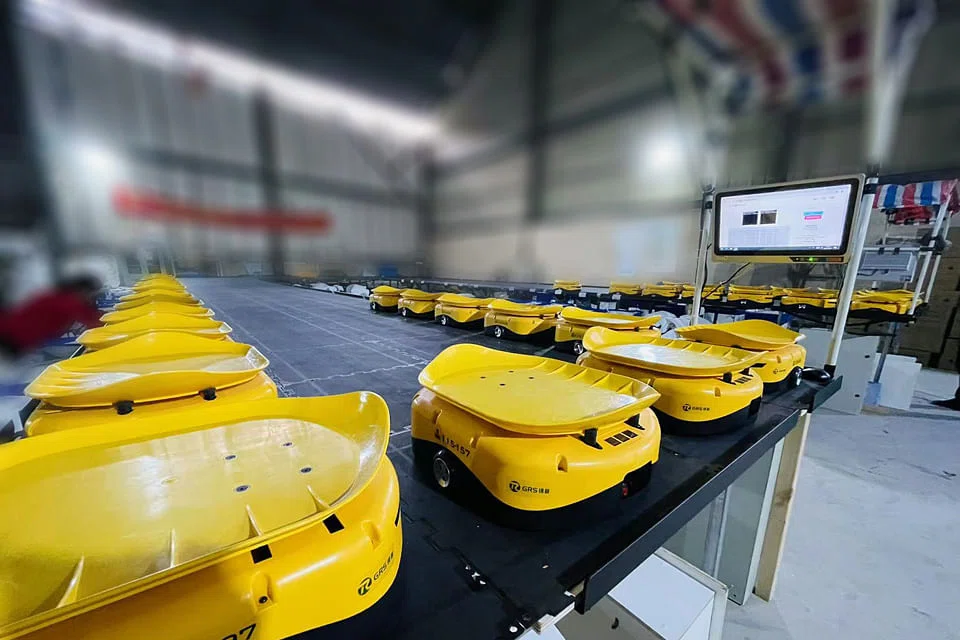
Within the group, GLP invests in developing new technologies and services that enhance its customer businesses and assets - one example is Global Robotics Services (GRS), a platform launched last year that provides GLP's proprietary robots-as-a-service (RaaS) solutions.
GRS aims to bring about a greater adoption of automation, while lowering the barrier to entry for businesses when it comes to robotics technology, says Balenske; its subscription-based model is said to create lower upfront capital requirements, reduced fixed costs and flexible lease terms, which helps bridge the automation gap for many small to medium-sized enterprises.
There's also CarbonXpert, a carbon-management solution launched by one of GLP's subsidiaries to render the huge amount of ESG data associated within a logistics park in a user-friendly interface; Balenske notes that this will greatly help with data visualisation and scientific planning when it comes to modelling and executing ESG plans.
GLP also makes private-equity investments in supply chain technologies that can contribute to its own ESG strategy, in particular when it comes to health and safety issues, as in the case of its investment in G7 - a technology company that provides Internet of Things (IoT) and artificial intelligence (AI)-enabled fleet management services.
According to Balenske, G7 - one of China's leading IoT technology developers - succeeded in drastically improving driver safety through a combination of Global Positioning System (GPS) technology, sensors and onboard diagnostics codes, such that its customers lowered their accident rates by 19.9 per cent and almost halved their high-risk accidents, over the last 3 years.
Technological innovations have also helped GLP better communicate its ESG objectives and its adherence to such objectives to its various stakeholders.
"Real estate as a sector is relatively opaque, especially in relation to performance of privately-owned assets. Industry benchmarks such as GRESB (Global ESG Benchmark for Real Assets) lead to improved transparency through data sharing and can trigger healthy competition among participants and improve the overall performance of the sector, as well as the quality of underlying assets.
"We can also leverage online platforms to poll stakeholders on the topics most material to them and structure our strategy accordingly," Balenske adds.
TRENDING NOW

Philippine power giant First Gen rebuffs foreign offers, plans up to US$2.6 billion in expansion
Cliff Tan has 7 million followers and a 4-month waitlist. Why won’t he expand his business?

Could stablecoins be the future of money?
From finance aspirant to Asean CEO: TUV SUD’s Jonas Strahberger on finding people who believe in you

