

The resilience of outlet malls in China
Sasseur Reit says China's outlet mall industry has been growing at a steady rate of about 30% year on year over the past 5 years.
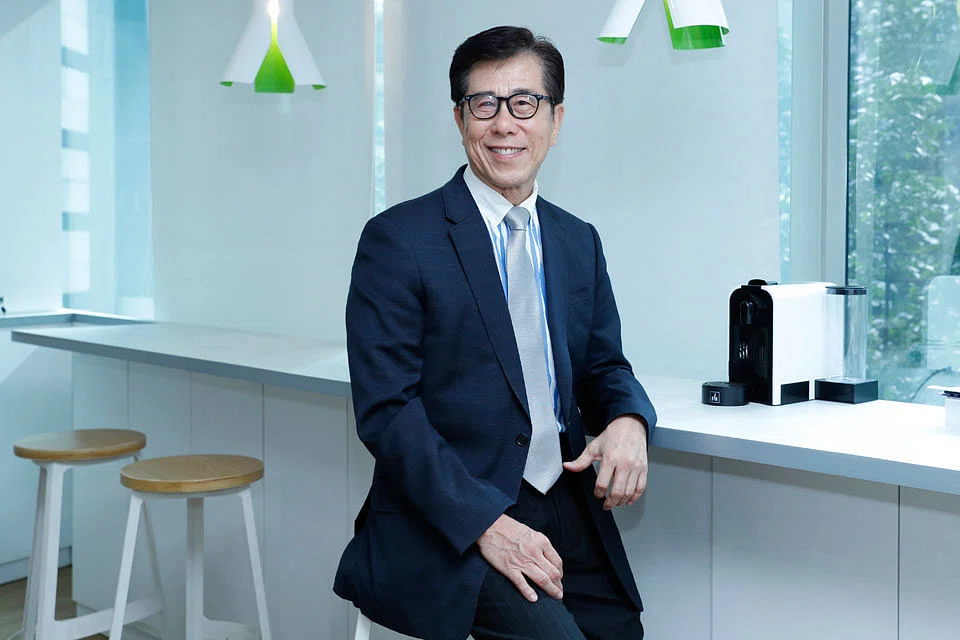
ONLINE shopping may be changing the physical retail landscape and affecting traditional mall operators. But one segment of the industry seems to remain unfazed - outlet malls.
In March this year, Sasseur real estate investment trust (Reit) made its debut on the Singapore bourse at 80.5 Singapore cents apiece, slightly above its offer price of 80 Singapore cents. As the first outlet mall Reit to be listed in Asia, Sasseur's S$396 million initial public offering (IPO) has made it one of the highest IPO listings in recent times.
Asked how the physical retail space in China has been impacted by e-commerce, chief executive of Sasseur Reit Anthony Ang notes that he is "not too concerned", as the outlet mall industry in China is still poised for growth.
"The perspective is that people think e-commerce takes over everything. But e-commerce only covers about 17 per cent of retail in China. There's still 83 per cent more out there, and outlet is one of them," Mr Ang says.
He adds that China's outlet mall industry has been growing at a steady rate of about 30 per cent year on year over the past five years, with the sector projected to grow at 24 per cent per annum over the next three years, according to an independent market research by China Insights Consultancy. In fact, the study notes that by 2030, China is expected to become the world's largest outlet mall market by sales revenue, outstripping even the US.
Interestingly, two of Sasseur Reit's cornerstone investors - Chinese Internet giant JD.com, and Nasdaq-listed branded goods platform Secoo Holdings - are companies in the e-commerce space themselves. As Mr Ang points out, the merging of both offline and online tools in today's retail environment is becoming increasingly common, and while the firm has a physical presence from its portfolio malls, it also leverages on technology to promote the brand, and collect data on consumer preferences.
To illustrate, half of the sales from its malls come from its 1.2 million VIP members, and social media is used to not only create buzz, but also better engage customers.
Citing the phenomenon of phubbing (or phone snubbing), Mr Ang adds that the human experience doesn't merely exist on the phone, and that people will want to emphasise face-to-face interaction.
"People are social beings, we need to see people, and we cannot eat online," quips Mr Ang. Other reasons the outlet mall industry may not be easily shaken by e-commerce include the "confidence of authenticity" because the brands themselves operate these shops, as opposed to the danger of fake goods from online purchases, he says.
He adds that outlet malls also offer products that are priced differently from online retail, where smaller-ticket items are usually sold. And the idea is for Sasseur's outlet malls to become a lifestyle centre for China's rising middle class, which has a greater capacity for discretionary spending.
This is also part of the reason Sasseur chose to focus on high-growth Tier-2 cities in China, which have a rapidly expanding middle class population. Having malls located in Tier-2 suburban areas meant that entry costs were lower, and the group could enjoy first-mover advantage in a market that is underserved, Mr Ang says.
Still, the Reit manager did face some challenges along the way, one of which included listing a company from China. In order to list a China company in Singapore, there were tax leakages, structural issues, and policy or political risk that the group had to manage, Mr Ang says.
He adds that other difficulties the group faced included getting recognition, and coming up with its unique business model. Unlike conventional retail Reits that typically focus on rental income growth as a measure of operating performance, Sasseur focuses on the sales growth of its outlet malls. This means that the bulk of its rental is based on turnover rent.
Besides having activities for kids and sports aficionados at its malls, Sasseur Reit also intends to continue enhancing shoppers' experience with its "super outlet" business model. This includes developing its concept of a "super farm", which is an attempt to inject nostalgia and recreate traditional country life within its outlet malls.
Looking ahead, Sasseur Reit has a pipeline of potential properties available for acquisition, with two right-of-first-refusal properties in Xi'an and Guiyang, and three properties in Nanjing, Hangzhou and Changchun. Assuming these properties are acquired, the gross floor area of its initial portfolio could more than triple, the manager says. Sasseur Reit's initial portfolio comprises four outlet malls in Chongqing, Bishan, Hefei and Kunming.
And while global volatility abounds, the Reit manager is of the view that China's consumption remains strong. "We believe that the outlet business in China is less exposed to global trade risk and external macro trends, as outlet malls in China are focused on the domestic consumption of the Chinese middle class," the group said in its maiden financial results on Aug 6.
For the period from March 28 to June 30, distribution per unit came in at 1.587 Singapore cents, 4.6 per cent ahead of its IPO projection, while portfolio occupancy rate stood at 94.5 per cent. Net property income, recorded as "entrusted management agreement" rental income, was S$32.3 million, 3 per cent higher than its own forecast.
Essentially, the Reit in Singapore serves as a "capital recycling platform", where the group takes in money from the listing to build more malls so they can keep growing, Mr Ang says. Beyond China, the Reit's sponsor, Sasseur Cayman Holding, also believes that its business model can travel, and is now looking at other South-east Asian countries.
Says Mr Ang: "Potentially, the sponsor may even come to Singapore, establish themselves, and use Singapore as a base to expand their business."
TRENDING NOW

South-east Asia has lost Nvidia’s best salesman

Demand, tech capabilities position Apac and AI as Skyscanner’s next growth frontiers: CEO Bryan Batista

Peter Kwee’s Ridley Park bungalow on the market with S$100 million asking price

Beyond the greenback, Vietnam’s big borrowers turn to Asian-currency bonds

