

There is method to Mitsui's finger-in-every-pie strategy
Singapore
AN increase in interest in IHH Healthcare for S$2.8 billion, an acquisition of Singapore sugar supplier SIS late last year, and a tie-up with JR East Group to open Japanese restaurant JW360° in Jewel Changi Airport in April this year sound rather hodgepodge.
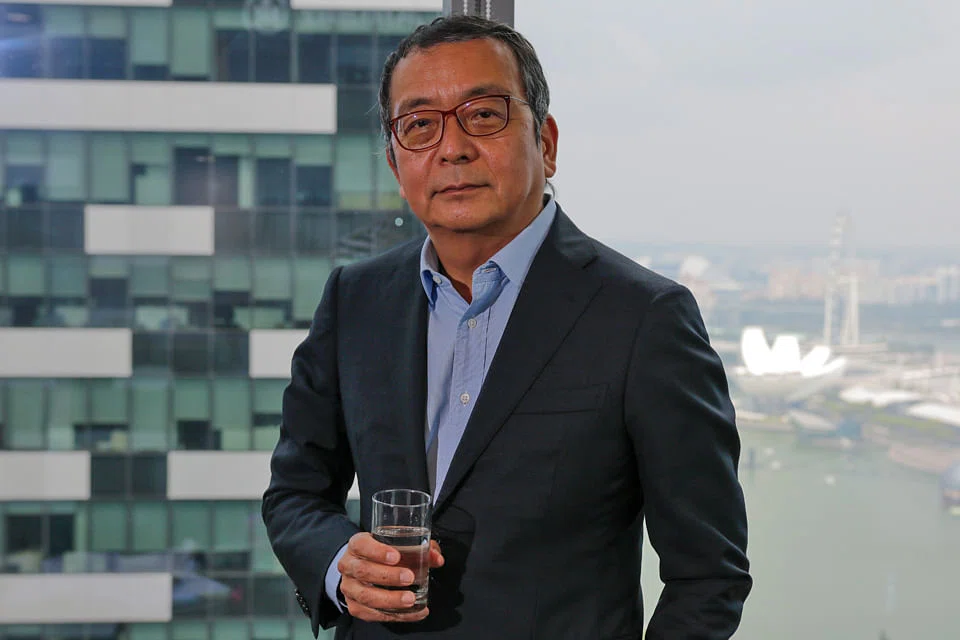
But Taku Morimoto, chief executive officer of Mitsui & Co (Asia-Pacific), says no. There is a strategy behind these deals - to diversify from its mainstay resources business into the fast-growing healthcare, environment, and consumer sectors in Asia.
Mitsui has made investments in these three categories in the region recently too. For instance, in July this year, it formed a joint venture with Japan-based Ichibanya, which owns curry chain Coco Ichi, to enter the Indian market to run outlets and franchise the Coco Ichi brand throughout the curry-loving country.
That same month, Mitsui also invested in SmartE, India's first and largest three-wheeler electric mobility service. In May this year, it invested in Vietnam's Minh Phu, the world's largest shrimp integrator from farming to processing to sales.
The crucial objective for Mitsui now is to seek out "direct consumer touchpoints" - from hospitals to food & beverage to transport - as it looks to shift its investments to the mid- to downstream of value chains, closer to the consumer.
Mr Morimoto says the firm is placing "highest importance" on Asia, having identified it as a growth region. The Asia-Pacific region currently contributes more than half of Mitsui's overall profit after tax and core operating cash flow. (The group uses the latter metric instead of revenue in order to capture numbers from its minority stakes in all its investments.)
"We see the most opportunity in South-east Asia and South Asia due to the higher economic growth as well as population and middle income class growth," Mr Morimoto says.
Asked about its plans for IHH Healthcare, following the bulking up of its stake in the firm to 32.9 per cent in November last year, Mr Morimoto says Mitsui is eyeing growth in Asia, especially China, and will "carefully select" the regions that IHH can expand into by leveraging Mitsui's global network.
Ageing societies, certain disease patterns, and a shortage of hospital beds are driving the rapid growth of healthcare in Asia, he says. Right now, Asia ex-Japan only has 0.7 to 2.8 beds for every 1,000 people, compared to about 4.8 in the developed OECD countries. In Japan, the number is more than 12 beds per 1,000 people.
"We anticipate that the healthcare sector in Asia will continue to grow at 12 per cent per annum - a rate much higher than GDP growth - and we expect expenditure to reach US$3.1 trillion by 2030. Since we first invested in IHH in 2011, we nearly quadrupled hospital beds from 3,500 to 15,000, while IHH has tripled Ebitda from US$218 million to US$613 million," he says. Ebitda refers to earnings before interest, taxation, depreciation and amortisation.
The kinds of healthcare services Mitsui is looking to invest in include medicines, devices, and ancillary services. For example, besides IHH Healthcare, Mitsui has also taken a 20 per cent stake in a joint venture with kidney dialysis business Davita to operate dialysis clinics in the Asia-Pacific region. Last November, it also acquired a stake in GOQii, a business providing a preventive healthcare platform through a wearable device and smartphone app in India.
Its other healthcare investments include Thorne Research, a developer and supplier of supplements; Keimed, a major drug and medical supplies wholesaler based in India; and healthcare device manufacturer, Panasonic Healthcare.
Mitsui also hopes to import new business models into its portfolio companies. For instance, in the US, Europe and Japan, many hospitals have already spun off their pharmacies and diagnostics units, which are no longer housed in hospitals because they are considered peripheral services that can be outsourced to third-party providers.
Mr Morimoto believes that for cost and operational efficiency purposes, IHH Healthcare could also spin off its pharmaceutical unit, so that the ejected unit, while still remaining under IHH, is able to serve other customers, including non-IHH hospitals. This will boost the healthcare group's business, while optimising its balance sheet.
On the timeline for the execution of this idea, he replies that it "depends on how many hospitals we have in the group in the next 10 years".
Part of the reason for the company's complete strategy rejig comes from recognising that its resources business is vulnerable to fluctuating prices. Mr Morimoto thus hopes that its non-resources business can help to stabilise the company's performance with its more predictable returns.
Mitsui says that it will continue to keep its core portfolio in energy, coal mining, infrastructure and chemicals. Resources currently takes up more than half of Mitsui's business. For the current financial year ending March 31, 2020, of its forecast profit after tax of 450 billion yen (S$5.6 billion), Mitsui expects 285 billion yen, or 63 per cent, to come from resources.
But the group will also invest more in growth areas such as mobility, healthcare, nutrition and services, with the aim of balancing both segments eventually.
It stressed that the company is not merely a "financial investor that buys and sells companies", but a "very long-term holder" which tries to synergise all the investments in its portfolio.
For example, in its liquefied natural gas (LNG) business, it has various investments along the value chain, from exploration & production, to piping, shipping and logistics, to LNG-receiving terminals and gas-fired power plants. Similarly, in its healthcare business, it has hospital chains and other peripheral services that make up an ecosystem.
Mr Morimoto's eventual vision is for the company not to be known as a "Mitsui of Japan", but a "Mitsui of Asia". Having guided the firm to deliver a return on equity of about 10 per cent for the past two years, he aims to achieve the same for its fiscal year 2020.
TRENDING NOW
Who is Leo KoGuan, the Singapore-based billionaire backing Nvidia’s Jensen Huang?

Demand, tech capabilities position Apac and AI as Skyscanner’s next growth frontiers: CEO Bryan Batista

Higher rates, weaker spending: Is the Philippines entering stagflation?

South-east Asia has lost Nvidia’s best salesman

