

Industrial property in Singapore among sectors likely to take a hit from JS-SEZ, analysts say
Manpower or space intensive sectors could reap big savings by moving to the special economic zone across the Causeway

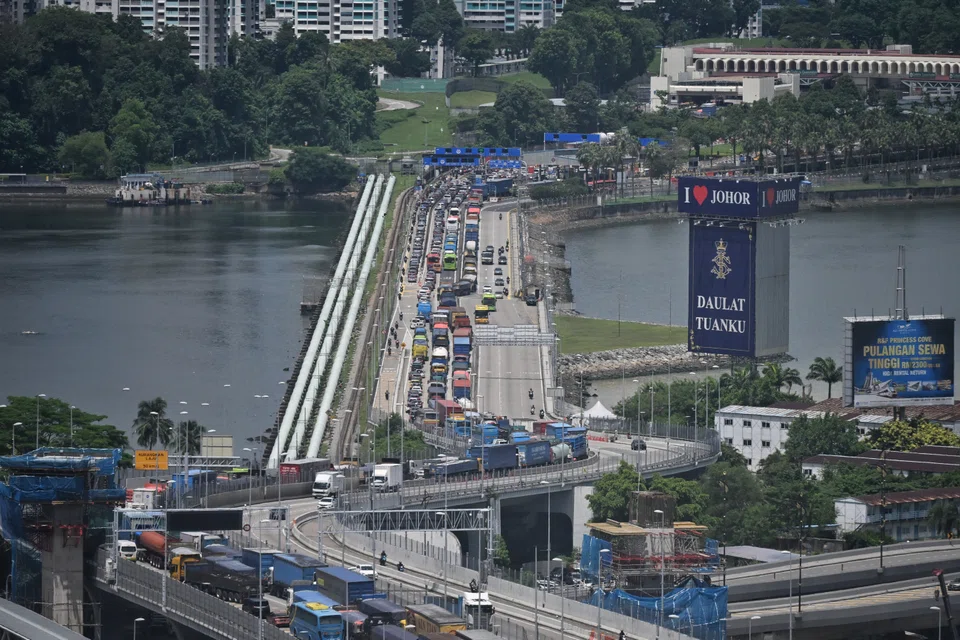
WHILE some industries in Singapore, such as banks and gaming, are poised to benefit from the establishment of the Johor-Singapore Special Economic Zone (JS-SEZ), some industries may not have it as easy.
Market watchers who spoke to The Business Times identified the industrial property segment in Singapore as one that could be hit. They added that retail properties could see more limited impact.
Wong Xian Yang, Cushman & Wakefield’s head of research in Singapore and South-east Asia, noting the major implications of the SEZ for the industrial sector, said that those industries that are manpower- or space-intensive could achieve significant cost savings by relocating there, he said.
Fears that the SEZ may hurt certain industries in Singapore were raised in Parliament this week, with Member of Parliament Saktiandi Supaat citing the local transport and logistics sector as one that might be affected by the entry of Malaysian logistics into Singapore.
Minister of State for Trade and Industry Alvin Tan responded, saying that the government is aware of the concerns that it might hurt certain industries, and that it is monitoring the impact.
Singapore and Malaysia set up the JS-SEZ in January to drive investments in key sectors. They are manufacturing, logistics, food security, tourism, energy, the digital economy, the green economy, financial services, business services, education and health.
Both countries have aimed for 100 projects in the next 10 years and to create 20,000 skilled jobs.
Low value-added activities and cost-sensitive industrial demand may well move from Singapore into the economic zones, analysts told BT.
Lower costs is one benefit
Maybank Securities analyst Guha Krishna pointed to the benefit of potentially lower operation costs: “The impact will be from possible moves by existing tenants to take advantage of potentially lower all-in operational costs on a running basis, and/or incentives to move their operations.”
He noted that Singapore industrial real estate, as a segment, is “quite broad”; it encompasses properties with listed and non-listed end-users, as well as landlords, who account for 15 per cent of industrial space.
The biggest three listed real estate investment trusts (Reit) by gross floor area in Singapore are CapitaLand Ascendas Reit, Mapletree Industrial Trust and Mapletree Logistics Trust.
Alan Cheong, executive director of research and consultancy at Savills Singapore, pointed out that an industrial property developer like CapitaLand would “no doubt be drawn” to the JS-SEZ, given that it is already active in other parts of Malaysia.
But some challenges it might face include assessing the extent of demand from companies attracted to the benefits offered by the SEZ, he noted.
Industrial real estate players with older, lower-specification factory spaces, general industrial buildings and logistics facilities may be negatively impacted, said RHB analyst Vijay Natarajan.
Tenants likely want to capitalise on the availability of large tracts of land, lower rental costs and manpower advantages in the various zones, he noted.
“The lower cost base provides more advantage for Singapore companies to move non-core and generic production there, due to a strong Singdollar and manpower constraints, which make Malaysian industrial property players more competitive,” said Natarajan.
On this note, Graeme Bolin, head of occupier and leasing, industrial and logistics services at CBRE Singapore, disclosed that some businesses have “expressed interest” in the JS-SEZ.
“In the immediate to near-term, businesses involved in trades dealing with bulky goods and raw materials have shown strong interest in establishing satellite warehouse spaces in Johor,” he said, noting that the move could help them alleviate cost pressures.
But he highlighted that these businesses still plan to retain their main operations in Singapore to reap the benefits of the country’s high-quality infrastructure, strategic location and access to skilled labour.
To mitigate the impact from existing tenants making the move, industrial players could bring in new demand or “re-calibrate supply”, suggested Maybank’s Guha.
“The opportunities can come in from new tenants, new industrial segments, any development-related opportunities in the SEZ for their existing or new tenants,” he added.
Retail plays remain resilient
Some analysts, turning to retail players, said this segment may suffer less impact from the SEZ, although they may take more of a hit from the Johor Bahru-Singapore Rapid Transit System (RTS).
Cushman & Wakefield’s Wong said the expected completion of the RTS is likely to boost connectivity between Johor and Singapore, though the extent of this will “hinge on the smoothness of cross-border travel, especially during peak periods”.
Similarly, CBRE Singapore’s head of retail services Joan Chen said Singapore retailers are unlikely to relocate their physical stores to the SEZ, given that the Republic’s reputation as a tourism and business hub provides international exposure for their brands.
But she is not ruling out the possibility of these retailers setting up shop in the SEZ in the medium term, as the area is “expected to have a large local catchment from both residential and business crowds”.
In the near-term, however, the SEZ will have a “limited impact on retail properties”, said Chen. This is because businesses are likely to retain “core functions” and research and development in Singapore.
“Additionally, Singapore continues to enhance its sea- and air-cargo handling capabilities through projects like Tuas Port and Changi Air Cargo Hub, ensuring it remains a critical hub for global trade and logistics, complementing the JS-SEZ opportunities,” she noted.
RHB analyst Alfie Yeo said that the JS-SEZ would increase connectivity between Singapore and Malaysia. More Singapore residents crossing the Causeway for longer durations could impact the food and beverage, as well as grocery retail sectors, he said.
“Retail chains are unlikely to experience significant disruption unless we see Singapore residents shopping in Johor en masse over the long term.”
As for the other sectors, Chen of CBRE Singapore is expecting “minimal impact” on Singapore office and residential markets.
While rental demand may fall as Malaysians renting in Singapore return to JB, the overall demand for property has gone up, she noted.
The “continued improvement” in accessibility and transport infrastructure has contributed to the rising demand for residential assets in the northern part of Singapore, said Chen.
Cheong of Savills Singapore said: “The SEZ is just a small, narrow piece of the economic jigsaw. With or without it, nothing much would happen to the other real estate sectors.”
TRENDING NOW

Once staunchly pro-China, Malaysian Chinese businesses are now distancing themselves from Beijing

Looking beyond looming CEO succession, should UOB potentially pursue a transformative merger?

Could stablecoins be the future of money?

Grab CEO’s wife Chloe Tong on life with Anthony Tan and finding her purpose

