

Timely for CityDev to launch a UK Reit?

PROPERTY heavyweight C09(CDL) is having a torrid time. It wrote down S$1.78 billion of its investment in Sincere Property Group, which contributed to a net loss of S$1.92 billion for the full year ended Dec 31, 2020.
The group saw improvement across its core business segments in Q1 2021. But its large hotel business struggled, with revenue per available room globally down 52 per cent year on year.
Recently reported developments about CDL's planned listing of a real estate investment trust (Reit) may, therefore, be welcomed by investors.
A Bloomberg report quoted people with knowledge of the matter as saying that Qatar Investment Authority may inject HSBC Holdings' London headquarters building into a UK commercial property Reit to be listed by CDL in Singapore, possibly as early as the third quarter.
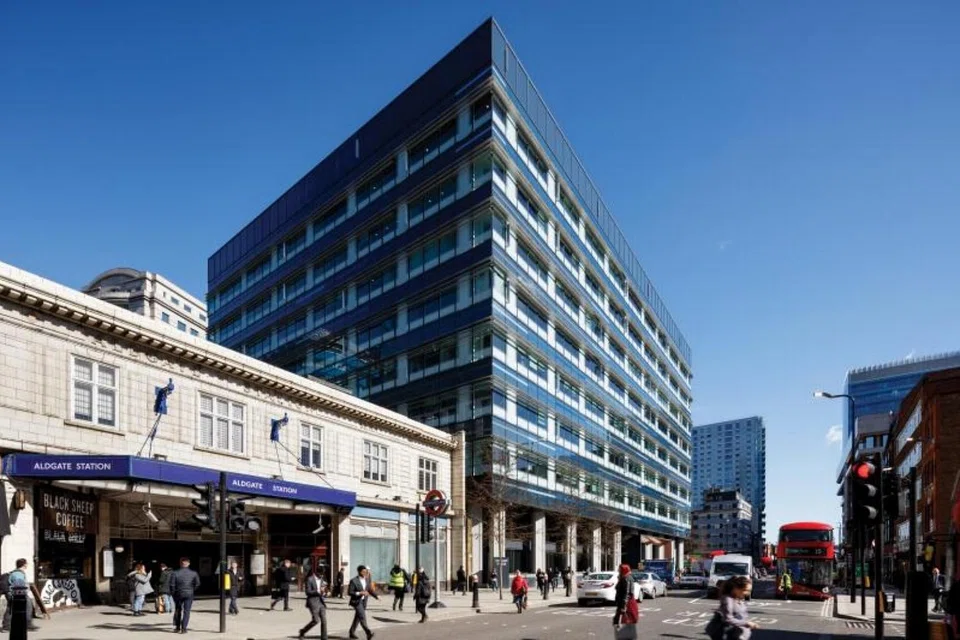
CDL has two predominantly office properties in London that could be injected into the UK Reit: 125 Old Broad Street and Aldgate House. These were acquired in 2018 for £385 million and £183 million, respectively.
The price at which CDL injects these assets into a Reit will be important. Shareholders will be looking for something more than the purchase price, with the company having held the properties for around three years, as a testament to the group's ability to recycle assets and grow its fund management business.
CDL currently has two other Singapore-listed trust vehicles in its stable: CDL Hospitality Trusts (CDLHT) and IReit Global. The latter's manager is jointly owned by CDL and French asset manager Tikehau Capital. A UK-focused office Reit would add positively to CDL's presence in the Singapore Reit space.
Monies freed up from divesting assets to the Reit can possibly be used to help the hotel business, which may take a long time to recover, or to pursue other opportunities.
Question of timing
Investors may wonder if the timing is right for the launch of an office Reit.
The iEdge S-Reit Index is down 1.0 per cent year to date, underperforming the Straits Times Index's gain of 10.6 per cent.
Signs of inflation in the United States have caused the 10-year US Treasury yield to spike. The 10-year Singapore government bond yield has also risen - to around 1.5 per cent in late May from 0.8 per cent a year ago.
A higher risk-free rate, as represented by long-dated government bond yields, would generally reduce investor demand for yield instruments such as Reits and increase the yield required by Reit investors.
Question of assets
Even so, a UK office Reit could benefit from improvement in sentiment in the London commercial property market. Activity in the leasing market is picking up amid the opening up of the United Kingdom.
More than a third of the country's population has been fully vaccinated. And since May 17, pubs and restaurants in the UK have opened for indoor service with some restrictions on numbers.
In the first quarter, Central London saw an increase in leasing transactions for the first time since the pandemic started - although at 1.3 million square feet, take-up was 56 per cent below the 10-year quarterly average, according to CBRE.
Adding HSBC's headquarters at 8 Canada Square in Canary Wharf would enhance the attractiveness of CDL's UK commercial Reit. An investor in this Reit would get exposure to assets in London's new financial hub of Canary Wharf as well as the traditional financial hub of the City, where 125 Old Broad Street is. The emerging submarket of Aldgate, meanwhile, has attracted occupiers from the technology, media and telecoms sector.
Critically, adding HSBC's headquarters will boost the scale of the Reit from an estimated £600 million to £1.8 billion (S$3.4 billion). That would make the new Reit larger than CDLHT and IReit, which have total assets of S$2.9 billion and 769 million euros (S$1.2 billion) as at end-2020, respectively.
Outlook for UK market
Elite Commercial Reit, which made its debut on the local bourse in February last year, has paved the way when it comes to UK-focused Reits.
It owns a £515 million portfolio of office assets, which are over 99 per cent leased to the UK government.
Elite is currently trading below its initial public offering price.
Investors may have concerns about the exposure to sterling, even though it is up around 4 per cent year-to-date versus the Singapore dollar.
And although the Reit could be the largest in CDL's stable, it is likely to still be dwarfed by Singapore office-centric Keppel Reit and Suntec Reit. These have total assets of S$7.8 billion and S$11.2 billion as at end-2020, respectively.
There are also some concerns about the health of the UK office property market.
According to CBRE, office availability in Central London continued to increase over Q1 to stand at 25.3 million square feet. The vacancy rate rose to 8.9 per cent.
Questions linger over the continued pre-eminence of London as an international business hub post-Brexit, and the impact to aggregate office space demand from the new hybrid model of office and remote working.
Nearer term, a flight to quality may see tenants seek accommodation in the new skyscrapers coming up in London. Many developers, including British Land, are betting on top rents for the best new buildings as tenants pay more for offices that suit their post-pandemic needs.
CDL's key task is to convince investors that the properties in the Reit are fit for purpose in meeting the needs of potential customers in a post-pandemic world.
If it succeeds, it may pave the way for more UK property Reits to list in Singapore. Peers such as Ho Bee Land, which has a sizeable London commercial portfolio, could follow in its tracks.
READ MORE:
TRENDING NOW

If Europe goes to war, the fallout will be felt in East Asia

Indonesia stocks suffer worst plunge in nearly 30 years as MSCI proposes standalone status

Markets can absorb current yields which are still ‘pretty normal’, says Franklin Templeton CEO

Vietnam’s race for growth tests pace of energy transition: experts

