Tiong Seng hopes to set new rules for construction processes
It's looking to use different tools, technology, materials to save time and manpower

Singapore
CONSTRUCTION group Tiong Seng is changing its procurement methods, working more closely with its subcontractors and experimenting with different building materials as it adjusts to changes in the industry environment.
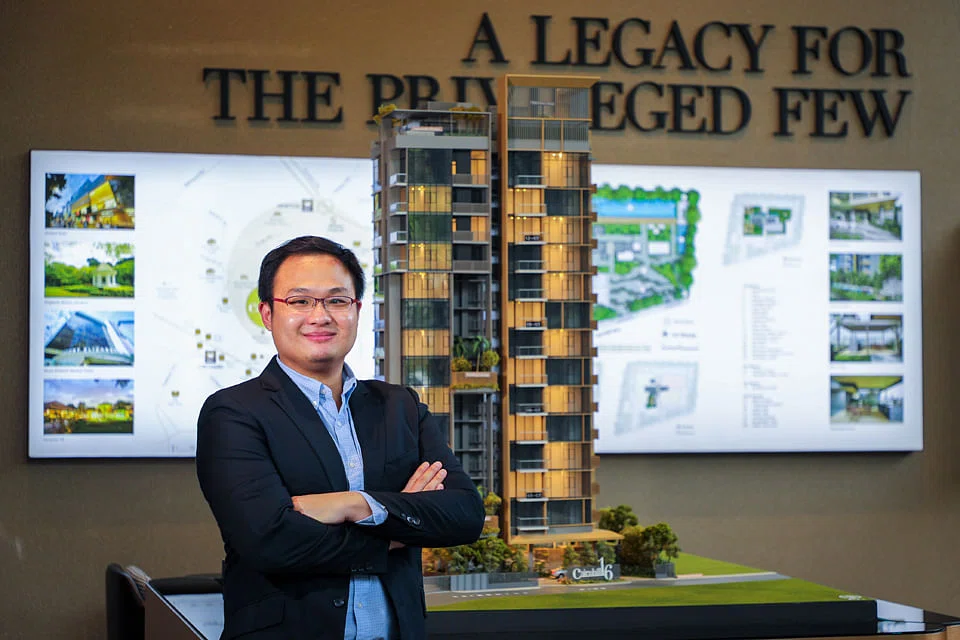
Pek Zhi Kai, who in July 2021 was appointed an executive director at the business built by his grandfather and father, said the company has stepped in to procure common materials required by subcontractors as it pursues greater savings from economies of scale.
Tiong Seng is also considering investments into some of its subcontractors, so that the company can bring those skills in-house and optimise operations at construction sites.
"As a main contractor, you have to now step in to understand your subcontractor, help your subcontractor and re-engineer that relationship. It's not as simple as calling them to the site and asking them to do things," Pek said.
Pek recalled a recent case in which he observed the output of a normally efficient subcontractor drop, because all his skilled workers had gone home during the pandemic. Tiong Seng therefore looked at how it could assist the subcontractor in training its general workers to take on more specialised work, and helped it source for more skilled labour from abroad.
To identify where subcontractors or other workers may be falling behind, Tiong Seng worked with field management software developer Novade to adopt data collection tools in its construction sites.
Pek said this particular digitalisation initiative was made possible thanks to the widespread adoption of smartphones among construction workers. Out of 500 workers the company surveyed before it started the initiative, only 6 did not have smartphones.
With their phones, supervisors can divide a construction site into different zones and monitor productivity by zone. Different variables can also be examined to see if a worker is slow due to site conditions or because of their skill levels. Problems can then be addressed more accurately.
"You have digital tools, but you must also match it with construction knowledge," he said. "When you mesh these two things together, I think you'll transform the site into a treasure trove of information that allows you to better understand and manage the people in the project."
Tiong Seng is also exploring different building tools and technologies for its projects. One example is the use of mass engineered timber at the new Nanyang Business School.
As timber is 40 per cent the weight of concrete, Pek estimates that the manpower required to build with the material is halved - fewer workers are needed to position the different timber pieces and build the projects.
Because the material is lighter, the foundations of the building can also be shallower and less soil compacting needs to be done. Workers need not paint the building either.
Although timber is 50 per cent more expensive, Pek expects the time and manpower savings will result in cost savings over the project's life cycle.
Building with timber is, however, more complex. Every piece that goes into a building needs to be meticulously planned with building information modelling (BIM) software because these pieces are delivered pre-packaged in the right sizes and the right cutouts. Designs need to be confirmed at least six months in advance, since the timber needs to be cut and shipped in from countries like Austria.
Pek said he has heard of cases in which contractors put up walls of the wrong size or in the wrong location, resulting in wastage of time and materials when the walls need to be demolished and rebuilt.
While such planning and attention to detail can also be applied to concrete buildings, Pek believes the limitations of timber could help force more industry players to see the benefits of starting with these processes first - creating a "revolution" in the way buildings are designed and built.
In particular, Pek believes developers need to bring contractors on board earlier in the design process so that contractors can have discussions with developers, architects and consultants to give advice on more efficient and cost-effective ways of constructing a development.
Work that used to be done sequentially can also be done concurrently to save time.
"If you want to talk about more efficient construction, you want to talk about construction that uses less labour and that is more advanced and productive, you need this kind of a system," he said.
Citing the attention that climate change conference COP26 received in November, he also sees the need for construction companies to be aware of their carbon footprint as they will likely face more scrutiny over their emissions and waste management practices in the future - factors that can be mitigated with early planning discussions.
Over time, he believes that even facilities management will participate more in the whole design process so as to ensure a building can be maintained sustainably after it has been built.
Pek said the industry is still feeling the squeeze from the pandemic, and that the restriction of movement across borders has taken a toll on workers.
"It's a partnership that perhaps the industry can take with authorities, to really look at how we address the manpower problem," he said. "Because if we cannot get past today, it's very difficult to talk about what we can do tomorrow."