

Tokenisation key to ‘next frontier’ of trade finance: StanChart’s Sofia Hammoucha
The ‘key priority’ is to solve, embrace, invest and deliver on the new technology, she says

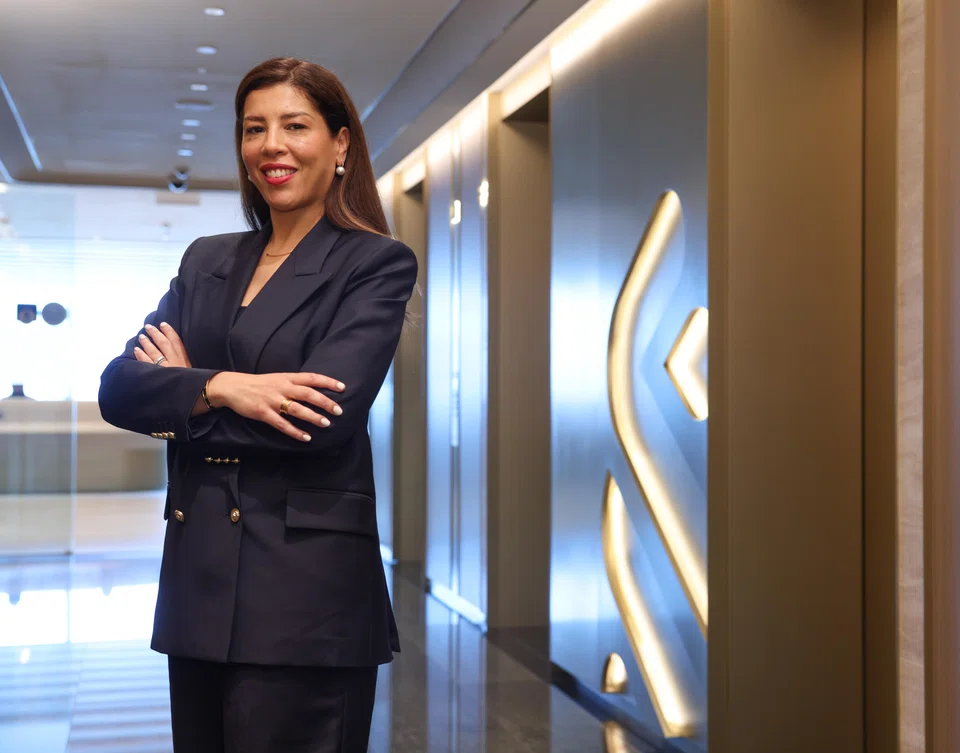
[SINGAPORE] Faster, safer and cheaper – these are the themes that Sofia Hammoucha, global head of trade and working capital at Standard Chartered, believes will “transform the way” trade finance is carried out.
One way this is happening is through digitalisation and the adoption of tools such as artificial intelligence (AI), which allow the financing of goods and services to be processed in parallel, potentially cutting turnaround times from days to minutes.
Typically, a letter of credit or bank guarantee for a shipment of goods can take “up to five days, at best” from the time a bank receives the application to when the beneficiary receives funds, owing to manual paperwork, legal documentation and compliance checks, noted Hammoucha.
A letter of credit is a bank’s written undertaking to pay a seller on behalf of a buyer once agreed shipping documents are presented. It is commonly used in cross-border trade to reduce the risk that either party fails to meet its obligations.
With digitalisation and AI, much of this work can now be completed “within the day, if not in minutes”, allowing clients to access cash flow more quickly.
“You can leverage the value of your cargo multiple times, and you fast track your prepayments and your delivery, and you can accelerate your working capital,” said Hammoucha. “It’s really around those themes of faster, safer, cheaper that are the core themes that’s going to transform the way we do (trade finance).”
Beyond leveraging existing technologies, her role is also to find ways to apply and scale newer technologies across the bank’s offerings. “A big part of my role – actually my mandate – is to develop new solutions,” she said. “What is the next frontier of trade finance?”
To that end, tokenisation – the process of converting rights to an asset, such as trade receivables or invoices, into digital tokens on a distributed ledger – is an important piece of the “next frontier” puzzle, she added.
Here are excerpts from her conversation with The Business Times:
How did you end up in your role?
Both my parents were bankers. I grew up in Morocco, lived in France for a long time, and moved to Singapore over 15 years ago.
At university, I became interested in the fundamentals of the economy, and how capital and goods move across the globe. That was what got me hooked, and I ended up in trade finance because of an internship at the end of my studies.
Honestly, a banking career was not planned at all. But I stayed because I saw the impact it could make. I am fundamentally someone who is motivated by change and impact.
As an anecdote, my first day at my first bank, BNP Paribas, was exactly the day BNP and Paribas merged. I saw the two teams coming into the office and meeting each other for the first time.
It was interesting to see how you navigate a fundamental change in culture, how you bring cultures together, and how much leadership and management can make a difference in making it work.
That was also my first real touch point in understanding what distinguishes a good leader from a less effective one, and what that looks like.
I moved quite a lot during the 22 years of my career with BNP Paribas, working in different countries in Europe before moving to Singapore with them over 15 years ago.
Then Covid-19 came and, like many people, the question was: What next? I had been at my bank for 22 years at that point, and it had helped me advance my career.
The choice was whether to go back to Europe or stay in Singapore. As a family, we wanted to stay in Singapore. While I was thinking it through, I received a call from StanChart to join them in 2022.
What is a key trend that you see in your area?
If I were to package that into one idea, it is really about how we ensure that what we are doing in resilience and innovation, as a community working together, comes together at the same time.
We need to tackle resilience while embracing innovation and delivering on it. One key theme we are very focused on is tokenisation.
For me, that is the key priority. We need to solve for it, embrace it, invest in it and deliver on it. We have done a lot of that in Singapore.
A recent precursor was the Project Guardian sandbox we undertook with the Monetary Authority of Singapore for tokenised credit finance instruments. We are now looking at the commercial viability of that use case.
In terms of benefits to clients, I would say cheaper, faster and more accessible financing. For our clients, it provides another tool in the toolbox to obtain financing in a different way and, hopefully, in a way that is cheaper and safer.
How do these affect your role?
Tokenisation is nascent, but it is clearly something that is happening.
What has evolved in my role, beyond leading the franchise, is ensuring that we spend enough time bringing the ecosystem together.
We spend a lot of time working with banks, non-banks, regulators, industry bodies and clients to align on shared principles and frameworks.
We have all worked on sandboxes and proof of concepts, but the crux of it is this: How do we build something at scale? How do we scale this beyond one use case, one client or one market?
We can only do that if we operate on shared principles and frameworks. What StanChart wants to do is advocate for and lead wider adoption of shared principles, so we can move much faster from sandbox to scale.
That is an important focus area for me and my leadership team.
TRENDING NOW

Once staunchly pro-China, Malaysian Chinese businesses are now distancing themselves from Beijing

Looking beyond looming CEO succession, should UOB potentially pursue a transformative merger?

Could stablecoins be the future of money?

Grab CEO’s wife Chloe Tong on life with Anthony Tan and finding her purpose

