

Tokyo shares plunge at close on profit-taking
 Add BT as a preferred source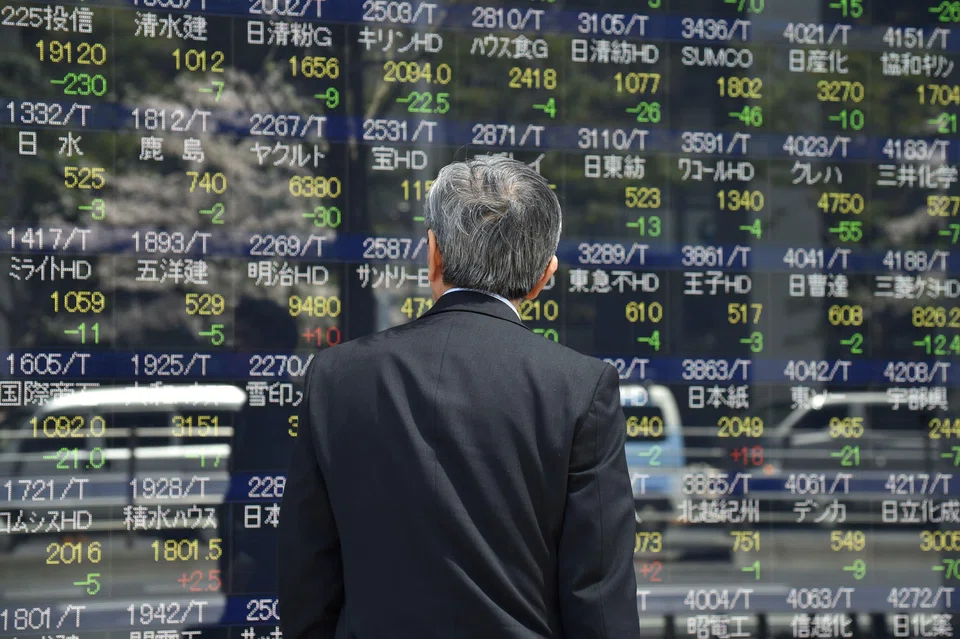
DeeperDive is a beta AI feature. Refer to full articles for the facts.
TOKYO shares fell across the board on Wednesday (May 31) as investors locked in profit after recent gains, while also monitoring the risk of a US debt default.
The benchmark Nikkei index lost 1.41 per cent, or 440.28 points, to close at 30,887.88, while the broader Topix index fell 1.32 per cent, or 28.59 points, to 2,130.63.
Japanese stocks were down throughout the day as investors locked in profits following recent three-decade highs for the Nikkei.
“A wide range of shares came under profit-taking pressure” following four straight winning sessions after steady gains seen throughout May, IwaiCosmo Securities said.
Market players were also cautious ahead of a congressional vote in Washington on a deal to raise the US debt ceiling, the brokerage said.
The yen’s relative strength and weaker-than-expected Japanese machinery orders data also brought down share prices, it said.

Navigate Asia in
a new global order
Get the insights delivered to your inbox.
Fresh Chinese data pointing to slowing manufacturing activity weighed on regional markets, Daiwa Securities said
Nintendo fell 0.90 per cent to 5,936 yen. Fast Retailing, which operates the Uniqlo brand, lost 1.89 per cent to 32,680 yen. Toyota fell 1.62 per cent to 1,908.5 yen.
Advantest, which makes tests for semiconductors, gave up 1.00 per cent to 17,910 yen. Tokyo Electron, a builder of tools to make semiconductors, fell 2.00 per cent to 19,315 yen. AFP
Decoding Asia newsletter: your guide to navigating Asia in a new global order. Sign up here to get Decoding Asia newsletter. Delivered to your inbox. Free.
Share with us your feedback on BT's products and services
TRENDING NOW

Air India asks Tata, Singapore Airlines for funds after US$2.4 billion loss

‘Boring’ is the new black: The stars are aligning for a Singapore stock market revival

From 1MDB to ‘corporate mafia’: Is Malaysia facing a new governance test?

South-east Asian markets account for 8.8% of global capital inflows from 2021 to 2024: report

