

Too early to bet against Singapore amid wave of casino openings in Asia: analysts

Uma Devi
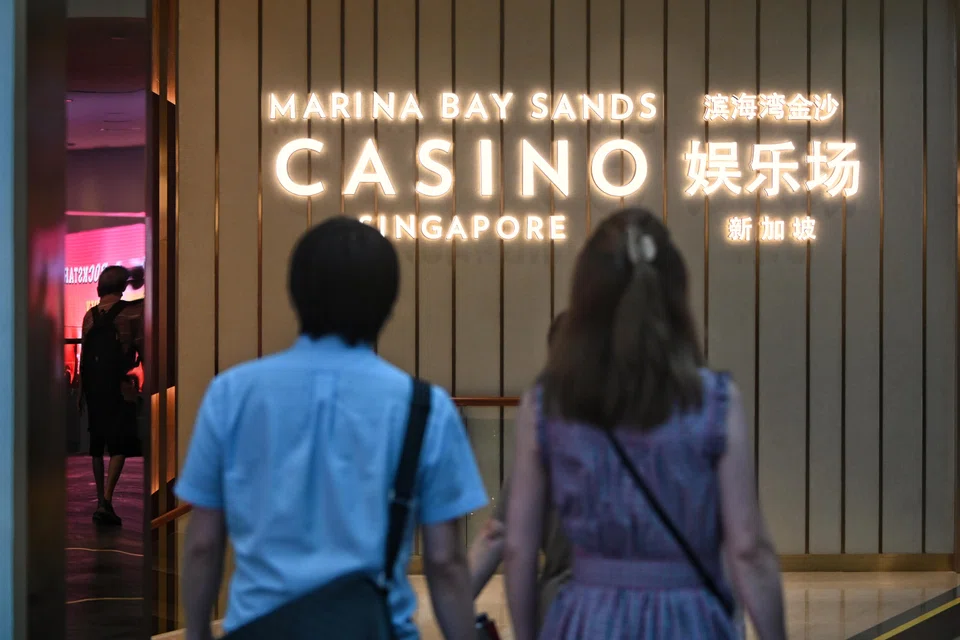
SINGAPORE’S integrated resorts (IRs) could struggle to keep their market share as competition intensifies with the opening of new casinos in the region.
But industry watchers say that it could be too early to bet against the city-state – at least for now.
This comes amid a boom in Asia’s casino industry, with Japan and Thailand recently announcing plans to legalise casino gambling and build casinos in an attempt to boost domestic and international tourist spending.
Japan in April said that the country’s first gambling resort will open in the western city of Osaka in 2029. It was reported that the resort would cost about 1.1 trillion yen (S$7.8 billion), with targeted annual revenue of 520 billion yen.
Casinos were illegal in Japan until an integrated resort law was passed in July 2018 that outlined basic requirements for Japan’s IR and casino operations as well as measures against problem gaming.
In Thailand, it was reported that the government is mulling the legalisation of casinos in the country, with the construction of an entertainment complex that will feature a casino.
Market watchers polled by The Business Times said that Singapore’s IRs could take a hit from these new openings.
Maybank Investment Banking Group analyst Samuel Yin said that Japanese IRs will likely not have a material impact on the Singaporean IRs as their target markets are “not similar”.
“Japanese IRs will target Japanese, Koreans and northern Chinese. Singaporean IRs have always targeted Asean residents and southern Chinese instead,” he pointed out.
“I would be more worried about Thai IRs. Thailand is especially popular with the Chinese, both northern and southern,” he noted, adding that prior to the Covid-19 pandemic, Thailand welcomed more Chinese visitors than Singapore and Malaysia combined.
These new casino establishments mean the Asia-Pacific casinos and gaming sector is forecast to grow at a compounded annual growth rate of 3.2 per cent for the period of 2022 to 2027, said Divya Dubey, project manager at GlobalData.
Prior to these developments, Singapore had earned a name for itself as one of the region’s top gambling spots, with two casinos – one at Marina Bay Sands (MBS) and the other at Resorts World Sentosa (RWS).
The only other country in the region that could give the city-state a run for its money was Macau, which is widely known as the “Asian Las Vegas”.
Data gathering platform Statista indicated that revenue from gaming and gambling in Macau exceeded US$29 billion in 2019, more than treble the annual gambling revenue in Las Vegas of about US$8 billion.
“The appetite for gambling in the Asia-Pacific region has always been astonishing. Singapore and Macau come immediately to mind when you think of the most amazing casino experience in Asia,” said GlobalData’s Dubey.
With new casinos opening up in countries such as Japan and Thailand, she reckons “the focus is likely to shift to these countries”. But, it is uncertain if these new casinos will be able to compete with the more established ones in Singapore and Macau, she added.
Some analysts also noted a difference in the types of customers that these casinos will attract.
Maybank’s Yin said that competition could intensify in the “VIP market” with more supply and less demand from Chinese VIPs.
“Chinese VIPs are now outright banned from gambling overseas. That said, the mass market will likely expand further as new jurisdictions like Japan will likely cater to their own residents,” he noted.
On the mass market front, he added that Singapore and Philippines’ mass markets are showing a “resurgence” due to wealth creation.
Meanwhile, the mass market in Malaysia still has room to recover as tourist arrivals are still not back to pre-Covid levels.
GlobalData’s Dubey said that the majority of the casino customers in Singapore historically have been international visitors, including high net worth individuals (HNWIs). She expects Singapore to receive more HNWIs and international visitors.
Macau, according to her, is following a “Las Vegas-like business model” – providing a resort-like experience with fine dining, live shows and family entertainment, instead of just an environment centred on gambling.
The booming Chinese middle-class are now spending more money on travel and a more “wholesome experience”, said Dubey, adding that Macau could benefit from this.
“Key casino players in Macau are focusing on replacing high-class rich players with middle-class families by opening new malls and arranging lavish shows,” she said.
But others believe that the situation is still fluid, and it could be too early to determine the impact on incumbent casino operators and countries.
Jennifer Song, senior equity analyst at Morningstar, said that the size of new casinos in Japan and Thailand could be “much smaller” than those in Macau and the US. She also noted that it “takes years to build up the integrated resorts” and develop its client base.
“In the meantime, both MBS and Genting are developing their phase two projects (in Singapore) , which will help to defend their market share,” she felt. She added that the client base of Singapore casinos is a mix of local residents, and tourists from South-east Asia and China as the casinos “offer the convenience for adjacent countries”.
Meanwhile, Maybank’s Yin pointed out that hotel room rates in Singapore are currently “too high by historical standards”. He added: “This impedes the growth of foreign-sourced mass market. There should be more hotel supply to bring down hotel room rates. This will boost not just Singaporean gaming but tourism overall.”
Maybank’s top picks in the casino space are Bloomberry as a Philippine consumer play, Genting Singapore as a stock that could benefit from China’s reopening, and Genting Malaysia.
TRENDING NOW

First Resources blames El Nino, outside fires for Kalimantan hotspots amid haze scrutiny

High Court rules against Julius Baer’s Singapore trust arm in US$50 million family trust dispute

Singapore key exports jump by higher-than-expected 68.4% in September, led by non-electronics

MSCI proposes downgrading Indonesia to standalone market status

