
Top Glove’s ‘negative’ emissions come under fire; issue underscores minefield in emissions reporting

Top Glove says it’s ‘restudying’ its carbon emissions calculations

Wong Pei Ting
Wong Pei Ting

Published Wed, Jul 6, 2022 · 03:47 PM
    • Top Glove, which is on the Dow Jones Sustainability Index for emerging markets, was one of 53 "industry movers" featured in S&P Global's sustainability yearbook 2022.
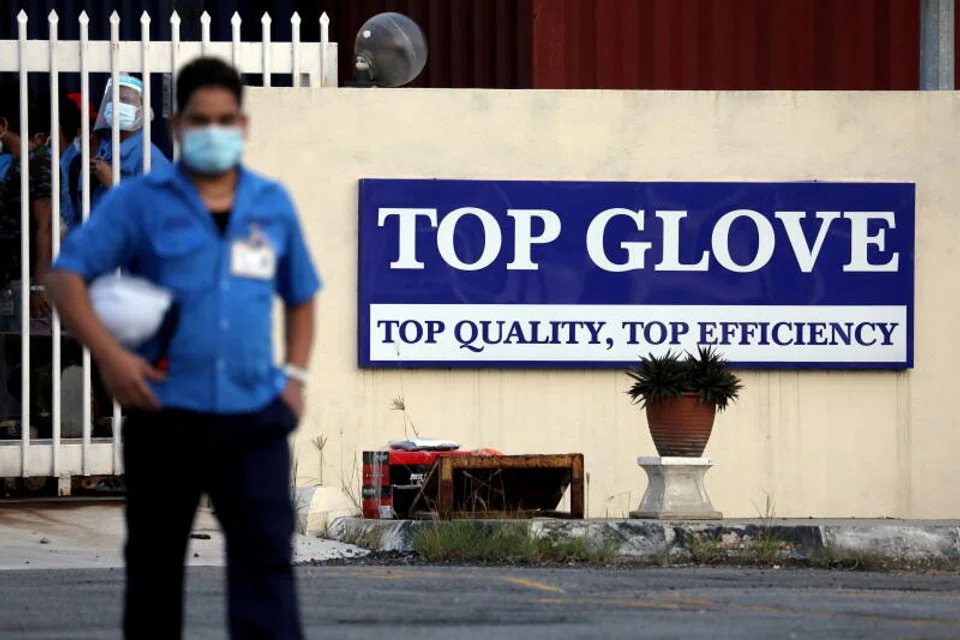
    • Top Glove, which is on the Dow Jones Sustainability Index for emerging markets, was one of 53 "industry movers" featured in S&P Global's sustainability yearbook 2022. PHOTO: REUTERS

    RUBBER glove giant Top Glove - which made its debut on S&P Global’s sustainability yearbook this year - reported a negative figure for total scope 3 emissions in its last financial year, as the company included avoided emissions from recycling.

    But the practice has been flagged as among the “most outrageous” errors found in the climate disclosures of listed companies in Singapore and Malaysia, and demonstrates the significant technical challenges that emissions reporting poses to companies and investors alike.

    In a presentation to The Business Times, Max Lee, chief executive officer of Malaysian climate tech startup Pantas, said companies are not supposed to claim negative emissions from recycling.


    “Recycling creates emissions. If anything, it should be positive, not negative,” Lee added.

    He referenced the Greenhouse Gas (GHG) Protocol’s technical guidance for calculating scope 3 emissions, which states that any claims of avoided emissions associated with recycling should not be included in, or deducted from, the scope 3 inventory. It “may instead be reported separately from scope 1, scope 2 and scope 3 emissions”, the guide noted.

    By definition, Scope 1 emissions are from direct, controlled sources, Scope 2 emissions are from purchased energy consumption, while Scope 3 emissions are indirect emissions, often by suppliers or partners.

    Lee declined to name any companies in his presentation, which covered several other errors committed by companies in both Singapore and Malaysia. But checks by BT revealed Top Glove as one of the offenders.

    Top Glove, which is dual-listed in Malaysia and Singapore, also committed 2 out of 3 other errors flagged by Pantas.

    The first is on the inclusion of the combustion of biomass under scope 1. The GHG Protocol, which supplies the world’s most widely used GHG accounting standards, states that direct carbon dioxide emissions from the combustion of biomass, which may include wood, shall not be included in scope 1, but reported separately.

    The second is on manufacturers’ exclusion of emissions from company-owned or controlled vehicles under scope 1. GHG Protocol had listed the transportation of materials, products, waste and employees as a type of activity that should be covered under the scope.

    Top Glove included 715,322 tonnes of carbon dioxide equivalent emissions from biomass combustion, but it did not account for transportation under scope 1.

    The company used its scope 1 figure in the calculation of the carbon intensity of its gloves, to report 0.0278 tonnes of emissions for every 1,000 pieces.

    In response to BT’s queries, Top Glove said it is presently “restudying” its carbon emissions calculations to ensure alignment with GHG Protocol’s scopes 1 and 2 requirements.

    As for scope 3, the company admitted that last FY’s disclosure of -2,495 tonnes “did not fully meet” GHG Protocol reporting and Task Force on Climate Related Financial Disclosures (TCFD) standards, but urged understanding that it came out of a “maiden effort”.

    The disclosure was part of its “first step towards making voluntary disclosures”, and covered 2 out of the 15 scope 3 categories listed by GHG Protocol – scheduled waste and business travel – it said. 

    “The company is committed to continue improving its reporting,” it added, noting that it will cover waste generated in operations, business travel and employee commute under scope 3 in its next annual report.

    Top Glove stressed that it “has been reporting its carbon emissions in line with requirements as well as best practices in sustainability”, while highlighting its aim to submit its net zero carbon target to the Science Based Target initiative by FY2024.

    “As the world’s largest glove manufacturer, Top Glove is mindful of its responsibilities as a corporate citizen and remains fully committed to continual learning and improvement in its sustainability practices,” it reiterated.

    In any case, Top Glove’s omissions in its emissions reporting have so far had little impact on its standing.

    Top Glove made headlines last year when it was removed from 3 indices based on environmental, social and governance (ESG) factors following the FTSE4Good Index semi annual review.

    But the removal pre-dated the company’s issuance of its latest integrated annual report, and analysts had at the time speculated that Top Glove had been dropped after authorities in the United States said they had discovered forced labour practices in the company’s production of gloves.

    Meanwhile, Top Glove remains listed as a component stock of S&P’s Dow Jones Sustainability Index for emerging markets.

    Asked how Top Glove and the index’s other constituents were selected, S&P Global told BT the process is based on the companies’ S&P Global ESG score as well as industry classifications resulting from its annual corporate sustainability assessment.

    If a company does not disclose numbers associated with scope 3 components material to it, the company will receive a score of zero out of 100 for the corresponding question score, it said, adding that its standards for scope 3 emissions reporting are “fully aligned” with the GHG Protocol.

    The complexity of emissions reporting may, however, make it difficult for investors to keep track of companies’ claims.

    Pantas, an electronic invoicing company, is working on a carbon accounting software in partnership with Universiti Kebangsaan Malaysia to help companies calculate, monitor and disclose their emissions.

    Lee believes companies that desire access to green investment, including low carbon exchange-traded funds and climate funds, should be more thorough in their emissions reporting, and not just report numbers relating to their scope 1 and 2 emissions: “If they want money from investors that are looking for low carbon, they shouldn’t just do 2 lines and say, ‘We are low carbon because these are the 2 numbers.’”


