StarHub's new chief expects enterprise services to drive growth
Consumer segment is also turning around, says Nikhil Eapen.

Singapore
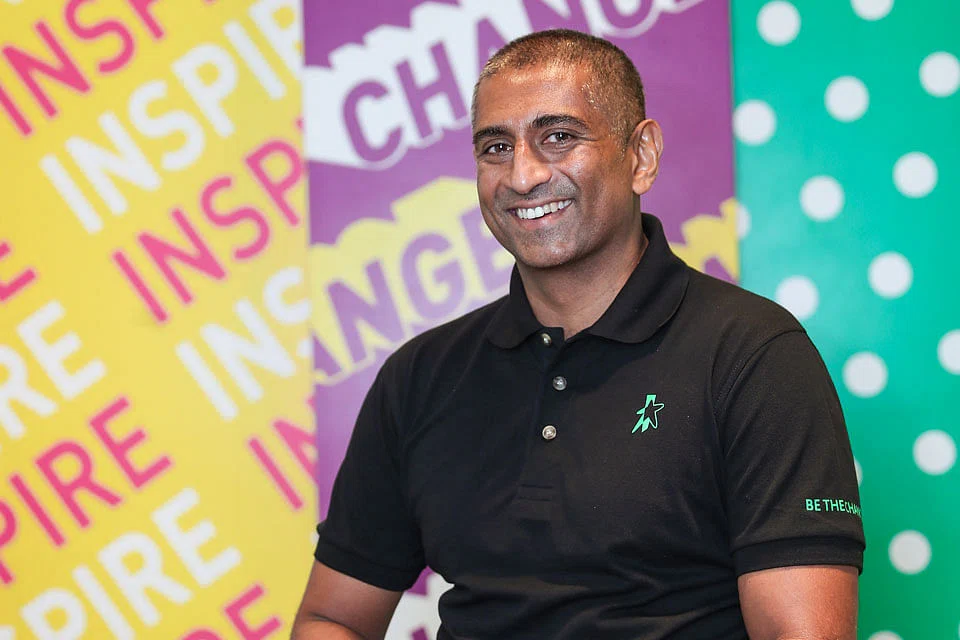
ENTERPRISE services are expected to drive growth at mainboard-listed telco StarHub, even amid an overhaul of the consumer segment, as chief executive Nikhil Eapen looks set to accelerate an ongoing business pivot.
"We really have this fundamental belief that cloud, security and 5G Internet of Things (IoT) are converging. . . around economic buyer behaviour and use cases," Mr Eapen, who joined from parent ST Telemedia in January, told The Business Times.
In the most recent half-year to June 30, revenue from enterprise services - that is, network solutions, cybersecurity, and infocomm technology (ICT) services - hit S$333.6 million for a year-on-year (y-o-y) gain of 12.9 per cent. The mobile business posted a 15.4 per cent decline in revenue to S$259.8 million.
"Just by law of numbers, it will get larger," Mr Eapen said, when asked whether enterprise will keep outstripping consumer contributions.
Indicating his plans for mergers and acquisitions (M&A), he added: "We want to bolster the cyber business, we want to bolster the ICT business. We want to make them both more 'cloudy' so there's an element of scale, footprint, but also capability."
Opportunity from new technology
Mr Eapen's push into the cloud should be no surprise given his background as president of the infrastructure technology group at ST Telemedia, which is known for an investment portfolio focus on cloud services startups.
At the same time, StarHub's emphasis on cloud products for the enterprise customer is coming just as the enterprise IT products segment is ripe for change. The introduction of the new 5G standard is expected to shake up the entire telecoms industry, creating new use cases and anointing new product leaders.
StarHub is currently staring at sliding contributions from its legacy network solutions business because customers no longer spend as much as they used to on voice, data and Internet access. But Mr Eapen thinks there is opportunity in the impending shake-up to grow the company's managed services arm, which encompasses analytics, cloud, ICT solutions and facilities management.
He envisions "core network-centric 5G solutions and propositions" for enterprise. In fact, he stressed that his "first-order priorities" for 5G use cases involve remote facilities and device management, digital workspaces and IoT platforms - and not necessarily the heavy industry applications, such as factory automation, that are often cited by telcos.
"Our ambition around the enterprise business is again very significant. We want to tap these growth tailwinds, and so far so good," he added.
Taking all enterprise business segments together, "the blended growth rate is (about) 25 per cent over last year and our ambition is to perpetuate that growth rate, even increase it".
Part of that growth is intended to be regional, and Mr Eapen - who used to work in investment banking - has made no secret of an appetite for M&A deals.
StarHub's top line was buoyed by the acquisition of Malaysia-based ICT service provider Strateq under predecessor Peter Kaliaropoulos. Now, Mr Eapen has promised that StarHub will do "more in cyber. . . more in ICT".
At the same time, he said, StarHub will "stay regional" with enterprise deals; that is, within Asean - especially bigger economies such as Malaysia, Indonesia and Thailand. In contrast, local telco juggernaut Singtel's NCS enterprise arm has picked Singapore, Australia and Greater China as its core markets.
Credit ratings agencies have griped about telcos' debt loads in the face of falling profits. But Mr Eapen said there should be no need for either debt or equity fund-raising as StarHub's ratio of net debt to earnings before interest, taxes, depreciation and amortisation has come down to 1.25 times as of end-June 2021, from 1.64 times in mid-2019.
He noted that StarHub's three-year "Dare" transformation, which concludes in October, will achieve cost savings of S$273 million - better than an initial target of S$210 million - and has brought down operating costs.
"Our target is going to be no less ambitious for 'Dare+'," he said, referring to the next stage of transformation, set to run until 2026. "Organically you're not going to see much need for us to use capital or to increase our leverage, which essentially means that all of that leverage is available for M&A - but M&A executed in a prudent, cautious and measured manner."
Mr Eapen told BT that Dare+ will boast greater digital engagement as well.
Consumer turnaround
While the original Dare "came out of a desire to fundamentally realign our cost model, moving from fixed cost to variable cost", he described its successor as having "a much more ambitious direction - so what we really want to be is a digital marketplace for connectivity-centric product".
On that front, he pointed to a continuing revamp of the consumer segment that builds on Mr Kaliaropoulos' rejection of the traditional fixed-cost pay-television business model.
StarHub recently made a significant change to how it segments its revenue, with an "entertainment" segment replacing pure "pay TV". Entertainment includes both traditional pay TV and over-the-top (OTT) subscribers, and may eventually include gaming.
With this new segmentation, entertainment subscriptions rose to 388,000 as at end-June - from 334,000 the year before - as an increase in mobile and broadband subscribers with OTT offset the 8.8 per cent y-o-y decline in pay-TV subscribers.
Meanwhile, entertainment average revenue per user (ARPU) rose to S$41 for the six months from S$39 before. StarHub attributed this to higher prices for bundled plans.
Performance at StarHub's broadband segment is also improving. Residential broadband lines slipped by 2.5 per cent to 489,000 as of mid-2021, but ARPU rose to S$32 a month - from S$28 the year before - on the absence of year-ago discounts.
And while depressed mobile postpaid ARPUs and declining pay-TV subscriptions have bled the consumer segment in recent years, Mr Eapen was upbeat on a looming turnaround.
Consumer mobile, which has suffered from stiff competition in the 4G market, is now growing, Mr Eapen said, as StarHub is "driving more consumption with a richer product range. . . and doing it off a digital platform".
Postpaid mobile ARPUs have stabilised at S$28 a month with monthly churn of 0.9 per cent, according to StarHub's latest financial statements.
Said Mr Eapen: "We are starting to drive good growth across every one of our consumer segments, and that will continue."