Trans-cab calls off IPO a second time amid virus outbreak

Angela Tan
Singapore
FIRST, it was a prick from a poison letter. This time round it's a Made-in-China virus threatening to send global stock markets into a tailspin.
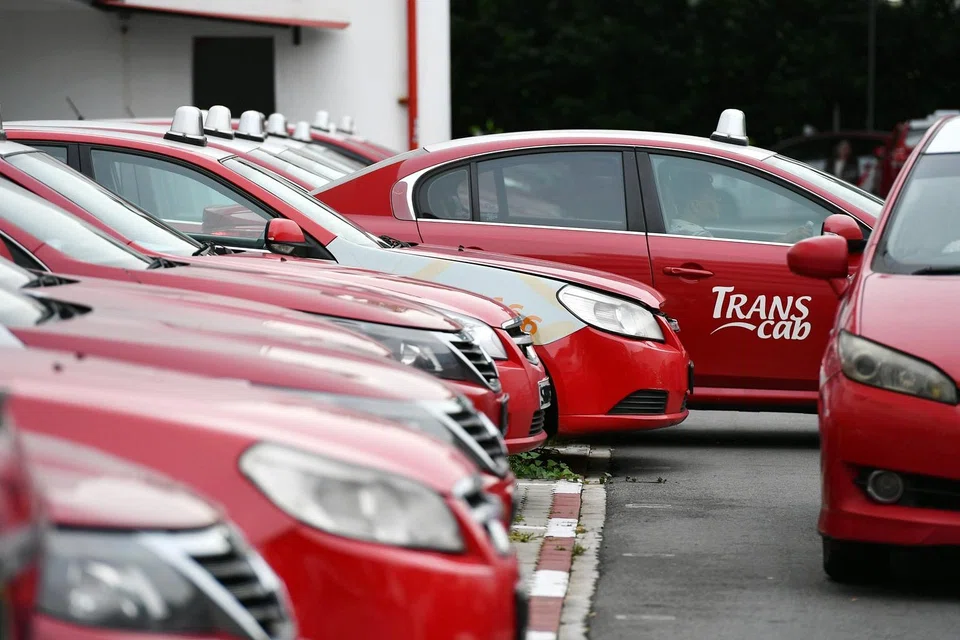
On Wednesday, Singapore's second largest taxi operator by fleet size, Trans-cab Holdings, was forced to postpone its second attempt to list on the Singapore Exchange (SGX), citing bad market conditions.
In a reply to queries from The Business Times, the taxi operator said: "As a result of the Wuhan virus, the company has been advised by its advisors to take the prudent approach to let markets settle down before reassessing the situation."
Road shows and meetings related to the initial public offer (IPO) have been cancelled till further notice.
Trans-cab aborted its first IPO plans in 2014 following the receipt of a "poison pen" letter questioning the outstanding insurance premiums the company owed. That was not flagged in the prospectus and the purported amount was later said to be untrue by a senior manager at its insurer, First Capital Insurance. At that time, Trans-cab made a global offering of 168 million shares at 68 Singapore cents each.
Sources said the company was seeking a valuation of as much as S$200 million in the second attempt, more than half what it had sought in 2014.
The latest attempt to list comes as Singapore gets ready to license ride-hailing operators like Grab and Gojek from June 2020, when new standards, rules and regulations will be imposed on operators.
According to its preliminary prospectus, Trans-cab - which has grown its taxi fleet size from 50 taxis in January 2004 to 3,098 taxis as at June 30, 2019 - is looking to grow its operations, including expanding into the leasing services and hire-purchase financing sectors. It was also pursuing growth through acquisitions, joint ventures and/or strategic alliances.
Trans-cab's reassessment comes at a time when markets globally are being spooked by the outbreak of the coronavirus which started in Wuhan, China and has since spread to 18 countries globally. The company had filed its preliminary prospectus in December and was expected to officially lodge its prospectus to list on the Catalist Board of the SGX - if not for the turn in the market sentiment.
"The uncertainty over the Wuhan virus is causing a lot of nervousness. The fear is the situation is far worse than what is being reported and that the worst is yet to come,'' said one broker.
Many analysts are comparing the Wuhan virus to other coronaviruses, including the Severe Acute Respiratory Syndrome (SARS) and the Middle East respiratory syndrome (MERS). SARS killed 774 people out of a total of 8,096 infected in 17 countries following its initial outbreak in southern China in 2002, while the 2012 MERS outbreak killed 858 people out of the 2,494 infected.
"In the case of the Wuhan virus, the number of cases has already reached more than six thousand after a matter of weeks, compared to SARS which hit 8,000 after nine months," explained another broker.
The Johns Hopkins Center for Systems Science and Engineering, which has built a regularly updated online dashboard for tracking the spread of the Wuhan virus, showed more than six thousand cases have been confirmed, of which 5,970 are in mainland China and the rest scattered all over the world.
Goh Tee Leng, a portfolio manager of a value-focused investment fund based in Singapore, shared that during the SARS outbreak, Singapore's key index lost 6.6 per cent from Mar 3, 2003 to April 25, 2003. Discretionary stocks, followed by financial stocks, led the decline, while communication stocks bucked the trend. The index later bounced 23.8 per cent when fears subsided from April 25, 2003 to Jun 25, 2003, led by technology, financial and discretionary stocks.
Mr Goh said that "...one thing for certain is that within a span of two months (stabilisation plus risk declining phase) the recovery of the index was close to or far greater than the decline in performance during the six months (risk rising phase)''.
The benchmark Straits Times Index (STI) traded in a range of 3,172.66 to 3,193.84, before closing at 3,182.57, up 1.32 points, or 0.04 per cent on Wednesday, having fallen nearly 2 per cent the previous day.
On Tuesday, governance advocate Mak Yuen Teen, an Associate Professor of Accounting at the NUS Business School, raised concerns over the appointment of Danny Lim, a partner at law firm, Rajah & Tann Singapore LLP, on Trans-cab's board.
"As the sponsor and issue manager, shouldn't UOB Bank have advised the company to undertake a proper search for independent directors rather than appoint a partner from its own solicitors?
Prof Mak also noted that Mr Lim will be serving on the boards of six listed companies, including holding chairman and lead independent director roles.
"Doesn't the sponsor also have concerns about his ability to commit time, especially given his day job as a partner in a major law firm?" asked the professor, who feels Mr Lim should have turned down the Trans-cab appointment.