

Trans-China Automotive remains optimistic about China’s car market despite zero-Covid policy

Sharon See
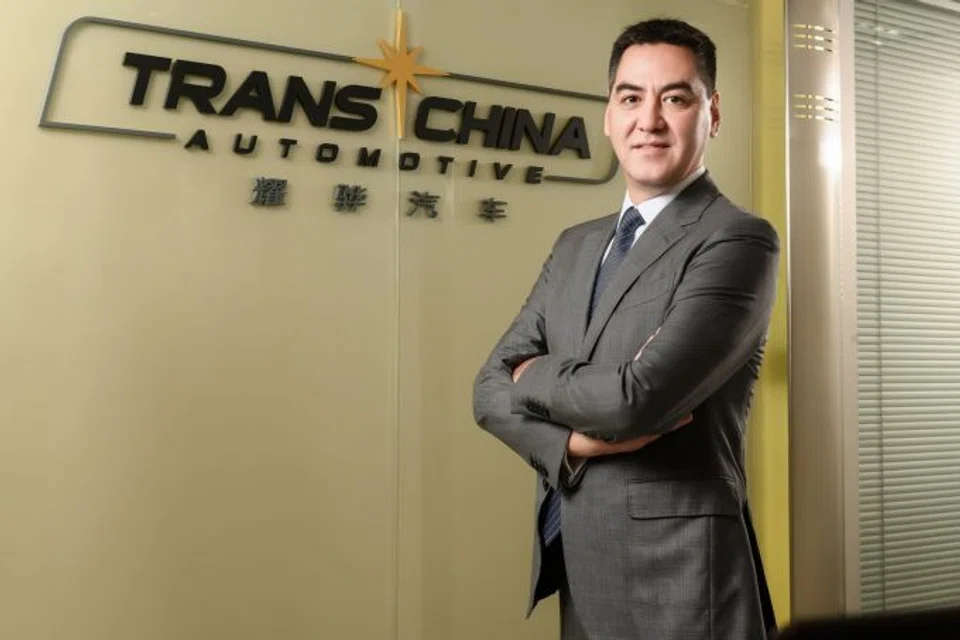
CHINESE premium car dealer Trans-China Automotive (TCA), which made its debut on the Catalist board 8 months ago, remains bullish about its prospects in the mainland despite China’s strict zero-Covid policy, and has no immediate plans to expand elsewhere.
Speaking to The Business Times from Shenzhen, TCA executive chairman Francis Tjia said car ownership rates in China are about a quarter of that in North America and Western Europe.
As the middle class continues to expand with the growing Chinese economy, he believes people will be buying cars in a “very similar fashion” to other developed economies.
“Premium products are aspirational,” said Tjia. “You’ll see a lot of households, when they already own a car or two, the next time they actually shop around for a new car as a replacement, a lot of people will think, now I’m driving, say, a Volkswagen, next time, I’d love to drive an Audi or BMW or Mercedes or Lexus.”
The group, which is headquartered in Shenzhen and Hong Kong, operates 9 dealerships across China, and represents the BMW, McLaren and Genesis brands.
Tjia noted that the market for luxury cars, typically retailing at 300,000 yuan (S$62,297) or higher, has outgrown the overall market over the last 11 years or so, even though there has been a “tiny hiccup” this year.
“We strategically focus on the more wealthy area, so that’s why the Greater Bay Area in southern Guangdong province is one of our core areas because it’s just a lot wealthier,” he said, referring to the area that consists of 9 megacities as well as Hong Kong and Macau.
Last year, as the Covid-19 situation eased in China, TCA became a “beneficiary” of revenge spending, Tjia said. This was reflected in the company’s earnings for financial year 2021, which saw a record net profit of 124 million yuan, a 12.8 per cent improvement from the previous year.
“It’s the kind of year that if you had opened up another store or acquired another store, you would have been a very strong beneficiary of that kind of environment,” he said. “And the kind of demand that we had last year was so strong. The way it manifested itself is in very good traffic to our showrooms and very strong margins, so in that sense, we were a beneficiary.”
But this year presents a different picture with the arrival of the Omicron variant, which has triggered a seemingly endless cycle of lockdowns in multiple Chinese cities.
In the first quarter ended Mar 31, total revenue slid 15.7 per cent to 1.09 billion yuan, not only because of Covid-19 but supply shortages as well as the “softening economy”, according to a May 6 business update.
Asked about TCA’s prospects amid China’s unrelenting zero-Covid policy, Tjia is candid about the policy’s highly disruptive impact to businesses and households as well as the downside risks it poses to his business.
“Without question, the current outbreaks that we’ve had in China create very strong negative consumer sentiment,” he said. “When you lock down a big area, it’s very natural that people, from a psychological perspective, become much more pessimistic, and it is difficult.”
Still, he credits the local governments for their effort in supporting the economy and maintaining a sense of normalcy, even as they take cues from directives set out by the central government.
Concerns over the pandemic have also evolved over the last 2 years, he noted, adding: “Now, I don’t think there’s a real worry about Covid-19 itself, it’s more a worry about getting locked down.”
The company has taken steps to plan around the risk of lockdowns, for example, by having split-team operations.
Even when business is slow, Tjia said the company is putting in a lot more effort on marketing and customer outreach, “rather than holding back”. This includes inviting customers in to get their cars maintained, having more touchpoints and doing more events.
“That is the focus, to counter this kind of negative sentiment where people are more cautious about making a big financial commitment,” Tjia said.
Meanwhile, global inflation and supply chain disruptions have not had as adverse an impact on TCA and may instead have helped to spur business.
“When they come into our store to buy a car, normally they’re quite price-focused. But if they know they may need to wait for a month or 2 months, actually their focus changes to ‘when can I get my car?’. And then it means that we have less discussion about the prices, so it can actually help discounts and margins,” he said.
Overall, Tjia does not think it makes sense to do the same business in other economies around the region, given that the business environment is likely to be “more difficult”.
“China is at the forefront of a lot of different automotive technologies, automotive products. I think they’re world leaders in EVs (electric vehicles),” he said.
“I do think we should at least keep an open mind to bringing potentially some of these automotive ideas, products, services to South-east Asia from China, if the right opportunity comes up, But this is more of a longer term,” he said, adding that the company’s core business of automotive retail is profitable and generates a good cash flow.
Still, that has not stopped the company from seeking a listing outside where it operates; specifically, in Singapore - a decision Tjia said was made “very early on”. This is because there are already a number of car dealers listed in Hong Kong, Tjia said, which would intensify competition for capital.
“I wanted to look for perhaps a different market where people have fewer opportunities to look at the consumer discretionary space in China,” he said.
Tjia, who calls Jakarta his hometown, said Singapore is familiar and comfortable to him, and that it offers potential business opportunities in the long term. Also, there are no other Chinese dealer groups listed here, while automotive exposure is also generally limited.
“So I felt this is one way to get access to a new group of investors, and we don’t have a very complicated business model. It’s not something that takes a lot of explaining to investors,” he said.
TCA’s core business comes from car sales, which bring 85 per cent of the company’s revenue. But up to 60 per cent of the company’s recurring profit comes from its after-sales business, even though this segment generates 12 per cent of its revenue.
“The reality is that selling cars is a low-margin business... But what a lot of people do not understand is that the after-sales business is actually a very significant contributor to profitability, and this is super stable,” he said.
“You may delay the purchase of a new car, but you still need to get your car maintained,” he said. “When we sell a car, we actually create that customer for our after-sales business.”
He believes this simple-to-understand logic contributed to a slightly better-than-expected performance at TCA’s initial public offering (IPO) last November.
Since then, however, its share price has fallen below its debut price - a development that Tjia said is beyond his control.
“What we can do is reach out to our stakeholders and especially our shareholders and investors and be as open and transparent as possible,” he said, adding that it would take time for investors to understand the “full cycle of this business”.
For now, the company still has about S$8 million left from its IPO proceeds of about S$16.3 million, which he intends to use to increase dealerships, showrooms and service centres.
TCA recently opened a Genesis store in Guangzhou, and is exploring whether there are other attractive cities where it can work with the brand. The company also has an agreement with BMW, its biggest partner, to open a service centre in Shenzhen, and are in talks about other opportunities, although Tjia prefers to focus on areas TCA already has a presence.
For now, the company’s core focus is to look after its customers and reach out to them.
“If you own a car, you need to get it serviced, and mileage in China is quite high - people drive big distances. So people come to our stores at least twice a year,” he said.
“We’re fortunate that our kind of business allows us to have a lot of interactions with our customers.”






