About 90% of boxships arriving in Singapore are off-schedule: transport minister
MPA and PSA discussing with major container lines to use MPA’s just-in-time system

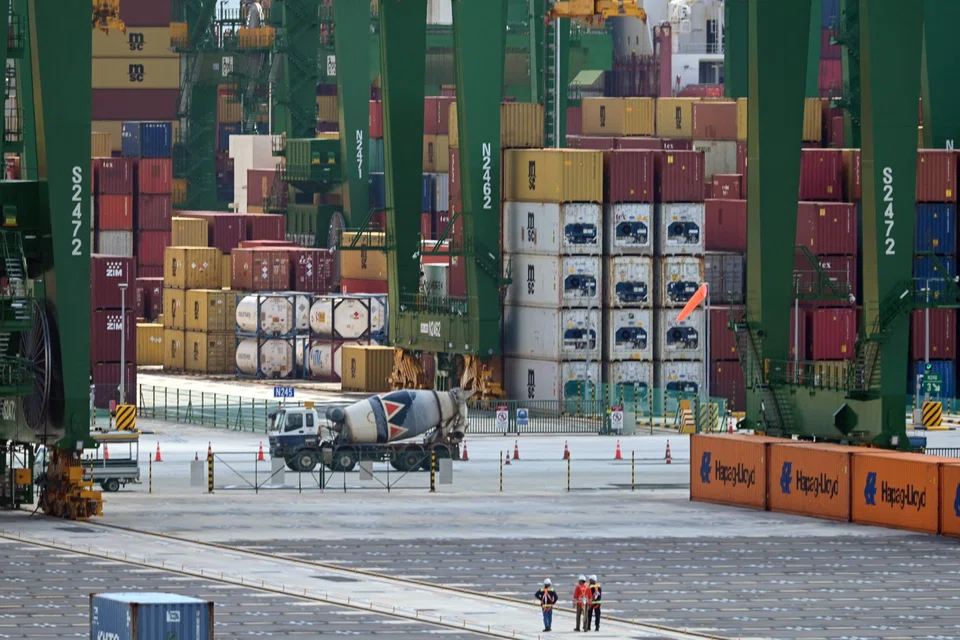
ABOUT 90 per cent of the containerships arriving at Singapore port are off-schedule as a result of the Red Sea diversion, compared to an average of 77 per cent in 2023.
Minister for Transport Chee Hong Tat disclosed the higher proportion of boxships that did not follow sailing timetables in a written reply to Parliamentary questions on Tuesday (Jul 2).
“Many of the vessels are also arriving within a short window, compounding the issue by causing a ‘vessel bunching’ effect,” he said.
Boxship companies are using Singapore as a transhipment port to unload cargo bound for Asian ports beyond the Republic, to allow vessels to return to Europe more quickly. Some are also using Singapore to rearrange their containers on the vessels to maximise loads and facilitate operations at downstream ports.
Minister Chee said: “As a result, both the demands and complexity of container handling at our port have increased.”
These have lengthened the boxships’ stay in Singapore port for cargo operations, which in turn increased the waiting time for incoming vessels, leading to congestion at container berths. But Chee insisted that there is no crowding in the anchorages at the moment.
Berthing delays reportedly stretched to about a week in May, whereas vessels would under normal circumstances be berthed upon arrival, or at most, within half a day.
Industry intelligence website Linerlytica wrote on Tuesday that vessels had to wait for up to five days for berthing as at the end of last week, “although the vessel queues (were) shortening due to vessel omissions”.
The Maritime & Port Authority of Singapore (MPA) and port operator PSA are in discussions with all the major container lines using MPA’s just-in-time system, said Chee.
This is to optimise vessel arrival times and operations to improve vessel turnaround. For vessels that arrive off-schedule and are waiting for berths to be ready, the liners will use the waiting time to conduct services such as refuelling and replenishing ship supplies at the anchorages.
PSA on Monday started to use the first of three new berths at Tuas, with two more berths to be in use in October and December, respectively. If the increase in demand is sustained, PSA will also expedite and bring forward the development of additional capacity.
This is on top of some of the berths and yard space that have been reactivated in Keppel and Tanjong Pagar.
Major carriers plying between Asia and Europe have been taking an extended route around the Cape of Good Hope off South Africa instead of the shorter one through the Red Sea since Yemen’s Houthi rebels began attacking merchant vessels near the Red Sea in mid-November.
Because of the longer-than-normal transit times and the rapidly rising sea freight rates, shippers are pushing cargo for earlier departures to avoid increasing freight costs.
Many companies are also front-loading their restocking to avoid the even more costly stockouts that many of them faced during the pandemic. These higher stock levels have created an unnatural spike in demand.
The United States’ impending tariff increases on certain China imports are also driving some of this front-loading.