

ADB approves up to US$4.3b loan for Philppine railway project
 Add BT as a preferred source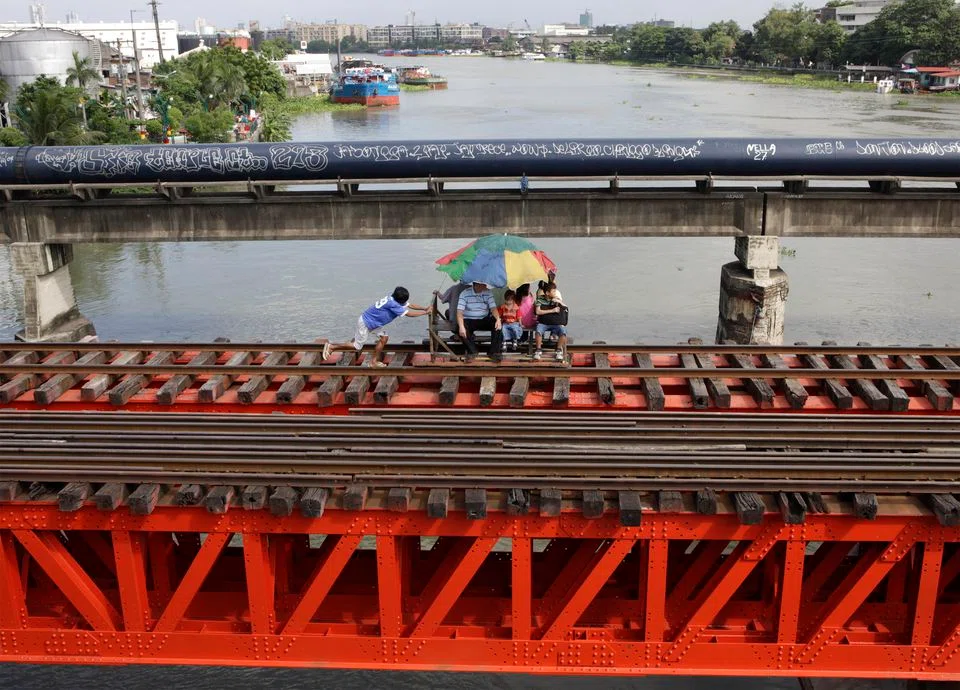
DeeperDive is a beta AI feature. Refer to full articles for the facts.
THE Asian Development Bank (ADB) said on Thursday (Jun 9) it has approved a loan of up to US$4.3 billion for a railway project in the Philippines, a much-needed boost for its ageing rail infrastructure.
From more than 1,100 km (683.5 miles) prior to World War II, the Philippines had only 77 km of operational railway as of 2016, well behind other urban centres across Asia, government data shows.
The 55-km South Commuter Railway project is ADB's largest infrastructure financing in the Asia and Pacific region to date, the bank's vice president Ahmed Saeed said in a statement.
The project will halve travel time between Manila and Calamba city in Laguna province, from the current 2.5 hours. The Japan International Cooperation Agency is funding the rolling stock and railway systems.
All ADB-financed infrastructure like civil works for the railway viaduct, 18 stations, bridges, tunnels, and depot buildings will be designed to be disaster-resilient and able to withstand typhoons and earthquakes, according to the statement .
In 2019, the Manila-based lender committed to fund a US$2.5 billion railway line north of the capital that is currently under construction.
Navigate Asia in
a new global order
Get the insights delivered to your inbox.
Two railway projects were completed under President Rodrigo Duterte while 6 are underway and 6 more have yet to start construction. Upon completion, the Philippines will have 1,209 km of railways. REUTERS
Decoding Asia newsletter: your guide to navigating Asia in a new global order. Sign up here to get Decoding Asia newsletter. Delivered to your inbox. Free.
Share with us your feedback on BT's products and services
TRENDING NOW

Shelving S$5 billion office redevelopment plan proved ‘wise’ as geopolitical risks mount: OCBC chairman

Eurokars Group introduces rental car franchises Enterprise Rent-A-Car, National Car Rental, and Alamo to Singapore
20 photos that show how dramatically Singapore has changed in two decades

Singapore’s key exports up 15.3% in March from electronics surge, exceeding forecasts

