Aircraft leasing rates unlikely to take off this year

Singapore
AIRCRAFT leasing rates will likely continue to face pressure in 2021, having dropped as much as 40 per cent last year.
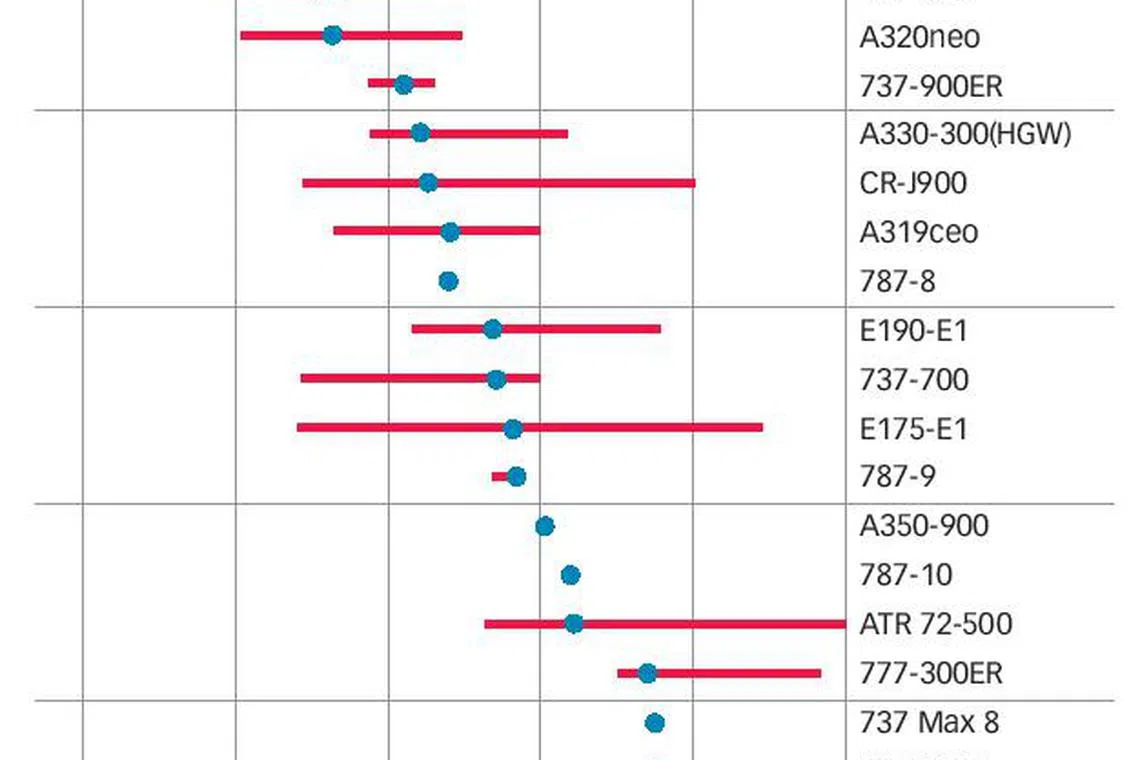
George Dimitroff, head of valuations at Ascend by Cirium, pointed out in a thought leadership piece that lease rates are closer to reaching a floor but there is still room for further decline in rentals for younger-vintage aircraft.
Even when values and lease rates reach a floor, they may not necessarily turn a corner and start recovering right away - they could remain flat at their low levels for some time.
Mr Dimitroff noted: "Values (were) 'bumping along the top' for a few years in the 2015-2020 period, and now they will probably be 'bumping along the bottom' in the latter part of 2021 and possibly beyond."
Leasing rates for aircraft declined by 10 to 40 per cent in 2020, with greater reduction for older generation and aged jets such as Boeing 737NG and Airbus 320ceo, observed David Yu, a finance professor at New York University in Shanghai, and a senior appraiser certified by the International Society of Transport Aircraft Trading.
Lower leasing rates affect aircraft put on new leases after the earlier ones expire, as well as aircraft repossessed in lease defaults and put out on new leases.
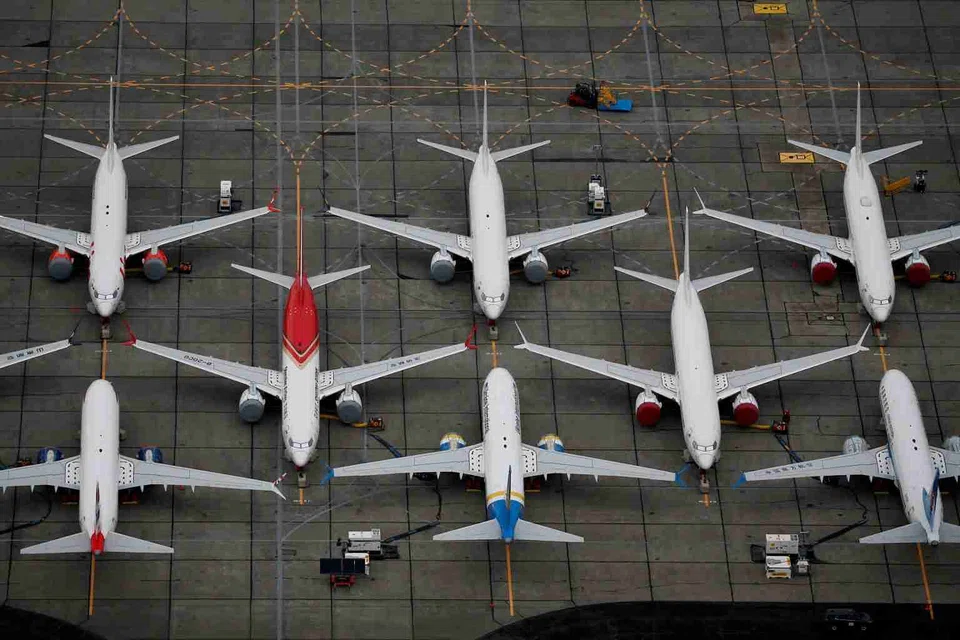
Cirium data indicates that there were about 370 used single-aisle and 90 used twin-aisle passenger jets idle with operating lessors with no future lease identified, as at the end of last year. These include some relatively new aircraft of the 737 Max family.
Mr Dimitroff has observed that it was not easy to lease out an aircraft in 2020 at fixed rent unless the lease started with a variable rate or power-by-the-hour rent.
Most leases signed begin with a variable rate or power-by-the-hour rent for anything from six to 18 months, before switching over to fixed rent.
Many of these leases and lease extensions have no minimum number of flying hours, and are generating zero lease revenue with aircraft sitting parked.
Power-by-the-hour leases seen in past downturns, for example, during the Great Recession in 2008, were for mostly very old aircraft, but these leases have been introduced for even midlife jets in this pandemic, said Prof Yu.
Also, lessors were hit with rental deferment requests from cash-strapped airline customers, but such requests have eased in the third quarter.
AerCap Holdings has reported that new deferment requests in the third quarter were lower than in the second quarter as air traffic has begun to recover.
Dublin-headquartered Avolon Holdings, which has an office in Singapore, also reported a higher percentage of customers starting repayments in the third quarter vis-a-vis the second quarter when the deferment arrangement expired.
Air Lease Corporation reported that most of its lessees have requested some form of accommodation. It has acceded to the requests from about 58 per cent of its lessees as at Nov 9.
In all, the company has agreed to defer approximately US$201.5 million in lease payments, of which US$59.8 million or 30 per cent of the total deferments have been repaid.
Generally, these have been in the form of partial lease deferrals for payments due during the first three quarters of 2020, typically with a short-term repayment period.
The majority of the deferments are to be repaid within 12 months from the date the deferrals were granted, and in many cases, include lease extensions.
Singapore-headquartered Avation has provided support to 14 of its 19 customers with agreements to defer a total of US$13.7 million as at Dec 23.
Prof Yu sees leasing companies being more selective in granting rental deferments this year, compared to last year.
This is because lessors will be much more rigorous in evaluating how their airline customers intend to restructure going forward, as lessors themselves will also face pressure from banks that provide them with funding.
"I believe that means less likelihood of more rental deferments," he said.
Before the pandemic, leasing was typically for new deliveries. As airlines axed or deferred aircraft deliveries, this has led to more used planes rather than new planes being on lease, especially when sale-and-leasebacks have become a source of quick liquidity for airlines unlocked from their unencumbered planes.
Air Lease chief executive John Plueger said in an earnings call last year: "We have always said that in good times, airlines need our aircraft and in bad times, airlines need our balance sheet."
Cirium's data estimates sale-and-leasebacks closed on around 500 aircraft in 2020 (392 single-aisle and 107 twin-aisle) with 77 different airline operators - a level comparable to the year before the pandemic struck.
Rob Morris, global head of consultancy at Ascend by Cirium, said: "What differed was the balance of new to used aircraft, typically 75 per cent to 25 per cent, but more like 25 per cent to 75 per cent in favour of used aircraft last year (albeit many were nearly new, in the two- to five-year- old bracket)."
Orix Aviation's chief James Meyler reportedly said at an industry conference in December that airlines such as German flag carrier Lufthansa were not big lessees pre-pandemic but now have been forced to sell their unencumbered assets.
Singapore Airlines had earlier mentioned it was also exploring sale-and-leaseback to shore up its liquidity.
READ MORE: Aircraft lessors face bumpy year ahead