

Airlines face steep drop in earnings from virus spread, but will bounce back: reports
During 2003 Sars crisis, monthly international passenger traffic returned to pre-outbreak levels within nine months

Fiona Lam
Singapore
MUCH like during the Sars (severe acute respiratory syndrome) outbreak in 2003, airlines now face risks from the global spread of the Wuhan coronavirus, S&P Global Ratings said in a report on Thursday.
However, the International Air Transport Association (Iata) noted in a separate report that the industry has proven resilient to shocks in the past, and thus any impact will not be long-drawn.
S&P wrote: "Air traffic, revenue and earnings dropped steeply in selected regions and with certain airlines during the Sars outbreak. We see the potential for a similar effect from the (latest) coronavirus outbreak."
At the height of the Sars epidemic in May 2003, airlines in the Asia-Pacific (APAC) region saw a 35 per cent plunge in monthly revenue passenger kilometres (RPKs) compared to their pre-crisis levels, according to Iata's report published last week. RPKs are a measure of the volume of passengers carried by an airline.
For 2003 as a whole, APAC airlines lost 8 per cent of their annual RPKs and US$6 billion in revenues because of reduced business and leisure travel to, from and within the region.
Singapore Airlines (SIA), Hong Kong's Cathay Pacific, Japan Airlines and ANA Holdings were among those that reported a financial loss during that period.
This time, significant routes in China and APAC will be the most affected by the Wuhan virus spread, S&P said.
An additional 450 million passengers now fly to, from and within China each year, compared to a decade ago. The timing of the latest outbreak also coincides with the Chinese New Year celebrations and the country's busiest travel season.
Many airlines have scrambled to suspend or cancel flights, and to reduce the frequency of some routes to China in view of falling demand.
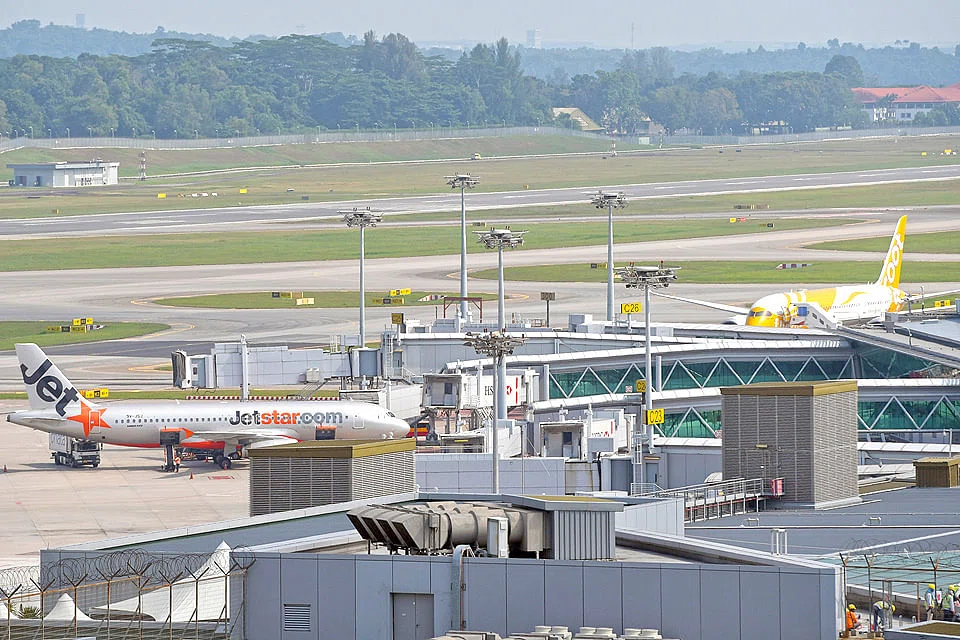
SIA's budget carrier Scoot on Wednesday said it has cancelled all flights between Singapore and Wuhan until the end of March. On the same day, low-cost carrier Jetstar Asia also suspended flights to three Chinese cities - Hefei, Guiyang and Xuzhou.
Cathay Pacific is cutting capacity to China by 50 per cent or more.
Other airlines in the region, including Malaysia's AirAsia, Taiwan's China Airlines, South Korea's flag carrier Korean Air and Japan's ANA, have halted flights in and out of Wuhan. Indonesia's Lion Air Group will suspend all flights to China from February.
"While there are risks that this outbreak could cause a sizeable disruption, history indicates that any effect on air transport would be temporary," Iata said in its report.
The association described Sars as the "most serious epidemic" that has affected air traffic volumes. On the other hand, the avian flu episodes in 2005 and 2013 had a "much milder" and short-lived impact, Iata noted.
Air travel rebounded quickly in those instances as the fears of global spread of the avian flu virus eased.
More recently, for Mers (Middle East respiratory syndrome), which was focused on a single country, the initial impact was a sharp slowdown. In the first month of the outbreak, but air travel volumes began to recover after two months, and returned to pre-outbreak levels within six months.
"Even in the Sars outbreak, monthly international passenger traffic returned to its pre-crisis level within nine months," Iata added.
Shares of some major Asian carriers ended trading on Thursday at record lows. SIA sank S$0.03 or 0.4 per cent to S$8.54, its worst showing since 2009. China Airlines plunged to a 12-year low, losing NT$0.89 or 10 per cent to close at NT$8.09.
Hitting three-year lows were AirAsia which slipped RM0.40 or 2.7 per cent to RM1.44, and ANA which lost 68 yen or 2 per cent to 3,396 yen.
Cathay Pacific fell HK$0.21 or 2.1 per cent to HK$9.66, and Korean Air shed 50 won or 0.2 per cent to 23,800 won.
The Wuhan virus death rate is currently about 2 per cent compared to around 10 per cent during the Sars epidemic, though the virus has infected more people than Sars.
TRENDING NOW

Simba admits exceeding spectrum limits amid failed M1 deal; full-year profits surge 277%

Temasek’s Wan Chee Foong to helm PIL, Lars Kastrup to be board adviser

He built the Vingroup empire. Now South-east Asia’s richest man is handing some key roles to his sons

One-third of Singapore-listed firms at risk in severe AI downturn: MAS

