

Airports positioning themselves as luxury brands rather than travel hubs
Munich Airport boasts that it has become 'Europe's first five-star airport'
New York
AS major airports around the world scramble to brand themselves as luxury entities rather than mere transportation centres, some have adopted a star-ranking system, like hotels. It was inevitable.
Munich Airport, calling itself "Bavaria's gateway to the world", boasts that it has become "Europe's first five-star airport". The five-star distinction was awarded in mid- March to the German airport and four other international airports by London air- travel research firm Skytrax, based on surveys completed by more than 13 million fliers in 2014.
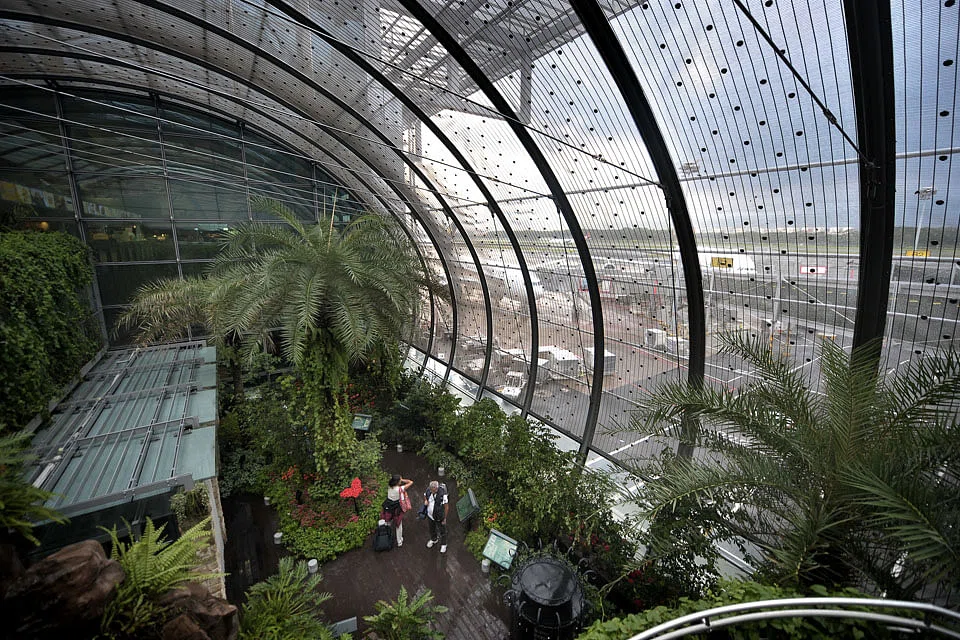
Modern airports positioning themselves in a firmament usually occupied by stylish hotels is an indication of how far the concept of airport-as-brand has come in the past 25 years. What used to be utilitarian - a place to grab a magazine, a candy bar or a beer and get on or off a plane - has become far more elaborate, with amenities at many airports including art galleries, interior gardens, theatres, mall-like concourses filled with shops and restaurants and, in some airports, exotic experiences.
"Have you flown through the Kuala Lumpur airport?" said Sharon Schweitzer, a business traveller who lectures on intercultural communication. "When you get to that airport, you have this experience of going into a rainforest-like setting. The Singapore airport is another example. They have a butterfly garden, a sunflower garden, an area where children can paint; they have movie theatres."
Business travellers who fly mostly to airports in the United States might be amazed by this array of attractions - Incheon International Airport in Seoul even has a 330-yard golf driving range. But across the board, in the US and abroad, seasoned travellers generally concur that airports have improved significantly in the past quarter- century as facilities expanded and terminals modernised to generate revenue.
And that presents a paradox, with airports becoming more attractive and comfortable for all even as airline service and amenities have steadily deteriorated in recent years, except for those lucky passengers flying in the highest-priced luxury seats on international routes.
Local governmental entities typically manage airports as showcases to bolster regional economic growth. But airlines fly planes strictly in ways dictated by the bottom line.
Since 2008, airports in the US have committed US$52 billion to capital improvement projects, many still underway. Globally, US$385 billion worth of projects are in progress, led by China and the Middle East, according to estimates by Capa Centre for Aviation, a research organisation.
Surveys of global travellers always show that most of the top-rated airports are in Asia. Of the top five on the Skytrax 2015 list of the world's best 100 airports, Singapore Changi is No 1, followed by Seoul Incheon, Munich, Hong Kong International and Tokyo Haneda International. Airports in the US do not appear in the top 25, although the Cincinnati, Denver and San Francisco airports are in the top 40.
The US airport industry says it needs more federal tax money for capital improvements to keep pace with those at foreign airports, especially to attract more international business travel, which accounts for 15 per cent of all arriving air passengers in the United States.
Kevin Burke, president of the trade group Airports Council International, North America, said last year that airports in the US were "at the breaking point" in struggling to finance the US$75.5 billion in estimated capital improvements needed through 2019.
One way out, at least from the airports' perspective, is lobbying to raise the federally mandated Passenger Facility Charge by US$4. The fee, which airlines must add to fares, has been capped at US$4.50 for each boarding since 2001.
However, the domestic airline industry strongly opposes increasing the fee, which sent US$2.78 billion to domestic airports in 2014, up from US$85.4 million in 1992, the first year it was collected.
Business travel groups also oppose increasing the fee, saying that airports are already awash in revenue from retailing, food, parking, landing fees and other sources, while enjoying a growing customer base as air travel rebounds this spring to what trade group Airlines for America says is the highest level since 2007.
"Business travellers want to see more enhancements and improvements for the current charges before they will consider new ones," said Greeley Koch, executive director of the Association of Corporate Travel Executives.
While US airports might have a long way to go before someone bestows a five-star rating on them, they have developed extensive amenities as air travel has boomed and terminals have become more crowded with passengers, many of them awaiting connecting flights.
"Airports are now like the Mall of America," said William Johnson, a business traveller who was sipping a cappuccino recently at a trendy restaurant at Los Angeles International Airport. NYT
TRENDING NOW

Peter Kwee’s Ridley Park bungalow on the market with S$100 million asking price
Motoring tycoon Peter Kwee is back in court: Here are his previous legal battles

Demand, tech capabilities position Apac and AI as Skyscanner’s next growth frontiers: CEO Bryan Batista

South-east Asia has lost Nvidia’s best salesman

