

Angry South Korean taxi drivers rally against carpooling service
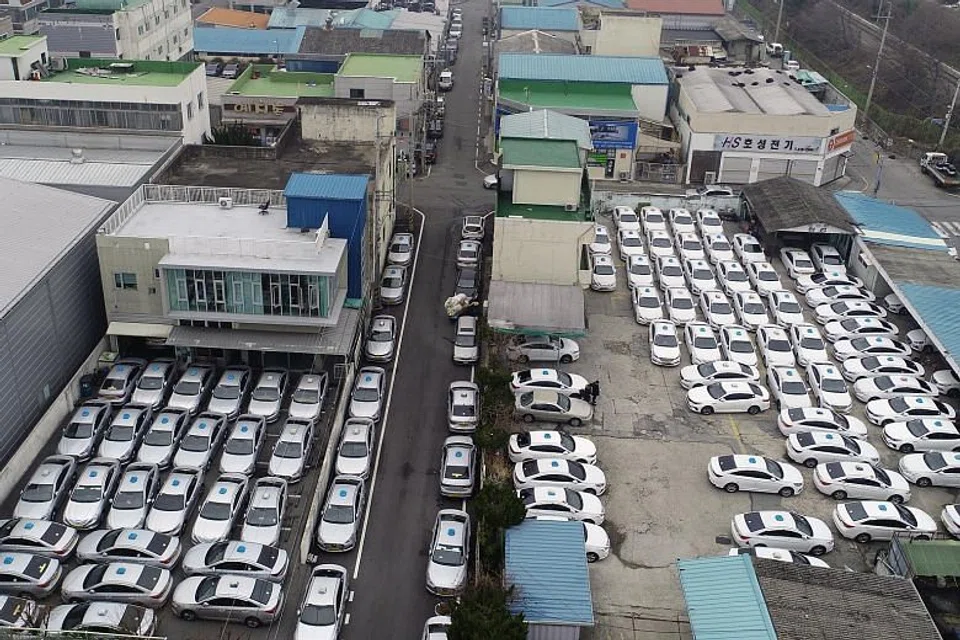
[SEOUL] Tens of thousands of South Korean taxi drivers walked off the job and held a rally on Thursday to protest against a carpooling service that they say would destroy their jobs and threaten their livelihoods.
The demonstration came days after the suicide of a taxi driver who set himself on a fire to protest against plans to introduce car-pooling service Kakao Mobility, a unit of mobile messenger operator Kakao Corp.
"If the service is implemented, my income will shrink by half. I'll fall into poverty," said driver Yoon Woo-seok, 62, at the rally in front of the National Assembly in the capital, Seoul.
Drivers wearing black headbands and ribbons to mourn their colleague chanted "combat illegal carpool".
Opposition from taxi drivers and regulations in Asia's fourth-biggest economy have hampered the introduction of new transport services such as those offered by US-based Uber Technologies
Kakao postponed the official launch of its service after the suicide.
"We will have continued consultations with the industry, parliament and the government," the company said on Thursday.
Taxi drivers say they already suffer from low income and long hours.
"My entire family is scraping a living on my tiny income," said another protesting driver, Lee Nam-soo, 67.
He said he earned 80,000 won (S$97) to 90,000 won a day.
"There's no way I can survive if Kakao operates."
The ruling party has created a task force to resolve the dispute, but it has not been able to agree on a compromise plan with the drivers.
REUTERS
Share with us your feedback on BT's products and services
TRENDING NOW

Gas Supply may pursue remedies if contract breached following Indonesia’s export cuts: Tan See Leng

Why the biggest business decision about AI isn’t which model to choose

If Europe goes to war, the fallout will be felt in East Asia

Singapore expects all parties to honour commitments, says PM Wong after Indonesia cuts gas exports

