

Apac airlines hit record loads on Iran war reroutes, but 80% fuel spike threatens margins
Total passenger traffic for March rises 8.5% year on year to 33.9 million

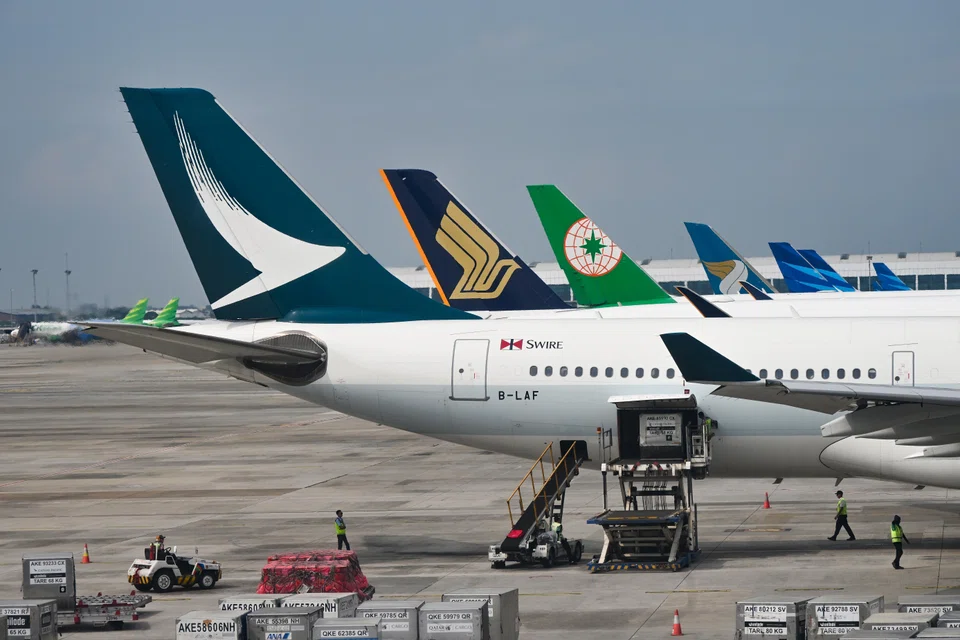
[SINGAPORE] Asia-Pacific airlines are flying fuller planes than ever as travellers bypass Middle East conflict zones, but the surge in jet fuel prices is threatening to erode the financial gains from a strong first quarter.
The average international passenger load factor of airlines in the region jumped 7.4 percentage points to a record 87.6 per cent in March, data released on Tuesday (Apr 28) by the Association of Asia Pacific Airlines (AAPA) showed.
Carriers absorbed a surge in demand on Asia-Europe routes as passengers sought alternative itineraries following airspace closures and operational disruptions at Middle East hubs such as Dubai and Doha.
Total passenger traffic for the month rose 8.5 per cent year on year (yoy) to 33.9 million. Demand, measured in revenue passenger-kilometres, jumped 11.3 per cent, outpacing the 1.9 per cent expansion in available seat capacity.
However, the geopolitical fallout driving those reroutes is simultaneously triggering a major cost squeeze. Jet fuel prices averaged US$156 a barrel in March, up from US$87 a year earlier.
AAPA director-general Wong Hong noted that the increase places strain on airlines that are “already grappling with high operating costs due to persistent supply chain issues”. Fuel accounts for roughly 30 per cent of total operating expenses for the region’s carriers.
The conflict’s disruptions also dragged on the freight sector.
As airlines adjusted networks to capture passenger shifts, March air cargo demand grew 2.5 per cent yoy, with the Q1 cargo growth average at 5.7 per cent.
The slowdown follows widespread cargo flight cancellations and the rerouting of Asia-Europe flows away from key Middle East hubs.



Additionally, profitability metrics on the cargo side weakened in March. Freight load factors fell 0.7 percentage point to 62.3 per cent, as airlines added 3.8 per cent in freight capacity – faster than the pace of growth of shipment demand.
Wong warned that the Middle East conflict was “going to add uncertainty to the global economic outlook and air travel demand”, forcing Asia-Pacific carriers to “maintain vigilance over cost controls while maintaining international connectivity”.
Decoding Asia newsletter: your guide to navigating Asia in a new global order. Sign up here to get Decoding Asia newsletter. Delivered to your inbox. Free.
Copyright SPH Media. All rights reserved.
TRENDING NOW

LTA proposes combining car COE categories, adding rebate-surcharge system

StarHub to acquire MyRepublic’s mobile business amid ongoing telco consolidation

DBS, OCBC, UOB rout lops billions off STI as inflation, rate concerns spook investors

Grab CEO’s wife Chloe Tong on life with Anthony Tan and finding her purpose

