
OUTLOOK 2025

Asia-Pacific aviation growth to slow, profits squeezed on easing demand and supply chain issues

But the region, especially South-east Asia and India, will continue to lead the world in air travel

Derryn Wong
Published Tue, Dec 17, 2024 · 05:00 AM — Updated Tue, Dec 17, 2024 · 11:03 AM
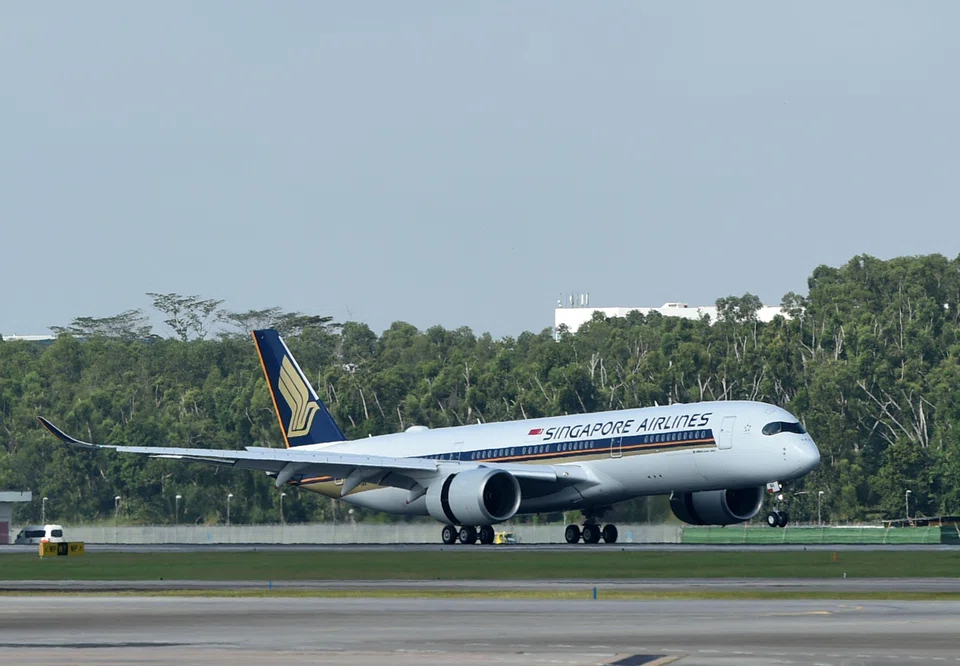
    • With South-east Asia leading the Asia-Pacific's air travel growth, Singapore stands to benefit as a major air hub.
    • With South-east Asia leading the Asia-Pacific's air travel growth, Singapore stands to benefit as a major air hub. PHOTO: AFP

    ASIA-PACIFIC will continue to soar as the world’s fastest-growing passenger aviation market in 2025, with South-east Asia and India expected to provide most of the thrust.

    But this climb still faces headwinds. Air travel demand is expected to come down from post-Covid highs – not least as China, the region’s largest market, continues to lag. This will further suppress airlines’ already declining profits.

    Flight supply will also be constrained, which will raise cost without necessarily boosting fares. This is due to continued supply chain issues, including delays in aircraft delivery and maintenance.


    Alan Lim, director at consultancy Alton Aviation, said: “In 2025, we will see a moderation of some of the growth we saw in 2024, partly due to moderating economic growth going into a period of economic uncertainty, but also due to constrained capacity growth owing to engine and supply chain issues.”

    A smaller boom

    The International Air Transport Association (Iata) predicts a bumper 2025 for air travel, with passenger numbers exceeding five billion and total industry revenues more than US$1 trillion, both for the first time.

    But even while these new highs are reached, the pace of growth will slow, with the industry’s post-Covid recovery almost complete. The Asia-Pacific region is no exception.

    Subhas Menon, director-general of the Association of Asia Pacific Airlines (Aapa), expects demand in the region to “still be very strong”, but adds: “As we get closer to pre-Covid levels, growth will taper off.”

    In October, the Asia-Pacific had the largest aviation market share at 31.7 per cent, according to Iata data.

    The region’s full-year 2024 passenger growth is predicted to be the world’s highest at 15.6 per cent, with the global figure at 10.7 per cent.

    In 2025, the region is expected to see slower growth of 9.1 per cent – while remaining in the lead, with the global figure at 6.2 per cent.

    South-east Asia still flying high

    In the next decade, growth may slow further. Alton’s Lim forecasts the Asia-Pacific’s passenger traffic growth to average 5.1 per cent per year from 2024 to 2034 – though this is still better than his global prediction of 4 per cent.

    He expects the region’s growth to be led by India and South-east Asia, with average annual growth rates of 6.3 per cent and 6 per cent, respectively.

    Reasons include strong economic expansion, a burgeoning middle class that will spend more on travel, and the growth of tourism, he added.

    Lim Ching Kiat, executive vice-president of air hub and cargo development at Changi Airport Group (CAG), said that with a rising middle-class population and stronger gross domestic product growth, the Asia-Pacific is fuelling increased demand for air travel and will be a key driver of the global industry’s growth.

    The International Monetary Fund (IMF) forecasts South-east Asia’s economic growth to be 4.6 per cent in 2024 and 4.7 per cent in 2025, largely supported by strong domestic demand and exports.

    India is expected to grow at 7 per cent in 2024 and 2025, as the world’s fastest-growing major economy.

    As a major aviation hub in South-east Asia, Singapore stands to benefit.

    “Singapore can leverage its hub status to take advantage of growth in the region,” said Lim.

    But he added: “However, other air hubs in the region will also be looking to take advantage of this growth, so there will be competition.” Rivals include Jakarta, Kuala Lumpur and Bangkok.

    At a media conference in December, Singapore’s Transport Minister Chee Hong Tat said he was confident that Changi Airport’s traffic will exceed pre-Covid levels in 2025.

    He noted that in 2024 the Republic added 16 new city links and 10 new airlines, while increasing daily flights to key destinations such as Jakarta.

    Such steps are part of CAG’s priority of restoring South-east Asian connections lost during the pandemic, said the group’s executive vice-president.

    He added that Singapore continues to be a key hub for South-east Asia, with six of the region’s top 10 international routes starting or ending here.

    With China, India and Indonesia to become some of the biggest aviation markets globally, Changi Airport will support their growth, he said. The airport added new connections to destinations in these countries in 2024 and is exploring more in the near term.

    China’s aviation industry has disappointed post-Covid, with the recovery of domestic but not international passenger volumes. But India and the Asia-Pacific could make up for its continued stall, said Menon.

    These two markets “have already sort of overcome the slack from China” this year, he added. “So it is already quite remarkable.”

    Thinner air

    Demand has not matched increased capacity in 2024, which has eaten into the earnings of some regional airlines, including Singapore Airlines and Cathay Pacific. PHOTO: REUTERS

    The slowing of growth is due to demand easing from post-pandemic highs. In tandem, airline profits are set to come down.

    Lim expects airline profitability to normalise in 2025, as revenue growth is dampened due to both increased capacity in the market and receding leisure demand that is not fully offset by a rebound in business travel.

    Regional airlines’ revenues have risen as they carry more passengers. But their profits dipped in 2024 as they increased capacity at a pace that outstripped demand.

    This is reflected in passenger load factors (PLF), which measure how much of its passenger carrying capacity an airline is using.

    SIA Group’s net profit for the half-year ended Sep 30, for instance, slipped 48.5 per cent year on year to S$742 million.

    Its revenue passenger kilometres (RPK) – a measure of actual passenger traffic, multiplying passengers by distance travelled – grew 7.9 per cent year on year in the period.

    But this trailed its capacity expansion of 11 per cent, resulting in a 2.4-percentage-point decline in PLF to 86.4 per cent.

    Similarly, Cathay Pacific’s profit for the half-year ended Jun 30 fell 15.3 per cent to HK$3.6 billion (S$624.7 million). Though its RPK rose 34.9 points, its PLF fell 4.8 percentage points to 82.4 per cent.

    As demand normalises, fares in the Asia-Pacific have also fallen faster than in any other region, said Iata.

    And demand growth could slow further yet amid moderating economic growth and geopolitical uncertainties.

    The IMF predicts Asia’s economic growth to slow to 4.4 per cent in 2025 from 4.6 per cent in 2024, while flagging the “acute risk” of a possible retaliatory trade war between the US and China.

    Another risk is an extended drag on growth from China’s real estate correction, said IMF. And if China chooses to stimulate manufacturing and exports, a flood of competing lower-cost goods could dampen growth in the destination markets.

    Air supply, chained

    Delivery times for narrowbody airliners, like this Boeing 737 MAX, are now close to a decade. PHOTO: REUTERS

    Even as some airlines grapple with overcapacity, supply chain issues could raise business costs for airlines in the short term – and dampen long-term growth if demand catches up.

    The industry continues to face delayed aircraft deliveries from the two major passenger jet-makers, Airbus and Boeing. Airlines have also had to ground existing planes due to spare part delays and repair problems.

    “Potentially, (supply chain issues) are something that we’ll see to some degree or another, well into the second half of the decade,” said Frank Naeve, senior vice-president of sales and distribution at Lufthansa Group.

    The average age of the global aircraft fleet has risen to a record 14.8 years. Iata director-general Willie Walsh said that older planes mean higher maintenance and fuel costs. Airlines may also have to pay more to lease planes, as they find “every way possible to expand capacity”.

    At an Aapa forum in November, airline bosses flagged problems such as longer servicing times for engines; defective repairs and parts; and a nearly year-long backlog for spare parts.

    “This is a time when airlines need to be fixing their battered post-pandemic balance sheets, but progress is effectively capped by supply chain issues that manufacturers need to resolve,” said Walsh.

    In the long term, these issues will constrain growth by limiting new routes and keeping costs high.

    Lufthansa’s Naeve said: “We have 240-plus aircraft on order at the moment and obviously any delay in those deliveries impacts whether we can start new routes or are able to retire older aircraft.”

    Iata data shows that this year, 1,254 aircraft were delivered – 30 per cent less than expected. While this should rise to 1,802 in 2025, this is still below an earlier forecast of 2,293, and it is “quite possible” that actual deliveries will fall short again.


