



Asian airlines report Europe demand surge as Gulf hub disruption shifts traffic
As a result, customers need to pay a premium for flights that avoid the Gulf, according to data from Google Travel
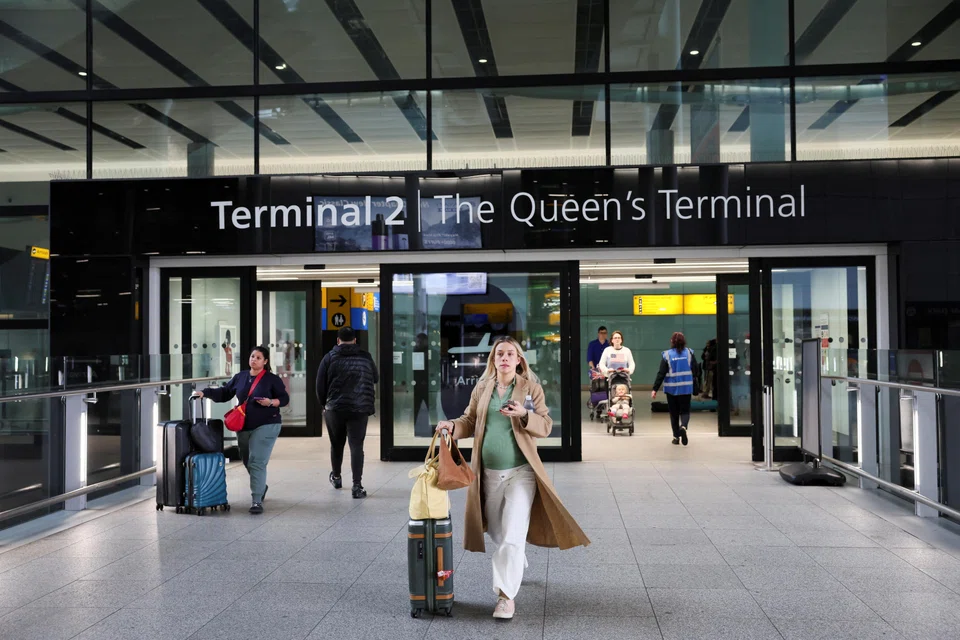
[HONG KONG] Major Asian airlines have reported surging demand on European routes as travellers shun disrupted Middle Eastern hubs, in a shift analysts suggest could persist for some time even after the Iran conflict ends.
Hong Kong’s Cathay Pacific Airways, Singapore Airlines, Korean Air Lines and Australia’s Qantas Airways last week disclosed robust performances on European routes in March, even as they grappled with a doubling in the price of jet fuel.
“We have ... mounted additional flights and capacity to Europe in March and April to cater for an upsurge in market demand as passengers prioritised alternative routings,” Cathay chief customer and commercial officer Lavinia Lau said on Friday (Apr 17).
She said that strong demand was expected to continue to April, fuelled by Easter travel and increased long-haul bookings that transit in Hong Kong.
Singapore Airlines said that the percentage of seats filled on its European flights jumped to 93.5 per cent in March, up from 79.7 per cent a year earlier, due in part to spillover Europe-bound traffic as capacity through Middle East hubs fell. It was the sharpest gain for any region.
Gulf carrier challenges
Before the conflict, Emirates, Qatar Airways and Etihad Airways together accounted for about one-third of passenger traffic between Europe and Asia and carried more than half of all passengers flying from Europe to Australia, New Zealand and the Pacific Islands, according to aviation data firm Cirium.
The major Gulf carriers have been gradually restoring capacity, with all three reaching at least 60 per cent of pre-conflict flight numbers, Flightradar24 data shows.
But they have to contend with other challenges, such as Australia warning citizens not to travel to or even change planes in the Gulf, meaning they are not covered by travel insurance.
As a result, customers need to pay a premium for flights that avoid the Gulf, according to data from Google Travel.


For economy-class Sydney-London return tickets leaving next Saturday, Etihad via Abu Dhabi is the cheapest at A$1,861 (S$1,692). Avoiding the Middle East, the most frugal one-stop options are United Airlines at A$3,144 via San Francisco and Thai Airways at A$3,901 via Bangkok.
Bank of America analysts said in a recent note that “tight pricing and share gains on Asia-Europe routes could persist for six to 12 months even after the end of the war, given forward booking lags and traveller risk aversion”.
Alternative hubs
Korean Air reported a strong European performance in its first-quarter estimated results, with operating income up 47.3 per cent to 517 billion won (S$446 million).
The Seoul-based carrier attributed this growth partly to “increased demand between Europe and Asia due to the Middle East war”, with European passenger revenue rising 18 per cent from a year earlier.
Looking ahead, the airline said that it expects “strong transit demand” benefiting from decreased market supply from Middle East carriers.
Qantas said that it had adjusted its operations to capture the shift, redeploying capacity from US and domestic routes to expand flights to Paris and Rome.
“Qantas continues to see strong demand for international travel to Europe as customers seek alternative routes,” the airline said.
Air traffic control manager Airservices Australia said Australia-Middle East traffic was down 77 per cent year on year in March as services were rerouted via other cities.
“Asian gateways such as Singapore, Kuala Lumpur, Hong Kong, Tokyo, and Seoul are capturing much of this displaced demand and may emerge as alternative hubs and travel destinations,” Airservices said. REUTERS
Decoding Asia newsletter: your guide to navigating Asia in a new global order. Sign up here to get Decoding Asia newsletter. Delivered to your inbox. Free.
Share with us your feedback on BT's products and services
TRENDING NOW

LTA proposes combining car COE categories, adding rebate-surcharge system

StarHub to acquire MyRepublic’s mobile business amid ongoing telco consolidation

DBS, OCBC, UOB rout lops billions off STI as inflation, rate concerns spook investors

Grab CEO’s wife Chloe Tong on life with Anthony Tan and finding her purpose

