

Asian owners commit to ‘greener shipping’
DAVID HUGHES
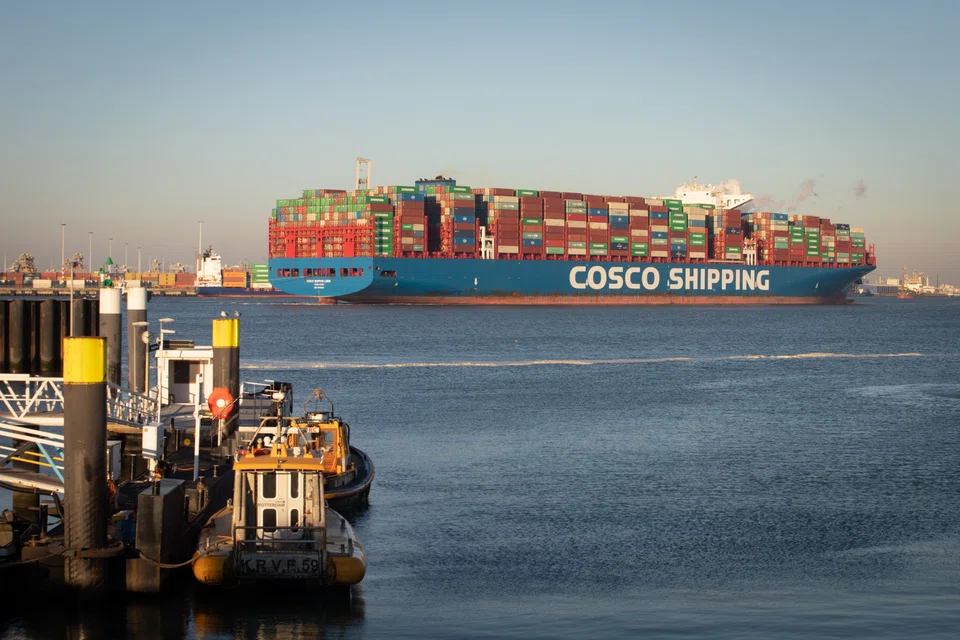
LAST week, the body representing shipowners from Asia reaffirmed its commitment to protecting the environment. At the Asian Shipowners’ Association’s (ASA) 31st annual general meeting held online, Kim Young Moo, executive vice-chairman of Korea Shipowners’ Association (KSA), said: “ASA confirmed that we would be moving towards greener shipping.”
Being environment friendly is one of several challenges faced by the shipping industry worldwide. While the Asian ship-owning community also discussed that issue at the meeting, it also has a more immediate pressing concern. ASA said in a statement: “Seafarers are the essential human resources of the shipping industry. However, the Covid-19 pandemic has left seafarers in a vulnerable position. Seafarers’ welfare and well-being are always our at most concern. ASA urges the world administrations and stakeholders of the shipping industry to take measures to ensure seafarers’ welfare and well-being under the MLC 2006, thereby attracting and retaining seafarers to remain in the industry. They are working in the front line of the global supply chain.”
That is all true though the Ukraine war has taken over as the main disruptor of shipping’s labour market, as some 14 per cent of the world’s seafarers come from Russia or Ukraine.
Interestingly, the ASA statement referred to an issue that is not generally understood by industry outsiders — limited liability for shipowners. It noted: “Just as there would be a massive fall in worldwide GDP if there were no ‘limited companies’ so, also there would be far less international shipping (with a commensurate fall in GDP), if shipowners were unable to limit their liability. Thus, a recent landmark achievement by the shipping industry is the formal adoption by the IMO Assembly, in December 2021, of the established International Maritime Organization (IMO) principles underpinning “the test for breaking the shipowners’ right to limit liability contained in the 1992 Protocol to the CLC, the LLMC 1976 and the LLMC 1996.”
“Arcane wording, perhaps,” ASA conceded, “but of huge importance. Industry insiders are familiar with attacks on the principle of limited liability for shipowners in Spain and France in connection with the Prestige and Erika cases.”
ASA said that it had “played a very active role” in promoting the principles which allow shipowners to limit their liability, and that it strongly welcomes this development at IMO.
The shipowners body expressed its serious concern over the Suez Canal’s toll and surcharge increases without sufficient prior notices and reasonable explanations, this year. ASA also noted with serious concern the new toll system proposals by the Panama Canal Authority, which had presumably been developed under the recent unprecedented world shipping market conditions, due to its “extreme scale” of increases in the coming 3 years.
It added: “Bearing in mind that those 2 great canals are playing an indispensable role in underpinning the global supply chain together with the shipping industry, ASA urges that the voices of canal users and all stakeholders, that reiterated the importance of stability, transparency and predictability of pricing policies, should be heard. ASA reconfirmed that we would seek direct and closer dialogues with both canal authorities at the earliest opportunities to enhance our communication and mutual understanding.”
Coincidentally, and apparently meeting some of ASA’s concerns, the International Chamber of Shipping (ICS) has recently signed a Memorandum of Understanding (MOU) with Egypt’s Suez Canal Authority (SCA), “covering key issues impacting international ship owners and operations of the Suez Canal”.
According to ICS, a year-long commitment, signed during a meeting at the SCA head office, will increase information sharing and negotiations on the movement of global trade through the canal. Of relevance to the ASA’s public concerns, the MOU will “open communication on long-term strategies for toll pricing, environmental protection, and decarbonisation”.
ICS said: “This MOU represents a formalisation of dialogue between ICS and SCA. The organisations hope it will lead to in-depth collaboration on operational and structural policies of the canal, the safety and security of transiting vessels, and enhancing pilotage, towing and repair services. The agreement follows a period of close cooperation between the 2 organisations, who have been in regular contact over the Covid-19 pandemic, and during the grounding of the Ever Given in 2021.”
“Egypt,” ICS noted, “is increasingly positioning itself as a key figure in the shipping sector’s decarbonisation, and the country will host COP27 this November. A maritime delegation led by ICS is scheduled to return to Egypt for the UN climate summit to continue meaningful dialogue on shipping’s transition to net-zero.”
Singapore-based ICS chairman Esben Poulsson commented: “ICS has enjoyed a close liaison with the Suez Canal Authority for almost a century. We thank the Authority for its hospitality and look forward to building on our cemented relationship. The maritime industry is at an inflection point as we earnestly begin our transition to a renewable future. The conversations we have had ... leave me with great confidence that Egypt will be one of the leaders of industry’s green transition, leaning on its position at the heart of the maritime world.”
On the subject of the environment and decarbonisation, ASA said it continues to express its strong support for the IMO Maritime Research Fund (IMRF) and the IMO Maritime Research & Development Board (IMRB). It believes these proposed measures will guarantee funding for the research and development (R&D) necessary to accelerate the development of zero-emission ships. ASA argued that “not only are the IMRB and IMRF the most efficient tools to decarbonise the industry, but they also offer a measure of stability to support for R&D efforts, and will be relatively insulated from external shocks that may result in increased volatility in carbon markets”.
It should soon become clear whether IMO will adopt the IMRB and IMRF proposals. Given that it will involve creating global bureaucracies, the cautionary words “be careful what you wish for” come to mind.
TRENDING NOW

US dollar falters after Iran’s offer to reopen Hormuz sends oil lower

He built the Vingroup empire. Now South-east Asia’s richest man is handing some key roles to his sons
Floods compound Philippine growth woes from public-works scandal

Tokyo reverses baby bust with AI matchmaking and generous subsidies

