

Aviation insurance premiums expected to reach 20-year high in 2024 amid air travel boom
The cause of claims that emerged top is collision or crash incidents, accounting for 63 per cent of the value

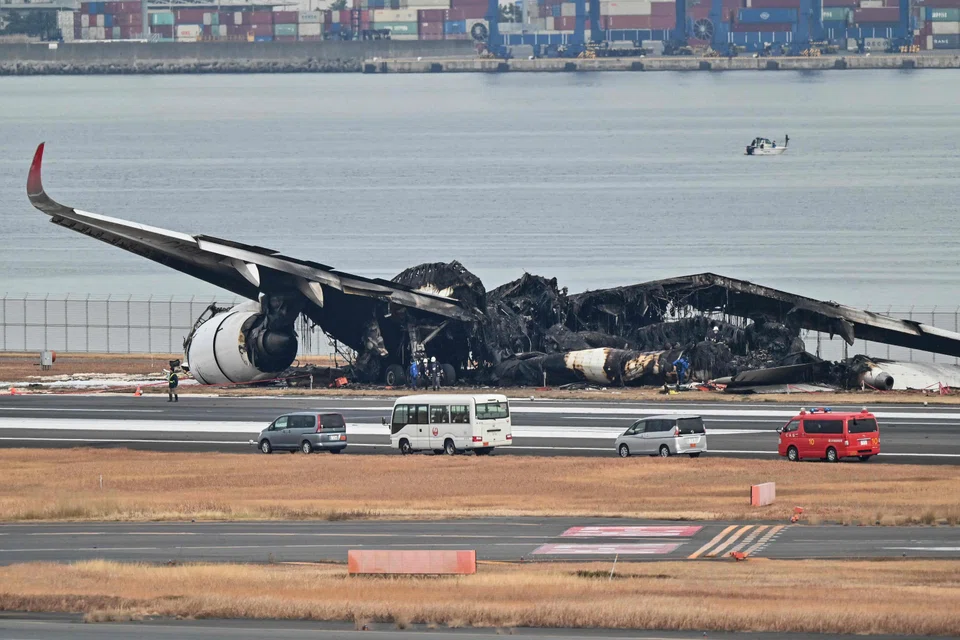
GROSS written insurance premiums for the aviation sector will hit a 20-year high in 2024 of more than US$8 billion as air traffic increases, a report by Allianz Commercial published on Wednesday (Jul 31) showed.
The commercial insurance provider said airlines will provide about 35 per cent of the premiums, while general aviation will account for 47 per cent. The war market accounts for about 13 per cent of this anticipated premium (US$1.1 billion), a staggering increase from 2021, when it accounted for just 4 per cent of the global premium.
This came as air traffic is expected to reach an all-time high in 2024, rising 10.4 per cent year on year, driven by the Asia-Pacific and North America.
Allianz Commercial analysed about 32,000 claims worth more than 14 billion euros (S$20.3 billion) in the top seven causes of loss over the past five years.
Top causes of claims
The cause of claims that emerged top was collision or crash incidents, accounting for 63 per cent of the value and one-third by number. These claims included hard landings, bird strikes and runway incidents such as incursions and excursions.
A runway incursion is the unauthorised presence of an aircraft, vehicle or person on the runway’s designated landing and take-off area, while an excursion occurs when an aircraft accidentally or improperly exits the runway while on a runway.
Allianz Commercial pointed out that runway excursions were trending higher than in 2023, with at least 23 incidents reported globally from January through May 2024. The causes were varied, including weather issues and technical problems, with most incidents primarily involving aircraft hull damage.
The commercial insurance provider also observed a rise in ground-handling claims at large airports worldwide, including towing, fuelling, catering and wheelchair services related to commercial aircraft operations, as well as vehicle collisions on the tarmac.
Layoffs conducted to reduce expenses during the pandemic have resulted in new hires and less experienced employees in some cases, contributing to these claims.
Faulty workmanship or defective products was the second top cause of claims by value (22 per cent) and by number (13 per cent).
Natural catastrophes, including turbulence, ranked third by value of claims but fifth by number, accounting for 4 per cent each.
Travel issues, including property damage, personal injury, baggage claims and lost or stolen goods, ranked third by number.
Other top causes of claims included fire and slip and fall incidents.
Costs
Allianz Commercial also noted that there has been a significant increase in aircraft repair costs in the past two years, driven by higher labour rates, the cost of aircraft parts and inflation.
Carriers’ use of modern aircraft continued to impact claims, especially when it came to engine disassembly and repair costs. A comparison of claims involving PW1100G and CFMI Leap engines showed that costs have noticeably increased against previous engine types on the same airframe designation.
Repairs on the composite Boeing 787 aircraft, which have weeks-long timescales for repair development, are now roughly four times more expensive than the same repairs that would have been done on metal aircraft.
Claims costs have increased for certain aircraft spare parts by 10 to 15 per cent over the last few years, resulting in a greater number of aircraft being deemed Constructive Total Losses – when the estimated costs for repair exceed the insured value of the property – than in the past.
John Nowicki, regional head of aviation claims for the US market at Allianz Commercial, flagged that a significant shortage of spare parts is also driving up claim costs and duration from the time of claim notification to closure of the file.
The growing shortage of aircraft mechanics may have an impact on future claims activity, Allianz Commercial said, with an obvious concern being the shortfall ultimately leading to an accident regardless of the systems of checks and balances in place.
TRENDING NOW

Grab CEO’s wife Chloe Tong on life with Anthony Tan and finding her purpose

What role can Japan play in Asean’s future?

He built the Vingroup empire. Now South-east Asia’s richest man is handing some key roles to his sons

Asean’s challenge is to become resilient against global geopolitics: former Indonesia trade minister

