Aviation's future intact but its recovery from pandemic will be patchy, players say
Firms are restoring headcounts shed in late 2020; one long-term trend that could be positive is growing demand for freighters

Singapore
THE future of the aviation industry in Asia-Pacific is shining brightly - Covid notwithstanding - with industry players getting ready for a proper recovery.
French plane manufacturer Airbus sees a market for 17,620 passenger planes and freighters within the region in 20 years' time, as passenger traffic is expected to increase 5.3 per cent per annum.
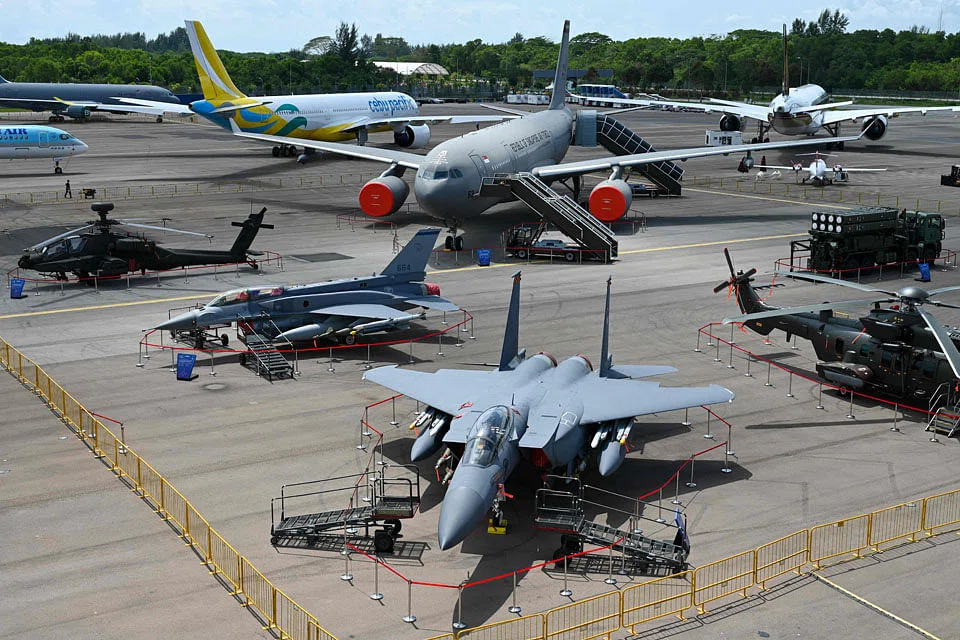
Sharing its forecasts during the Singapore Airshow 2022, Airbus noted that Asia-Pacific is home to 55 per cent of the world's population. China, India and emerging economies such as Vietnam and Indonesia are likely to report economic growth outpacing the global average. Nearly 30 per cent of the planes needed will be to replace older, less fuel-efficient models, the plane maker expects.
In fact, Domhnal Slattery, chief executive of lessor Avolon, told Bloomberg TV on the sidelines of the biennial aviation event in Singapore that he estimates the large economies in Asia-Pacific would not have sufficient planes in 5 to 10 years - after the pandemic is over.
"We estimate China is under ordered by at least 1,000 narrowbodies and widebodies. So we're going to see very significant pent-up demand for the airlines for new aircraft," Slattery said.
Orders for Indonesia will fall short by "at least 200 aircraft for the next 5 or 6 years", he added.
Slattery thinks corporate travellers and leisure passengers as well as sustainability-driven orders for fuel-efficient planes will underpin the "significant uptick in demand" once borders in the region reopen.
Aircraft engine maker Pratt & Whitney expects global aviation will get back on its feet by the end of 2023 to early 2024, while Airbus expects recovery to take place between 2023 and 2025.
Already, industry players are restoring headcounts that were shed in late 2020. Pratt & Whitney retrenched 400 in Singapore in 2020, but hired 250 in 2021.
Tim Cormier, vice-president of Pratt & Whitney's Asia-Pacific aftermarket operations, told The Business Times its MRO (maintenance, repair and overhaul) sites have plans this year to add a total of 900 positions globally, including 250 here. This would bring the company's headcount in Singapore to 2,000 - on par with pre-pandemic levels.
Cormier said the recovery is still patchy. The market for narrowbodies, which mainly serve domestic routes, as well as freighters, have rebounded strongly. But the widebody planes market is still in the doldrums.
He is, nevertheless, confident about prospects for a full recovery: "I don't think that innate human need is going away. So I think the fundamentals are definitely there."
Not everyone is as optimistic. Endau Analytics aviation analyst Shukor Yusof, for one, doesn't see full recovery unless the virus is eradicated and travel barriers and costs fall.
"After assessing the data and speaking to industry and non-industry people since the start of 2022, I'm leaning towards a very tepid recuperation for the business this year," said the Malaysia-based Shukor, who had to give the airshow a miss because he was unable to get his hands on the limited tickets sold under the quarantine-free Vaccinated Travel Lane arrangement Singapore has with its neighbour.
The industry landscape has changed, Shukor noted, and the pandemic has brought about "permanent" demand destruction.
He said: "I'm not convinced there will be appetite for road warriors swinging from city to city, flying in premium cabins. We've seen transactions and deals completed online, via conference calls. Airlines that depend heavily on premium passengers will need to be realistic.
"AirAsia has not only changed its name but its raison d'etre: it's no longer an airline, but an investment company."
Alton Aviation Consultancy's managing director Mabel Kwan, too, noted fundamental changes in business travel patterns: "Considerations around costs, employee health and sustainability issues are driving companies to relook and possibly reduce business travel permanently."
Revenue passenger kilometre (RPK), the aviation industry's measure for air traffic, is increasing year on year. But Kwan noted the figures are still some way below pre-Covid levels.
In South-east Asia, RPK in 2021 has recovered to 13 per cent of pre-pandemic levels. In North Asia, it is 21 per cent; in China, 55 per cent.
One long-term trend that could be positive for the industry is the growing demand for freighters, which is boosting the business of converting passenger aircraft to freighter planes.
Airbus sees cargo traffic in Asia-Pacific rising 3.6 per cent per annum - above the global average of 3.1 per cent - and projects a doubling in air freight in the region by 2040. Globally, express freight boosted by e-commerce will grow at an even faster pace of 4.7 per cent per year.
The aviation industry has already endured some tough years.
Collins Aerospace's vice-president of sales, marketing and business development for the avionics unit, Craig Bries, told BT the last 2 years have been particularly difficult for the MRO industry, as airlines downsized their fleets, deferred the delivery of new planes and shifted their priorities.
"Some of our projects have also been affected or delayed during this time. Customers and suppliers are also practising financial prudence and having a closer look at projects that will help with business resilience and profitability rather than those that they would like to do," he added.
Robert Martin, CEO of aircraft lessor BOC Aviation, said the difficult times may affect the industry's ability to rebuild.
Speaking at the Aviation CEO Forum, organised as part of the airshow, he said: "I think one of the big challenges our industry as a whole has over the next 2 to 3 years is getting people back into our industry... A lot of people who left the industry may not come back. And so this will either result in wage inflation, or we have to change the way that we recruit people going forward, and let them realise that there's a career in this industry for young people."
Other potential headwinds Martin flagged were elevated oil prices, higher inflation and rising interest rates. He added: "I think it's very important that the industry, while it has the opportunity, raises new equity. Otherwise we could find ourselves back in the same position in 2 or 3 years' time."
READ MORE: Hot stocks: Aviation, tourism-linked counters rise on Singapore's reopening