

Bad news piles up for iron ore carriers as China demand seen falling
New York
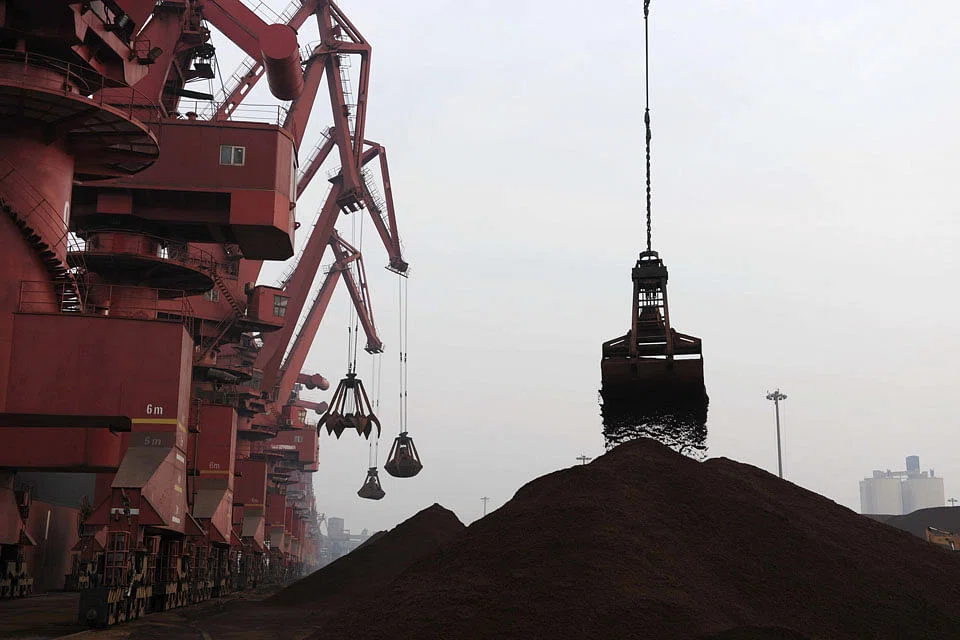
THE worst start to a year for ships hauling iron ore since at least 2000 has gotten so bad that rates no longer cover crew costs. Now for the bad news.
China, whose demand for iron ore grew the most over the past decade, will consume less steel on an annual basis for the first time since 1995, the World Steel Association says. That's a sign to Morgan Stanley that the economy's need for imported ore cargoes will drop, something that last happened in 2010, according to data compiled by Bloomberg.
"What we see clearly is a significant slowdown in Chinese demand," Fotis Giannakoulis, a New York-based shipping analyst at the bank, said by phone on April 29. "The next 18 months, they look very difficult."
A record expansion over the past half-decade in the global fleet of Capesizes flooded the market with ships, leaving some of the 1,000-foot vessels earning less than crew salaries on global trade routes. The same carriers earned about US$230,000 a day back in 2008 when rates reached a record.
Capesizes earned US$3,174 a day on April 30, according to one of two global prices published by the Baltic Exchange, a London-based provider of freight rates. The ships need US$3,233 to pay crews, according to data from Moore Stephens, a UK-based consultant that tracks the industry's expenses.
Freight rates vary across routes and vessels can also earn more money on long-term charters, according to Erik Nikolai Stavseth, an analyst at Arctic Securities in Oslo.
China imported an average of 75.7 million tonnes a month of iron ore in the first quarter, about 2 per cent more than a year earlier, customs data show. The nation's purchases of seaborne cargoes this year will decrease by three million tonnes to 927 million, Morgan Stanley estimates. That drop is the equivalent of about 20 Capesize cargoes.
Steel use in China, which accounts for about two in every three iron-ore cargoes, will drop 0.5 per cent to 707.2 million tonnes in 2015 and 703.7 million tonnes next year, the World Steel Association estimates. Dry-bulk ships carry more iron ore than any other commodity.
"This is extremely negative for Capesize demand," Eirik Haavaldsen, an analyst at Pareto Securities in Oslo, said by phone on April 28. "You're still going to see fleet growth exceeding demand growth if this is the new scenario and then rates will not move from the current levels." The optimistic scenario is that iron-ore markets are so bad that China's higher-cost domestic miners may be more vulnerable to weaker steel consumption than international suppliers, according to Clarkson plc, the biggest shipbroker. The company estimates a 6 per cent increase in cargoes to the country, down from 8 per cent growth it anticipated at the end of last year.
While benchmark iron-ore prices have rallied 19 per cent from their trough April 2, they're still 65 per cent below the peak reached in 2013, Metal Bulletin data show.
China's domestically mined ore, typically lower-quality than international supplies, will drop by the equivalent of 50 million to 55 million tonnes of international-standard ore in 2015, Colin Hamilton, the head of commodities research at Macquarie Group in London, said by phone April 29. Most or all of the missing supply will be replaced by seaborne imports, he said.
"The low-cost producers are based in Brazil and Australia so those ones could potentially replace your Chinese domestic second-tier iron ore producers," Henriette van Niekerk, head of dry bulk analysis at Clarkson, said by phone on April 24.
The slump in rates will also hasten demolition, curbing the growth that caused the slump. As much as 6 per cent of the world's fleet could be removed this year while owners are also idling ships, according to Charles Rupinski, an analyst who follows shipping for Global Hunter Securities in New York.
The portents from China and the iron-ore market are not encouraging.
"The dry bulk market needs a faster growth environment from China," Mr Stavseth, the analyst at Arctic, said by phone on April 30. "Do you believe in China? If the answer is no, then I say forget it." Bloomberg
TRENDING NOW

He built the Vingroup empire. Now South-east Asia’s richest man is handing some key roles to his sons
China’s Pinglu Canal likely to benefit Singapore, other South-east Asia ports in the long term
Suntec Reit to increase Singapore focus, sell three Australia properties

Despite the de-dollarisation debate, demand for dollar liquidity in Asia is growing

