

BAIC to raise 3b yuan for its electric-car business
It will sell shares in the unit on Shanghai's exchange for emerging firms: sources
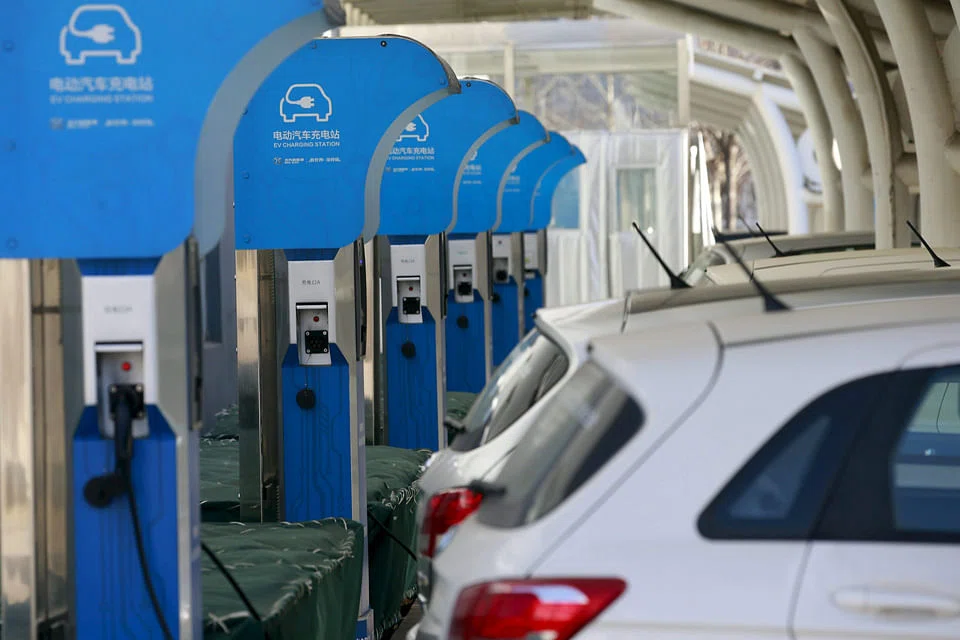
Beijing
BAIC Group is seeking to raise about three billion yuan (S$638.3 million) in a financing round for its electric-car business, with plans to sell shares in the unit on Shanghai's exchange for emerging companies, according to people familiar with the matter.
Beijing Electric Vehicle Co, which is 60 per cent controlled by BAIC, has attracted investments from technology companies including Le Holdings (Beijing) Co, said the people, who asked not to be identified because the information is confidential.
BJEV, as the unit is called, plans to use the funds from the initial public offering to cut debt, make investments and as working capital, according to the people.
China has made electric vehicles a strategic initiative as part of its push to lead in the automotive technology, curb pollution and cut dependence on imported oil.
BAIC's financing plan follows BYD Co's filing last year to sell additional shares and raise funds for its new-energy vehicle business.
Global carmakers also plan to cash in on the rising demand, with Tesla Motors Inc seeking a local partner to start production in China.
"There shouldn't be a lack of investor appetite to back China's electric- car industry," said Steve Man, a Hong Kong-based analyst covering the auto industry at Bloomberg Intelligence. "China is resolute in tackling the environmental calamity that it's facing."
Representatives for BAIC and Le Holdings declined to comment.
BAIC Motor's shares closed 5.35 per cent lower on Tuesday to HK$6.02 while the benchmark Hang Seng Index slid 0.73 per cent.
BJEV has three other founding shareholders besides BAIC, all of which are owned by the Beijing government.
The carmaker's electric vehicle sales may more than double to 55,000 units this year from 20,000 last year, and reach as many as 700,000 units annually by 2020, according to Chen Ping, chief engineer of BJEV.
The company is developing its first plug-in hybrid model, which runs on a rechargeable battery backed up by a small internal combustion engine, Mr Chen said in January. It is working with China Petroleum & Chemical Corp, also known as Sinopec, to provide battery replacement for electric vehicles at its gas stations.
Le Holdings is teaming up with Aston Martin Lagonda Ltd to help bring its electric RapidE vehicle to market by 2018, providing the powertrain and battery pack. It also backs Faraday Future, the electric-vehicle startup planning to manufacture its first car in 2017 at a US$1 billion factory near Las Vegas.
Sales of new-energy vehicles, which include plug-in hybrids, surged 3.4 times to 331,092 units in 2015, according to data from the China Association of Automobile Manufacturers. BLOOMBERG
TRENDING NOW

GCash parent Mynt rises in market debut after South-east Asia’s top 2026 IPO

In the age of AI, what is a university education for?
Singapore to use ‘every legal and regulatory lever’ against companies linked to haze: Shanmugam
‘IPOs are not the only vehicle’: KKR heads for record exits even as firms stay private for longer

