

Bicycles are taking over Europe's streets
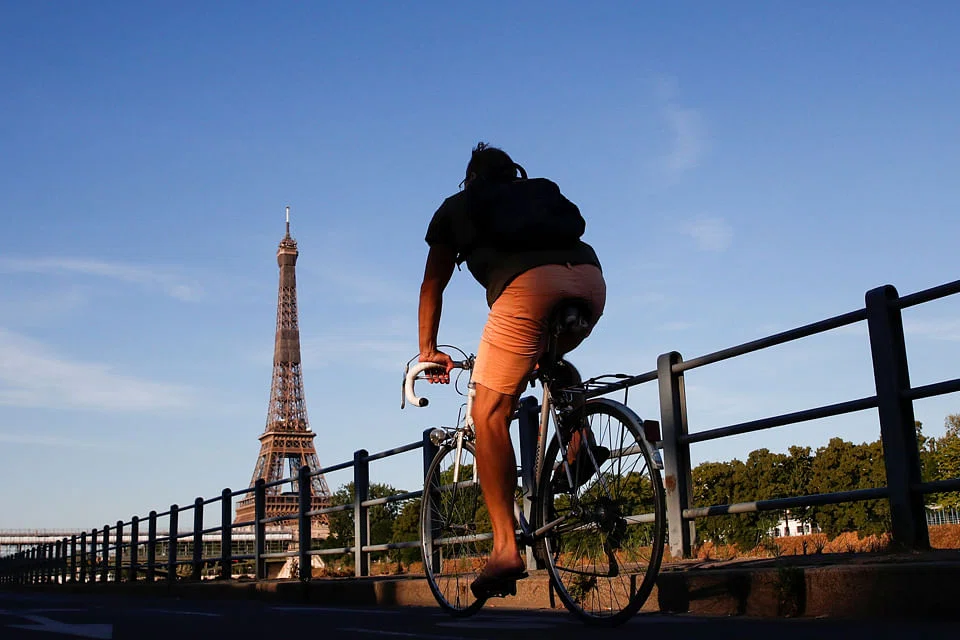
Berlin
BICYCLES are increasingly muscling aside cars on Europe's city streets, as the novel coronavirus accelerates a shift towards pedal power.
Even before the pandemic, bicycles were enjoying an uptick in demand from environmentally conscious consumers, but the risk of contagion on buses and subways have increased the appeal. The emergence of e-bikes, which boost power with an electric motor, has removed some of the sweat factor, making biking a viable option for more consumers after lockdowns lifted.
Governments are fuelling the trend, offering buying incentives ranging from 100 euros (S$157) to as much as 1,500 euros for heavy business users of e-bikes. Cities from Berlin to Lisbon are also opening up more space, with almost 1,500 kilometres of new lanes promised as a result of the public-health crisis, said the European Cyclists' Federation.
"People want self-supporting and sustainable mobility, that is a transformation in society," said Susanne Puello, an industry veteran who helps run Pierer Mobility's e-bike business, including the Husqvarna and R Raymon brands. "Corona(virus) is a phenomenal push in that direction."
The unit's revenue is set to triple to more than 100 million euros in 2020 compared with two years ago, and the bikemaker expects sales to jump to about 500 million euros by 2025, putting it at the heels of industry heavyweights like Dutch manufacturer Accell Group, Specialized Bicycle Components of the US, and Taiwan's Giant Manufacturing and Merida Industry.
Swelling demand has also propelled new services like Swapfiets. The Amsterdam-based company that offers bike subscriptions on Thursday announced plans to expand to London, Milan and Paris before the end of the year, after surging demand during the pandemic lifted its customer base to more than 200,000.
The company - majority owned by Pon Holdings, the maker of Gazelle and Kalkhoff bikes - plans to add more electric-powered bicycles and scooters to its range. Swapfiets offers long-term rentals and differs from ad-hoc services like Uber Technologies's Jump, which was folded into Lime in the midst of the spread of the disease.
"Corona(virus) only contributes to the decision, but is not really the cause," said Swapfiets managing director Onno Huyghe. "Most people simply recognise that the bicycle is the best means of transport" in the city.
During the shutdown, people across Germany spent twice as much time riding their bikes as before, said Stephanie Krone, a traffic expert at German cycling association ADFC. Bike shops are currently seeing an "unprecedented boom", but for that to continue, municipalities must improve infrastructure to accommodate all the newcomers, she said.
Demand in Europe's largest economy is backed in part by programmes such as tax benefits for employers to provide leased bikes for workers, as part of Germany's efforts to combat climate change. Puello estimates that one in four electric bikes, which typically cost more than 2,000 euros, was leased last year.
Germany is by far the largest bicycle market in Europe, with 1.36 million electric bikes sold in 2019 - more than double the number three years earlier. By comparison, 3.6 million cars were sold in the country last year, and the market has tumbled 35 per cent in the first half of 2020.
The lockdown prompted authorities in 32 of the European Union's biggest cities to bring forward planned improvements, said the European Cyclists' Federation. Belgium, Denmark, and the Netherlands are pioneering fast lanes designed for commuters.
Many of the plans come at the expense of car traffic. Notoriously congested Rome, for instance, mostly just painted bike lanes on existing roads. Berlin and Paris set up pop-up lanes in the midst of the pandemic.
Women are one of the key drivers for increased e-bike sales. Giant, for instance, created a separate female-focused brand.
To a certain extent, the bike industry's gain is carmakers' pain. More than half of consumers see electric bikes as a suitable substitute for some car usage, and 28 per cent see e-bikes in position to mostly replace cars for inner-city transport, showed a survey by Internetstores, an online bike retailer owned by Austrian billionaire Rene Benko's Signa Holding GmbH.
The company expects cycling trends to help it grow by about 30 per cent annually in the coming years, a rate that could put it on course to hit 1 billion euros in revenue as early as 2023. BLOOMBERG
TRENDING NOW

He built the Vingroup empire. Now South-east Asia’s richest man is handing some key roles to his sons

Quarter of Singtel special discounted shares sold ahead of CPF Board transfer

Why Tan Aik Keong of digital solutions specialist Agmo wants to make himself less indispensable

Asia needs new energy security architecture

