Biden's expected pick for energy secretary could lead EV charge
Jennifer Granholm has to make good on his campaign promise to help US compete with China on electric vehicles
 Add BT as a preferred source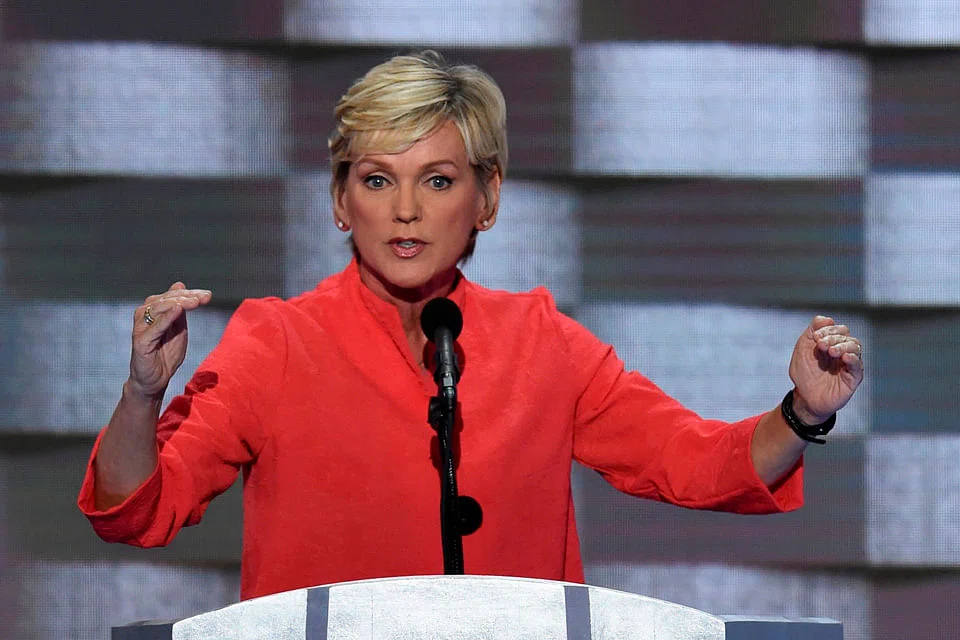
DeeperDive is a beta AI feature. Refer to full articles for the facts.
Detroit
WHEN Jennifer Granholm was governor of auto-manufacturing Michigan, she led a charge that secured a whopping US$1.35 billion in federal funding for companies to make electric cars and batteries in her state.
As President-elect Joe Biden's expected energy secretary, Ms Granholm now faces a bigger task: making good on his campaign promise to help the United States compete with China on electric vehicles (EVs) as part of a US$2 trillion plan to fight climate change.
Mr Biden has said China was set to dramatically outpace the US in EV production. But the US, he said after the Nov 3 election, could "own" the market with the right green policies. He has promised to build 550,000 EV charging stations and create over one million jobs by investing in clean energy research.
His transition team did not respond to a request for comment on how Ms Granholm, who sources said on Tuesday would be nominated by Mr Biden, would push EVs.
To do so, Mr Biden's administration will need to coax a closely divided Congress to approve tax credits and billions of dollars more in stimulus funding. The Democratic president-elect takes office on Jan 20.
Navigate Asia in
a new global order
Get the insights delivered to your inbox.
Joe Britton, executive director of the Zero Emission Transportation Association, or ZETA, was optimistic that Ms Granholm, who got green initiatives done in Rust-Belt Michigan, could make a difference.
"If we cultivate the electric vehicle sector, we can create hundreds of thousands of manufacturing jobs and Governor Granholm has been a key advocate in driving that economic development," he said.
ZETA, a group of 28 car and utility companies, including Tesla Inc, PG&E Corp and Southern Co, was launched last month to lobby for EV-friendly policies The Energy Department under Ms Granholm, who would need Senate confirmation, could play a critical role in deploying advanced vehicle, battery and supply chain manufacturing, Mr Britton said.
That would be a change from Republican President Donald Trump. Under a policy of "energy dominance" to boost oil and natural gas output, his administration rejected new tax credits for EVs, proposed to kill existing ones, and made it easier to sell petrol-powered vehicles.
While most of the Energy Department's budget goes to modernising the country's stockpile of nuclear warheads and cleaning up nuclear sites, a Granholm pick suggests a focus on transport, a large source of greenhouse gas emissions.
Ms Granholm, who was Michigan's governor from 2003 to 2011, worked with Mr Biden on the 2009 bailout of automobile manufacturers General Motors Co and Chrysler, which included incentives for investments in car batteries.
The bailout was initiated by Republican President George W Bush, but mostly overseen by President Barack Obama, a Democrat. Mr Biden was Mr Obama's vice president.
In addition, Ms Granholm helped Michigan's major carmakers and other companies and universities get US$1.3 billion in grants as part of the US$787 billion stimulus act passed by Congress in 2009. Ms Granholm said shortly after her governorship ended that the US grants brought 18 companies to Michigan working on lithium-ion batteries and projected those grants would create 63,000 jobs over time.
It was not all easy going. One battery company, A123, declared bankruptcy in 2012, leading Republican Mitt Romney, then a presidential candidate, to say that Democrats were "gambling away billions of taxpayer dollars".
The speed bumps years ago were mostly due to the US car industry not being ready for transformation, an expert said. "This is always an issue with any kind of transformative change," said Kristin Dziczek, vice president, industry, labour and economics at the Center for Automotive Research in Michigan. "Hitting the timing just right is exceedingly rare."
The US has some catching up to do with China. Sales of EVs in China are expected to be about 1.1 million units this year. Numbers for 2020 US sales were not yet available, but US automakers sold just 326,000 EVs last year.
Besides federal funding, much work will have to be done on the nation's electricity transmission grid to ensure it can take the load of new cars charged with power. REUTERS
Decoding Asia newsletter: your guide to navigating Asia in a new global order. Sign up here to get Decoding Asia newsletter. Delivered to your inbox. Free.
Share with us your feedback on BT's products and services