

Box shipping industry could sail into a downturn in 2026, watchers say
They expect higher capacity and lower demand

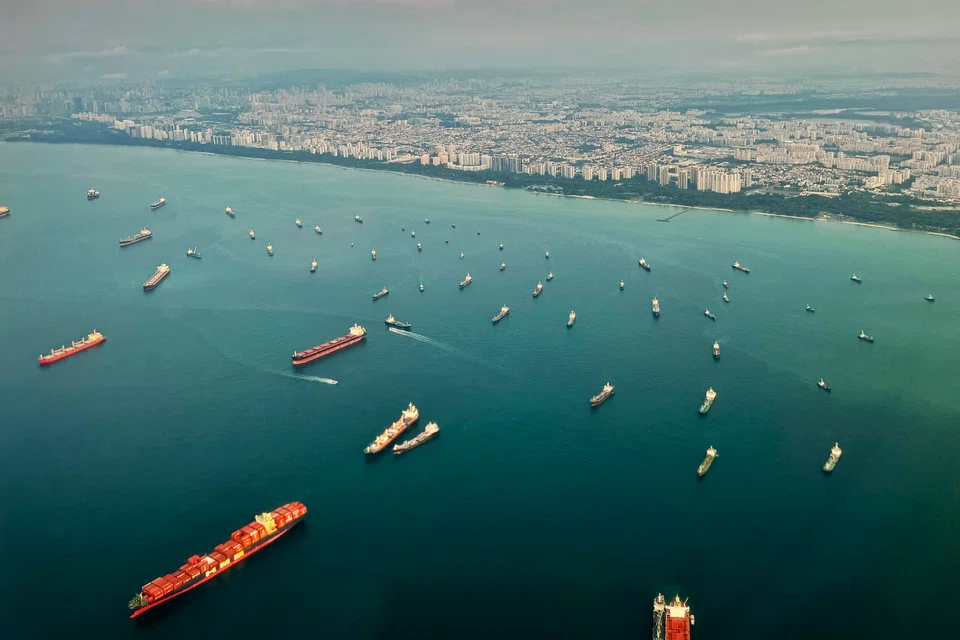
[SINGAPORE] The box shipping industry may experience a cyclical downturn in the new year as capacity is expected to outstrip demand, with supply-demand dynamics being aggravated by vessels’ return to the Suez Canal.
Lars Jensen, chief executive officer of Vespucci Maritime, said the conclusion of a downturn from looking at global supply and demand forecasts is pretty self-evident – the industry is heading into a “fairly normal” cyclical downturn. Not a crash, in other words.
“To me, a crash is what we saw during the financial crisis, 2008 to 2009, for example. That is not what we’re heading into, we are heading into overcapacity like we did in 2015 to 2016,” he elaborated in a panel discussion.
Nerijus Poskus, vice-president of global ocean procurement at Flexport, noted that a significant number of new vessels will be delivered in 2026: about 1.4 million 20-foot-equivalent units (TEUs; the capacity of container ships are sized by their TEU) or almost 5 per cent of the global fleet.
Flexport is a digital freight forwarder and supply chain platform.
A report by Citi noted that container shipping has an order book that amounts to over 30 per cent of the existing fleet – the highest since 2011, with supply expected to rise by 5 per cent on average a year for the next three years.
Ocean and air freight intelligence platform Xeneta believes that the record order book will pile on pressure for ocean carriers from 2026 to 2028.
Linerlytica analyst Tan Hua Joo pointed out that the increase in supply could reach 10 per cent if ships return to using the Suez Canal near the Red Sea.
Detouring around the Cape of Good Hope has been a common practice for most container ships for the past two years, after Yemeni rebels began their attacks on merchant ships in the Red Sea region in late 2023.
Resuming Red Sea transit saves more than 3,000 nautical miles and about 10 days of sailing on the Asia-Europe route. Over time, this will significantly free up vessel capacity.
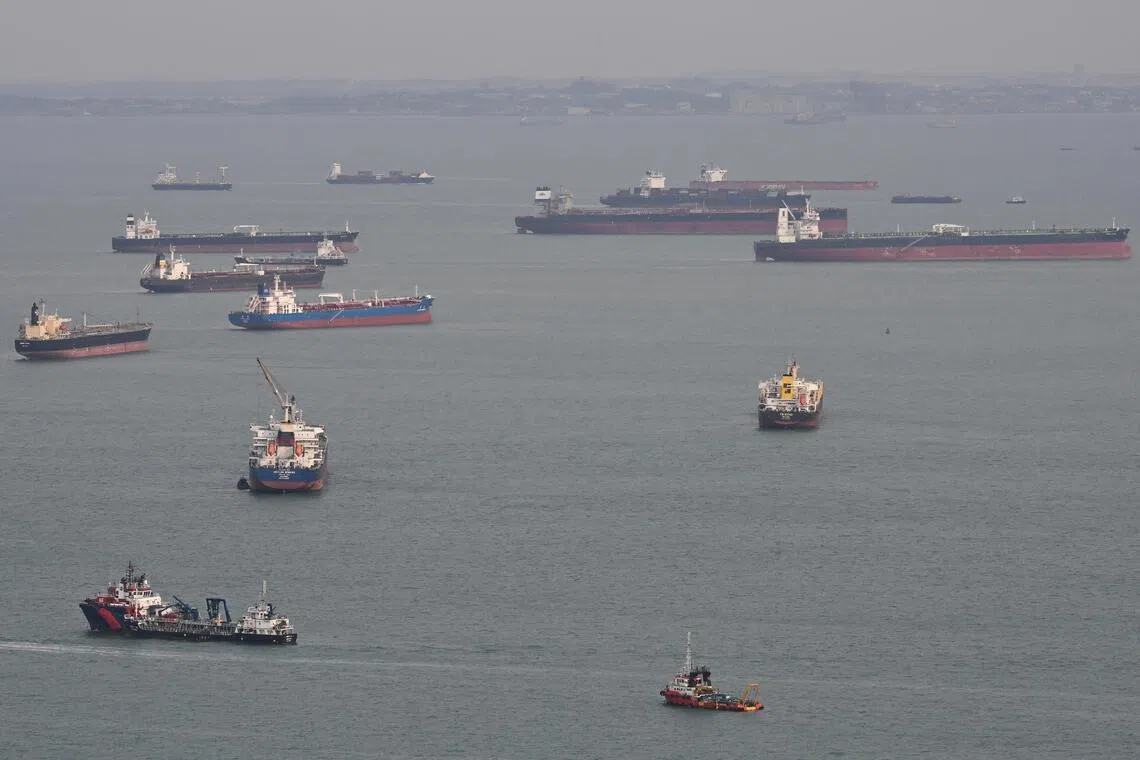
Low demand expected
Demand is expected to rise by less than supply due to lower US imports, following the tariff front-loading that boosted demand in the early part of 2025, Linerlytica’s Tan noted.
Xeneta forecast a 3 per cent increase in demand for container shipping in 2026.
Flexport’s Poskus said that while nobody can predict demand accurately, it should increase by no more than a few percentage points, especially on the major trades.
Leading industry players shared the views of the analysts.
Rodolphe Saade, CEO of CMA CGM Group, said at the world’s third-largest ocean carrier’s third-quarter financial results release in mid-November: “The months ahead will likely be marked by increasing capacity in our industry and softer demand across the market.”
But there is a silver lining for shipping lines, said Poskus, as Africa and some other trades are still growing very fast. “So most of the additional capacity is not going to go on Asia, Europe, transatlantic and transpacific trades.”
Niki Frank, CEO of global forwarding for the Asia-Pacific at DHL, said the logistics heavyweight has seen a double-digit increase on secondary lanes from Asia to the Middle East, Africa and Latin America. Intra-Asia trade remains the vibrant core, driven by sustained regional investment.
Bhavan Vempati, head of Asia market for ocean product at Danish logistics integrator AP Moller-Maersk, pointed out that Chinese companies continue to gain market share globally as they expand across the value chain, while creating cost-competitive products.
He said: “It is likely that this trend, and strong growth from China to emerging markets in Africa, South-east Asia and Latin America, will continue.
“We see companies expanding their manufacturing footprint in South-east Asia as not a short-term tactical reaction to escalating geopolitical tensions, but rather as a long-term strategic move to future-proof supply chains.
“This is leading to continued strong growth in intra-Asia trade with increasing flow of raw materials and semi-finished goods within the region, as well as growing demand for finished goods in Asean, driven by rising income and consumption levels.”
A buyer’s market
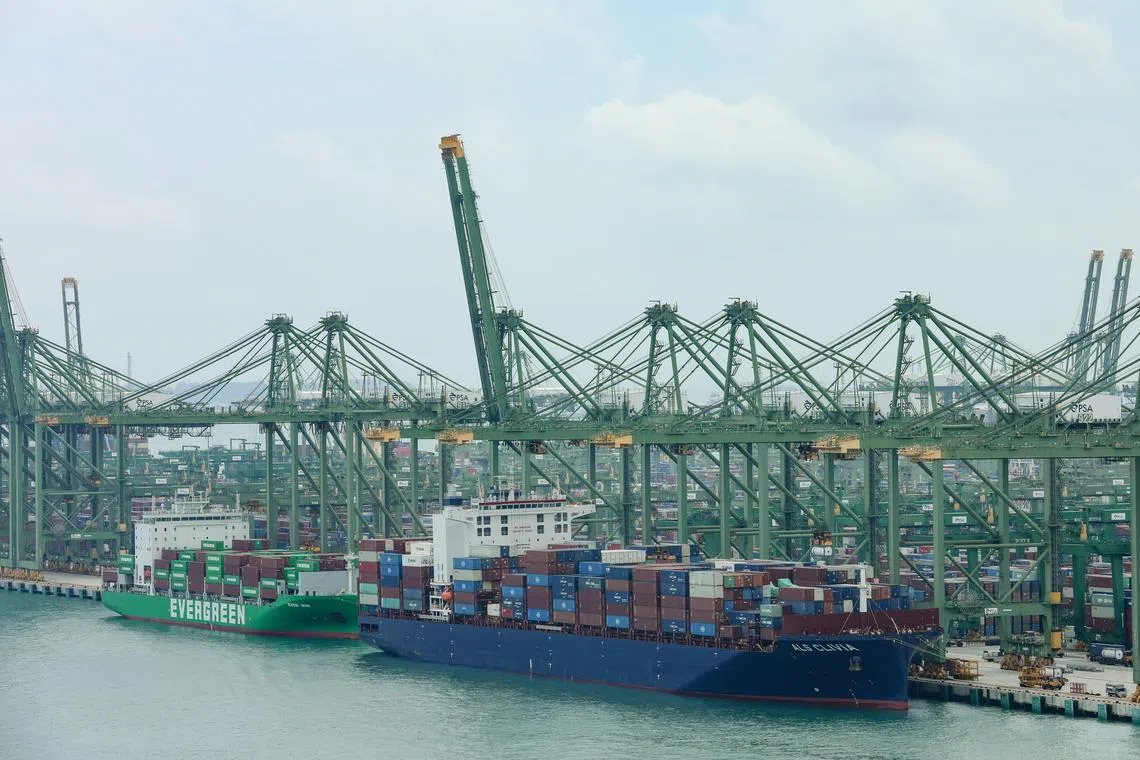
Xeneta pointed out that the tables are starting to turn in shippers’ favour, and they will negotiate more competitive freight rates amid overcapacity.
With rates below breakeven levels now, they will likely face more pressure into 2026, said the Citi report.
Agreeing, Linerlytica’s Tan said the container freight rates downward trend, which started from July, is expected to persist throughout 2026 – even without the return of container ships to the Suez Canal route.
But Xeneta said that carriers will try to protect revenue – and they are extremely good at it – whether by slow steaming, idling or blank sailings.
Slow steaming is a strategy where ships intentionally reduce speed, while a blank sailing is when the carrier aborts a scheduled voyage or skips a planned port of call to cut capacity and costs.
Port congestion expected when ships use Suez Canal
While the return to the Red Sea means shorter time, lower fuel consumption and lower carbon emissions than detouring around South Africa, the immediate ripple effect is not only a rise in capacity, but also port congestion.
Rico Luman, senior economist at Dutch bank ING, said that is the key thing to watch for in container shipping as it will first lead to congestion in European ports, followed by intensified rate pressures.
“Vessels arriving earlier than expected could trigger port congestion, which may again clog container terminals and cause delays for ships and empty containers across supply chains,” said the economist, whose areas of focus include transport and logistics.
Vespucci Maritime’s Jensen holds that view as well. He said it would be a major external shock, causing significant upheaval in global shipping.
A mass return of container ships to the Suez Canal would have a far-reaching impact beyond creating significant congestion in Europe, as the Mediterranean and Asia would also experience knock-on effects.
Apart from vessel bunching causing congestion, Kuehne+Nagel’s executive vice-president for sea logistics Michael Aldwell believes that landside bottlenecks arising from equipment and trucking shortages may also happen.
The return to the Red Sea could reasonably occur within the next six months, ING’s Luman added, as container lines are keen to avoid acting too swiftly.
Maersk’s Vempati told The Business Times in early December: “Once conditions support a safe and reliable network, we can activate our operational plans and change our ocean network back to the normal route through the Suez Canal.
“We will aim to do so in a way that to the extent possible ensures predictability and stability for our customers.”
The Danish integrated logistics player completed a transit in the Red Sea in December, but it stressed that this does not mean it is considering a wider East-West network change back to the maritime corridor.
“Assuming that security thresholds continue to be met, we are considering continuing our stepwise approach towards gradually resuming navigation along the East-West corridor via the Suez Canal and the Red Sea.”
US restocking of inventory might be another external shock
Jensen flagged a pickup in the US economy that results in massive restocking of inventories as the other potential external shock. This would lead to a double-digit increase in demand for the transport market, far above the baseline forecast.
Hapag-Lloyd also sees this as an uncertainty. Rolf Habben Jansen, the German container shipping line’s CEO, estimated the probability of this happening as “well above 50 per cent”, with restocking expected to push container demand up by over 4 per cent in 2026.
Kuehne+Nagel’s Aldwell said that a major US restocking could also arise if the the country’s Supreme Court rules that the tariffs imposed by President Donald Trump are unlawful.
The Supreme Court heard arguments in November but has not determined whether Trump overstepped his powers to impose sweeping tariffs on every US trading partner using a law that was designed for use during a national emergency.
TRENDING NOW

Philippine power giant First Gen rebuffs foreign offers, plans up to US$2.6 billion in expansion

Cliff Tan has 7 million followers and a 4-month waitlist. Why won’t he expand his business?

Could stablecoins be the future of money?

From finance aspirant to Asean CEO: TUV SUD’s Jonas Strahberger on finding people who believe in you

