Box shipping’s voyage of uncertainty expected to continue in 2025
Analysts expect freight rates to remain buoyed by geopolitical tensions, trade wars and labour disputes

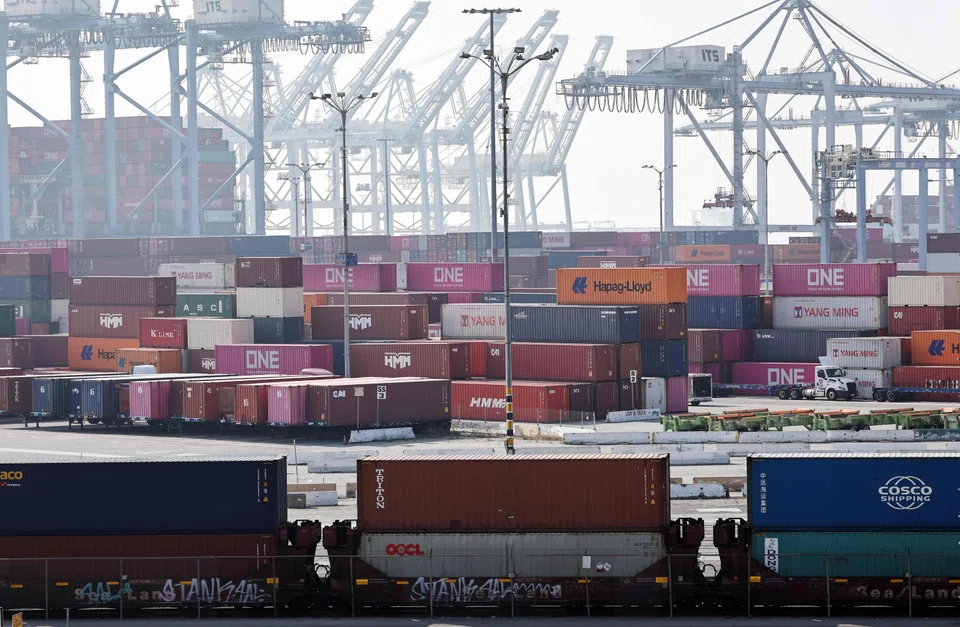
CONTAINER shipping could be in for another year of market uncertainty in 2025, with some analysts expecting freight rates to remain buoyed by multiple factors ranging from geopolitical tensions and trade wars to labour disputes.
German logistics heavyweight DHL expects the freight market to remain volatile into 2025, and freight rates unlikely to drop down to pre-pandemic levels in the immediate future. This is because of the raft of factors at play, including possible new tariffs and labour disputes.
United States president-elect Donald Trump, who takes office in January 2025, is expected to wield a major influence on trade and the shipping sector as he has vowed to raise tariffs, such as on Chinese imports.
During Trump’s first term as president, he ramped up tariffs on Chinese imports during the trade war in 2018, resulting in a spike in ocean container-shipping freight rates by more than 70 per cent, noted sea and air freight intelligence platform Xeneta.
Xeneta commented that shippers have already begun to front-load their freight to the US in anticipation of tariffs from the Trump administration.
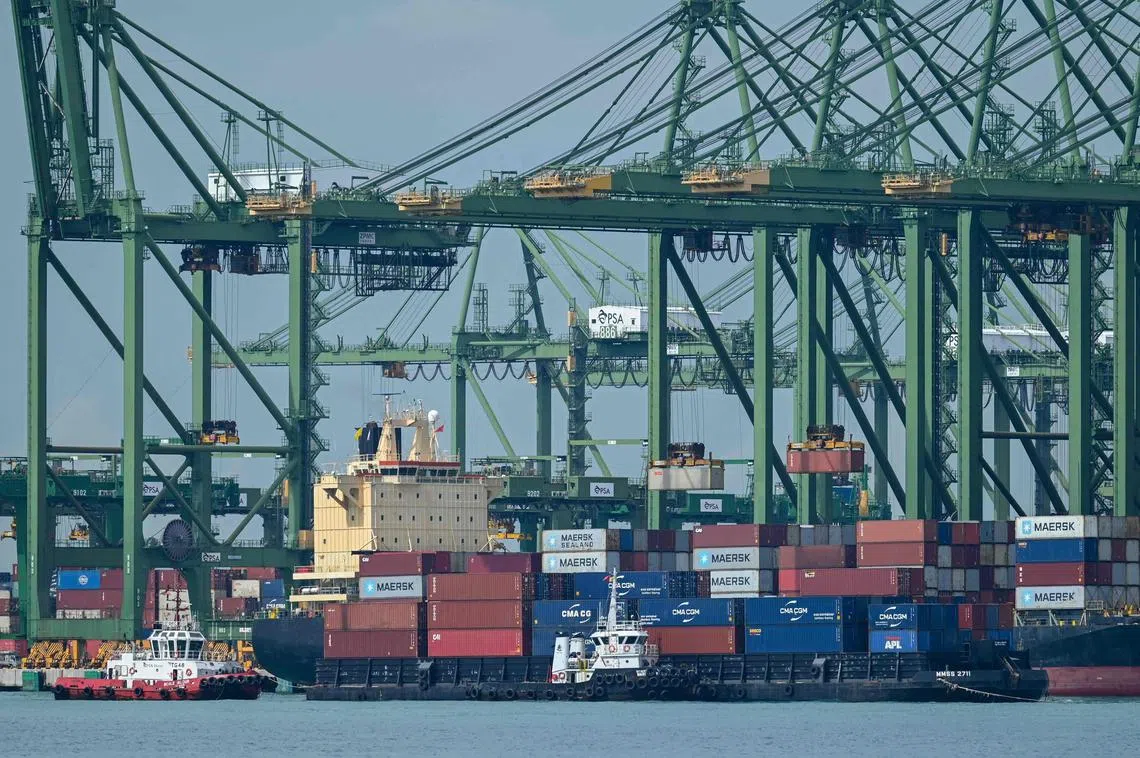
Xeneta’s senior shipping analyst Emily Stausboll pointed out that demand for containers is expected to rise by 4.5 per cent for 2024, which is much higher than what the underlying economic activity would suggest.
“This indicates front-loading is taking place to build up inventories, which should begin to neutralise next year,” she said as she predicted that demand will be 3 per cent higher in 2025.
Indeed, UOB pointed out that there was evidence that front-loading of exports ahead of Trump’s proposed tariffs on US imports was taking place.
Notwithstanding the less favourable base effects compared with October, Singapore’s overall non-oil domestic exports rose 3.4 per cent year on year in November, outperforming a Bloomberg consensus of negative 1 per cent and UOB’s estimate of an improvement of 1.5 per cent.
Trade tariffs
Container xChange’s chief executive Christian Roeloffs said that tariffs make trade less efficient by adding costs, complexity and time as businesses may use transhipments instead of direct routes, or diversify production and assembly sites.
Container prices and freight rates would thus be expected to stay elevated given that additional capacity would be required due to the inefficiency that arises, he said.
Trine Nielsen, global head of ocean freight at Flexport, noted that the market is expecting an 8 per cent increase in ocean shipping capacity in 2025 and only a 3 per cent increase in demand, which will help ease volatility across rate levels and space availability.
Ocean freight rates spiked earlier this year and have stayed elevated as shipping lines have rerouted to South Africa away from the shortest Asia-to-Europe passage, the Suez Canal, which handled 12 per cent of global trade before the diversion.
The diversion is to steer clear of the nearby Red Sea, where Yemen’s Houthi rebels began in late 2023 launching attacks on merchant vessels in retaliation against Israel’s war in Gaza.
Drewry’s World Container Index, as an illustration, was 132 per cent higher year on year as at Dec 13, at US$3,529 per 40-foot container. The composite index of freight rates of box shipping on major routes between the US, Europe and Asia had at one point surged to nearly US$6,000.
Route diversions
Shippers have to contend with not just higher rates, but also shipment delays resulting from the two-week diversion around South Africa that caused congestion at some transhipment hubs, including Singapore.
Lars Jensen, the chief executive officer of Vespucci Maritime and a well known shipping analyst, does not foresee the Suez Canal being safe for shipping for now, with the situation hinging on the development in the Middle East, as well as on the behaviour of the Houthis.
Jensen also flagged a potential problem. “What I think is extremely important to note is the tactical issue that will arise in February and March. This is when the new alliances will be phasing in their entire new networks. That means all the networks will be in – let’s call it what it is – completely disarray for a couple of months, while you’re phasing in the new ones,” he said.
Several major shipping lines are breaking up or forming new alliances, such as the world’s two largest carriers Mediterranean Shipping Company and Maersk going their separate ways as their 2M alliance dismantles.
“That has the practical implication that the carriers will have a very, very hard time managing, for example, a blank sailing strategy,” said Jensen.
“You could end up in a situation with a significant overcapacity issue, potentially, while the new services are being phased in, and, if that happens, all observers of the market should be very careful not to assume that what we see in February and March has any bearing on what the rest of 2025 will look like.”
Blank sailings, arising from a shipping line skipping a certain port or an entire voyage of a scheduled sailing route, are usually used to manage supply in accordance with low demand. But for most of 2024, blank sailings were driven by a lack of vessels, he said.
Blank sailings remained high at 15 to 20 per cent in 2024, making operational reliability a key issue for many shippers.
Nearer in time, some labour disputes that erupted between port operators and workers in 2024 have not been resolved, with at least one at the US East Coast expected in mid-January if the parties are not able to agree on the issue of automation.
Pelaris Cheng, managing director of freight forwarder Hermes Logistics in Singapore, said freight rates have been volatile.
North American freight rates have spiked from US$6,000 per 40-foot container two to three months ago to US$10,000 now, while the rate is now 50 per cent lower to ship to Dubai compared with July and August.
Cheng used to be able to lock in rates as recent as 2022 for six months for shipments bound for the Middle East and quarterly for North American markets, but is now able to secure rates that are effective for only a month and two weeks, respectively.
Asked where freight rates would be in the new year, she said it is difficult to predict. “Hopefully not so volatile,” she said.