

BYD’s car discounts show China’s EV price war is getting worse
Its CEO wrote in an annual letter to shareholders that China’s car industry has entered a “brutal knockout stage.”
CHINA’S efforts to cool its automotive price war are faltering as BYD and rivals expand discounts to avoid ceding ground in the world’s largest car market.
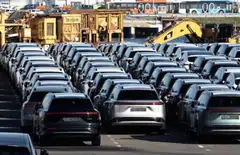
The average price reduction for BYD cars accelerated to a record 10 per cent in March, according to China Auto Market data compiled by Bloomberg. Discounts by competitors such as Geely Automobile Holdings and Chery Automobile have also edged higher, according to the data.
It’s a sobering reminder of the intense competition and overcapacity overshadowing China’s car market as the Beijing auto show gets underway this week.
Facing severe pressure on margins at home, BYD, Geely and other Chinese carmakers have increasingly sought out growth in overseas markets, ranging from Brazil and the UK to Australia and Canada. Regulators’ missives aimed at halting deflationary momentum have fallen on deaf ears so far, and industry observers say it won’t stop the discounting trend anytime soon.
“Price competition will always exist,” said Yale Zhang, managing director of consultancy Automotive Foresight. “It won’t go away this year or the next.”
Almost a year ago, Chinese authorities convened the heads of more than a dozen major electric vehicle makers to bring about a ceasefire in the price war, warning them not to sell cars below cost or to offer unreasonable discounts — something officials have done at least three times this year. Last year’s meeting also covered issues such as “zero-mileage” used-car sales and slow-walking payments to parts suppliers.
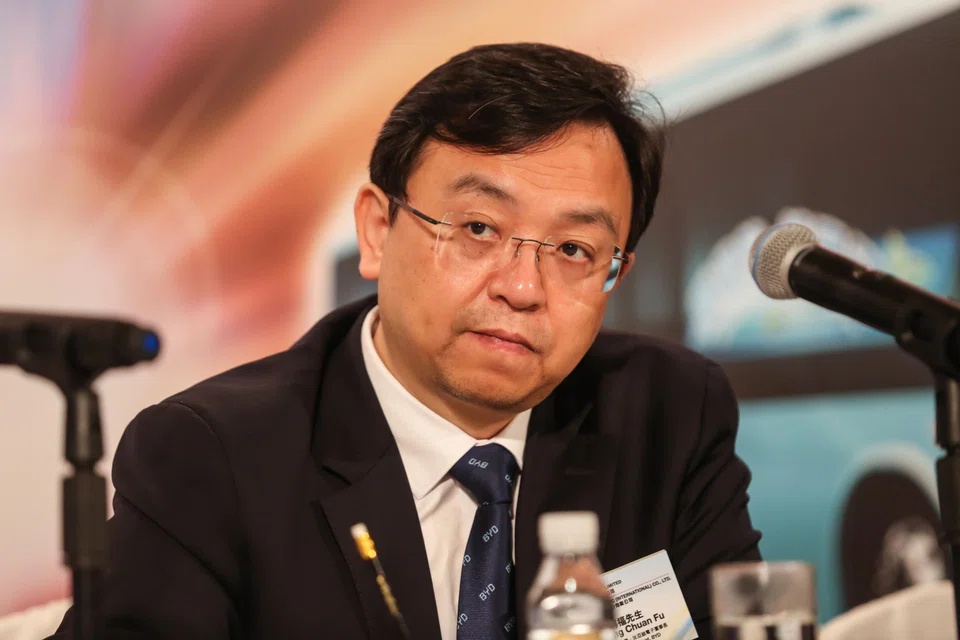
Days later, BYD chief executive officer Wang Chuan-Fu, who’s been dubbed China’s Henry Ford, fought back tears during an investor meeting when discussing “short-term pressures” facing the company and being “misunderstood.”
Famously backed in its early days by legendary investor Warren Buffett, BYD is at the centre of attention because of its position as the industry leader — even as its sales in China have slid for the past seven consecutive months.
In response to stepped-up scrutiny from Beijing, the manufacturer of Song SUVs and Atto crossovers has had to pay parts makers faster than its peers and can no longer deploy discounts as easily to stimulate sales, according to suppliers familiar with the situation, who asked not to be identified discussing private matters.
SEE ALSO



Specifically, the carmaker has been shifting away from an IOU-based system that allowed it to delay invoice fulfillment for months at a time — and has fueled an increase in payments with interest-bearing debt, according to the people.
That, in turn, has loaded up BYD’s balance sheet with liabilities and pushed its net debt-to-equity ratio to 25 per cent, after having been negative for the past four years.
A representative for BYD didn’t respond to a request for comment.
The financial toll from that debt load combined with lower revenue from price cuts has begun to erode BYD’s bottom line, with the carmaker last month reporting its first annual profit drop since the pandemic.
Speaking about the tough competitive environment, CEO Wang wrote in an annual letter to shareholders that China’s car industry has entered a “brutal knockout stage.”
“The auto industry is facing enormous pressure,” Cui Dongshu, secretary general of the China Passenger Car Association, said at a recent industry event. “The performance shows the struggles.”
At the root of those relentless price cuts is overcapacity.
China’s car factories are capable of producing 55.5 million vehicles a year, but domestic sales reached only about 23 million in 2025, according to the China Automotive Technology and Research Centre. That puts average capacity utilisation in Chinese auto factories at just around 50 per cent, an unsustainable figure over the long term.
Ultimately, that excess production may wane if Wang’s prediction bears out for a culling of weaker players through consolidation or collapse. But that type of reckoning could lead to a surge in unemployment that the central and local governments in China have sought to avoid through subsidies and other favourable policy treatment.
For now, some of that surplus volume is finding its way to overseas markets, with EV exports from China more than doubling to a record level in March alone. But those surging Chinese shipments have triggered a backlash in some markets, with the European Union and some countries in Latin America hiking tariffs to protect domestic car production.
In China, the largest automakers have sought to hold onto market share by shortening product cycles and appealing to buyers with a rapid stream of innovations.
BYD recently unveiled more powerful batteries and faster charging capabilities for its EVs. Rival EV-maker Xiaomi Corp.’s CEO Lei Jun said his company has packed almost 20,000 yuan (S$3,740) worth of new features in the latest generation of its popular SU7 electric car, but only raised the vehicle’s price by 4,000 yuan. BLOOMBERG
Decoding Asia newsletter: your guide to navigating Asia in a new global order. Sign up here to get Decoding Asia newsletter. Delivered to your inbox. Free.
Share with us your feedback on BT's products and services
TRENDING NOW

Government to bring forward raising of retirement age, give employers more financial support to create flexi-load jobs
If Europe goes to war, the fallout will be felt in East Asia

Indonesia stocks suffer worst plunge in nearly 30 years as MSCI proposes standalone status

Vietnam’s northern provinces, not Hanoi or Ho Chi Minh City, are powering near 10% GDP growth

