

California leaders set sights on high-speed rail construction
 Add BT as a preferred source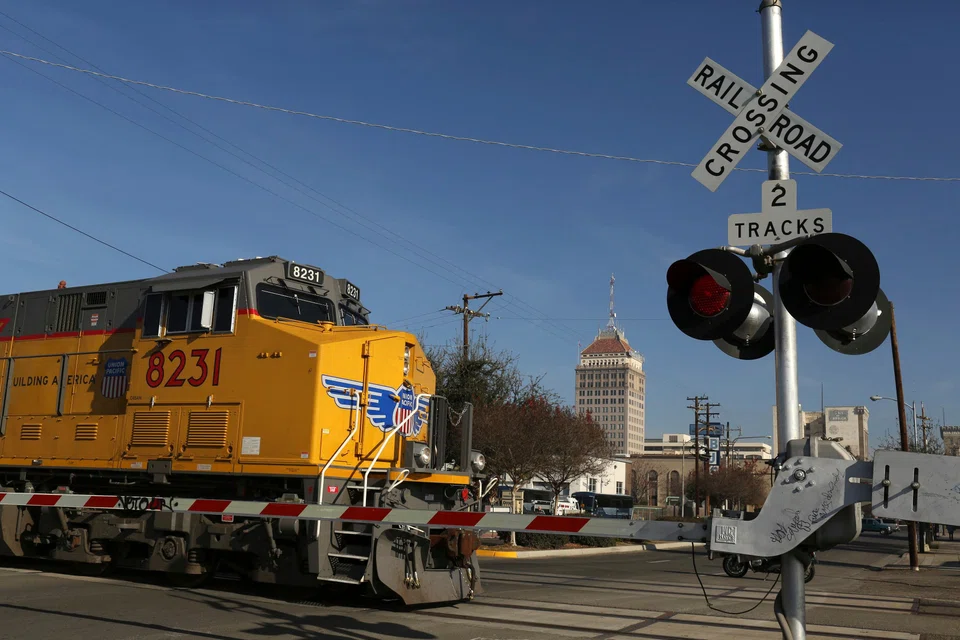
DeeperDive is a beta AI feature. Refer to full articles for the facts.
[FRESNO] California's business leaders on Tuesday ceremoniously broke ground on the country's largest and most ambitious plan for high-speed rail that would eventually transport passengers between Los Angeles and San Francisco in less than three hours.
The architect of California's plan, Governor Jerry Brown, brushed off a few dozen naysayers who protested nearby, saying other great infrastructure feats faced skepticism when originally proposed. "Everything big runs in opposition," said Brown, a Democrat who cited the Golden Gate Bridge and Bay Area Rapid Transit as projects once attacked or called a boondoggle. "This is important," Brown insisted, at the groundbreaking in Fresno.
The San Francisco to Los Angeles route is not expected to be completed until 2029. That trip by car typically takes around six hours but rail will cut travel time in half. Later extensions of the route would add Sacramento and San Diego, connecting 800 miles.
The United States lags behind Europe and Asia in constructing high-speed rail. California's project is one of only a few planned, although it has been mired in environmental lawsuits and eminent domain land disputes.
Construction began last year near Fresno in the Central Valley, a region home to 20 percent of Californians, because of access to federal funds and the ability to advance the project faster at a lower cost. Fresno is an area of high unemployment.
Across the street from the groundbreaking at the site of a demolished Del Monte plant, Paul Katchadourian of Katch Environmental said high-speed rail had already enabled his construction engineering firm to hire over a dozen new employees. "This area where we're standing, it was ... not the nicest side of town. This construction is bringing Fresno to a whole new level," said Katchadourian. "This is something that rarely happens to Fresno, usually federal dollars goes to other parts of the state." In 2008, Californian voters approved nearly US$10 billion of bonds to kickstart the project, estimated to eventually cost US$68 billion. The federal government contributed another US$3.3 billion. Next, the state will look to private partnerships.
Navigate Asia in
a new global order
Get the insights delivered to your inbox.
During Brown's record fourth inauguration on Monday, the governor outlined an aggressive plan to reduce California drivers' petroleum use by up to 50 per cent over 15 years.
US EPA Administrator Gina McCarthy on Tuesday said high-speed rail would help Californians meet that goal. "Few cars, few planes, cleaner trains means cleaner air," she said.
REUTERS
Share with us your feedback on BT's products and services
TRENDING NOW

Shelving S$5 billion office redevelopment plan proved ‘wise’ as geopolitical risks mount: OCBC chairman

Eurokars Group introduces rental car franchises Enterprise Rent-A-Car, National Car Rental, and Alamo to Singapore
20 photos that show how dramatically Singapore has changed in two decades
Singapore’s key exports up 15.3% in March from electronics surge, exceeding forecasts

