

Carmaker pledges to halt combustion engines
 Add BT as a preferred source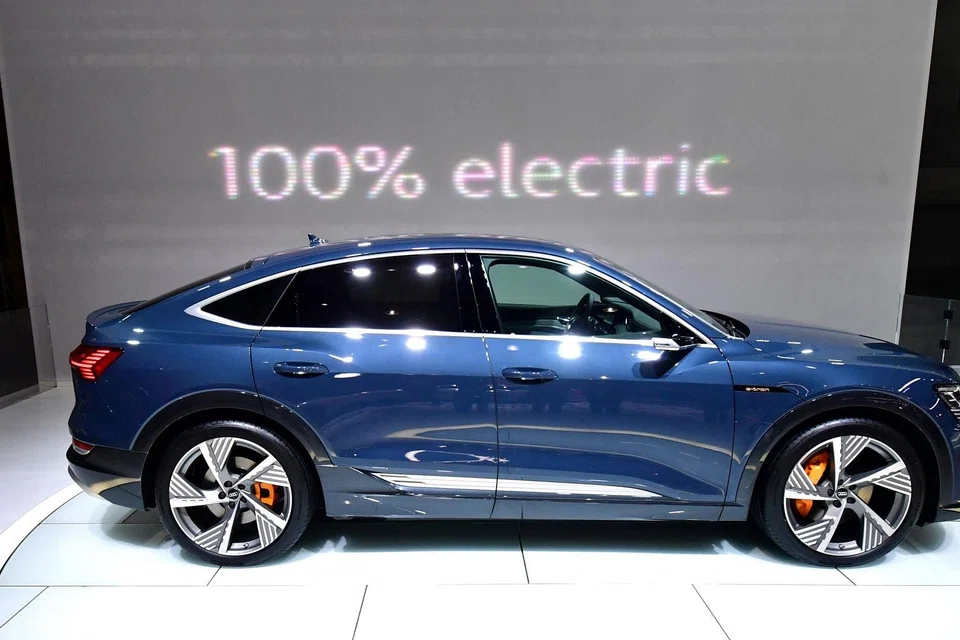
DeeperDive is a beta AI feature. Refer to full articles for the facts.
[PARIS] Several automobile manufacturers have made pledges in recent months to halt or drastically reduce producing cars with internal combustion engines between 2030 and 2035.
The latest was Audi, a subsidiary of Germany's Volkswagen, which pledged Tuesday to launch only fully electric vehicles from 2026 and halt manufacturing cars with internal combustion engines by 2033.
BMW
The German carmaker has increased its electric vehicle sales targets as stricter EU emission limits are pushing all manufacturers to make the shift.
Over the coming decade, BMW now wants to sell 10 million fully-electric vehicles, up from its previous target of 4 million.
The upscale carmaker was an early mover towards electric vehicles with its i3, but was then overtaken, in particular by Tesla.
Navigate Asia in
a new global order
Get the insights delivered to your inbox.
In addition to proposing a fully electric version of each model, BMW also announced in March that its brand Mini would shift completely to electric vehicles within a decade.
BMW plans to invest 400 million euros (S$638.5 million) for a manufacturing line for electric vehicles in place of those with conventional engines at its historic Munich factory.
VOLKSWAGEN
The German car group plans to have electric vehicles account for 60 per cent of sales in Europe by 2030, and 50 per cent of the global total.
It has yet to announce a date for retiring internal combustion engines.
It aims to sell 1 million electric vehicles in 2021 and plans to invest 46 billion euros over five years in its conversion effort.
Volkswagen's luxury carmaker Porsche has not announced an end date for petrol and diesel engines, but is targeting carbon neutrality by 2030.
It is investing 100 million euros to form a joint venture to build batteries with the German firm Customcells.
Lamborghini, which also belongs to the Volkswagen group, announced last month its roadmap to switching towards electric for its luxury sport cars.
It hopes to have electric options for all of its model by the end of 2024.
VOLVO
The subsidiary of the Chinese group Geely plans to retire internal combustion engines and hybrids from its lineup by 2030.
It aims for half of its cars to be electric by 2025.
GM
The US automaker has said it plans to stop building polluting vehicles by 2035, even if it hasn't explicitly stated to offer only electric vehicles.
STELLANTIS
The group which contains the Jeep, Chrysler, Fiat, Peugeot, Citroen and Opel brands has said it will no longer invest in the development of new internal combustion engines.
It aims to for 70 per cent of its sales to be electric and hybrid by 2030, up from 14 per cent this year.
TOYOTA
The pioneer in hybrids aims for them to account for 70 per cent of sales in 2025 and traditional internal combustion engines to account for just 10 per cent.
Another 10 per cent would be plug-in hybrids and the remaining 10 per cent fully-electric or hydrogen powered.
DAIMLER
The Mercedes-Benz maker said in April it plans to accelerate its shift towards electric vehicles, doubling the sale of fully-electric and hybrids this year.
By 2025, it aims for 25 per cent of sales to be electric, and 50 per cent by 2030.
AFP
Decoding Asia newsletter: your guide to navigating Asia in a new global order. Sign up here to get Decoding Asia newsletter. Delivered to your inbox. Free.
Share with us your feedback on BT's products and services
TRENDING NOW

Shelving S$5 billion office redevelopment plan proved ‘wise’ as geopolitical risks mount: OCBC chairman

China pips the US if Asean is forced to choose, but analysts warn against reading it like a sports result

Beijing’s calculated silence on the Iran war

Middle East-linked energy supply shocks put Asean Power Grid back in focus

