

Cathay's profit margins under pressure as fuel-hedging losses mount
Hong Kong
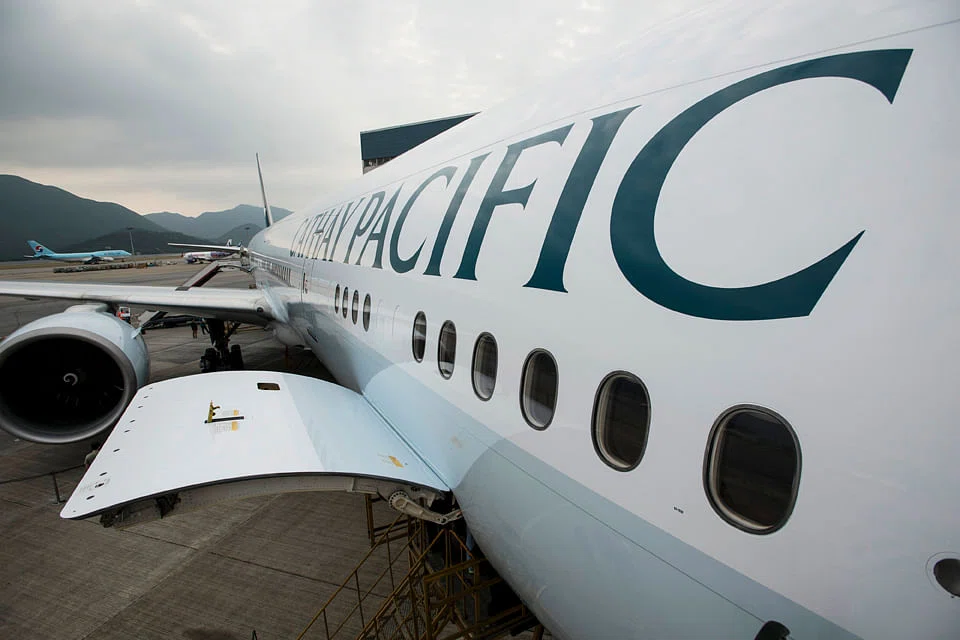
CATHAY Pacific Airways Ltd, the marquee Hong Kong airline, suffered millions of dollars in losses from fuel-hedges in the past two years. With the city's government adding new fees on passengers to fund the building of a runway, the carrier faces more challenges to retain profit margins.
The charges to fund the expansion of the Chek Lap Kok airport follows the city government banning from February the fuel surcharges that airlines could levy after crude oil prices tumbled to as low as US$26 a barrel.
The measures threaten to further depress ticket prices and yields as the company fights to prevent passengers from switching to Chinese and Middle Eastern airlines that are expanding rapidly in the region.
Chief executive officer Ivan Chu, who will detail first-half results on Wednesday, has already warned that the aggressive capacity injection by his rivals is putting "intense pressure" on the metric, a sentiment also shared by Singapore Airlines Ltd.
"There has been substantial capacity increase from Chinese carriers," said K Ajith, an analyst at UOB Kay Hian Pte in Singapore, who recommends that investors hold the stock. "Cathay has to lower fares to make it more attractive for people to come to Hong Kong and that's hurting yields."
Cathay may report that net income fell 46 per cent to HK$1.07 billion (S$185 million) in the first half, according to the median estimate in a Bloomberg News survey of four analysts. The report could include a HK$4.9 billion fuel-hedging loss, according to the average of two analyst estimates.
Cathay is among airlines that did not benefit fully from the drop in oil prices as the level at which it has hedged is higher than the spot market price. That has prompted the carrier to account for paper losses. The airline declined to comment ahead of the earnings.
Shares of Cathay have declined 4.6 per cent this year, compared with a 4.6 per cent gain in the benchmark Hang Seng Index.
Yields - or money earned from carrying a passenger for one kilometre - are under pressure as Air China Ltd, China Eastern Airlines Corp and other carriers offer more direct services from the mainland, making it less attractive to hop via Hong Kong.
That's coming at a time when the Middle East's "Big Three" - Emirates, Etihad Airways and Qatar Airways - expand more into Asia and offer luxuries such as butlers and shower rooms.
Every one per cent decline in yields is expected to lower Cathay's first-half profit before tax by about HK$347 million, UOB Kay Hian's Mr Ajith said. The metric is one of the key indicators of an airline's profitability.
Chinese carriers have added 25 to 30 per cent more direct international flights so far this year, Eric Lin, an analyst with UBS Group AG in Hong Kong, said on Aug 9. That compares with a 2.6 per cent increase for Cathay during the same period, according to the company's June operations statement.
Hong Kong aviation authorities told airlines to remove fuel surcharges from Feb 1, cutting Cathay's ticket prices by 6 to 7 per cent, which is a "disaster" for the city's flag carrier given its fuel-hedging policy, according to a CIMB Group Holdings Ltd note dated June 25.
Airlines charged HK$109 for long-haul and HK$24 for short-haul flights from Hong Kong before the levy was eliminated, according to the Civil Aviation Department.
Cathay said in March that 60 per cent of its fuel needs this year is hedged at an average US$85 a barrel. Brent crude now trades at about US$47 a barrel. BLOOMBERG
TRENDING NOW

Nvidia reinstates Jensen Huang as CEO; Trump says move poses no national security risk

Indonesia’s coal tycoon Low Tuck Kwong replaced as Bayan Resources president-director

Nvidia surges 33% after reinstating Jensen Huang, reviving AI trade; stocks soar in US and Europe

Consider lowering homeownership barriers for some non-resident foreigners

