CEOs are scaling down business travel - maybe for good
 Add BT as a preferred source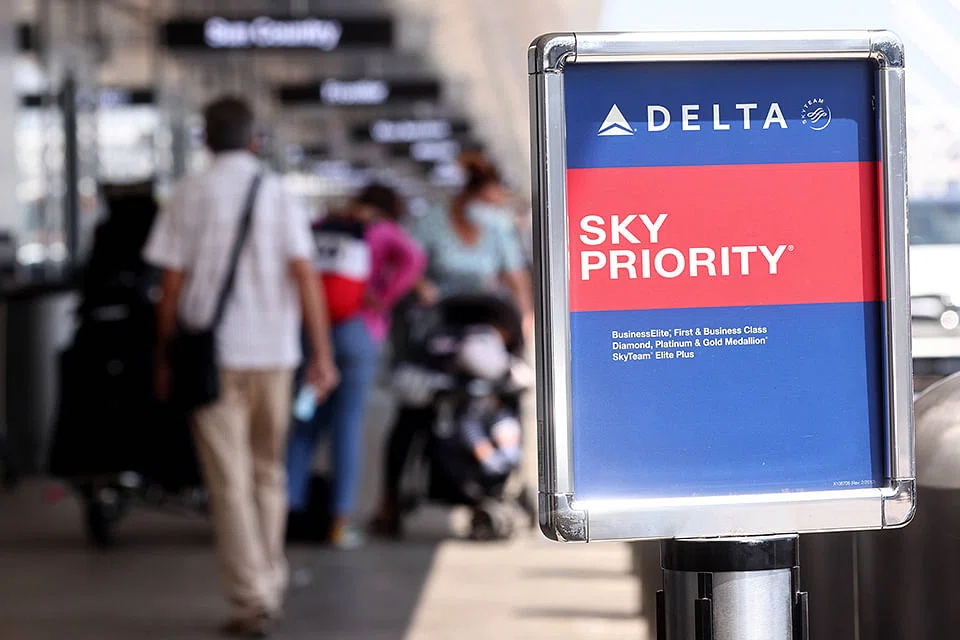
DeeperDive is a beta AI feature. Refer to full articles for the facts.
Amsterdam
BUSINESS travel as we've known it is a thing of the past. From Pfizer Inc, Michelin and LG Electronics Inc to HSBC Holdings Plc, Hershey Co, Invesco Ltd and Deutsche Bank AG, businesses around the world are signalling that innovative new communications tools are making many pre-pandemic-era trips history.
Take Akzo Nobel NV, Europe's biggest paint maker, for instance. At its Amsterdam headquarters, chief executive officer Thierry Vanlancker has spent the past year watching his manufacturing head, David Prinselaar, flap his arms, madly gesticulate and seemingly talk to himself while "visiting" 124 plants by directing staff with high-definition augmented-reality headgear on factory floors.
A task that meant crisscrossing the globe in a plane before is now done in a fraction of the time - and with no jet lag. For Mr Vanlancker, there's no going back.
"Trips to drum up business could drop by a third, and internal meetings by even more," he said in an interview. "It's a good thing for our wallets and helps our sustainability targets. Our customers have had a year of training, so it's not a social no-no anymore to just reach out by video... There's an enormous efficiency element."
A Bloomberg survey of 45 large businesses in the United States, Europe and Asia shows that 84 per cent plan to spend less on travel post-pandemic. A majority of the respondents cutting travel budgets see reductions of between 20 and 40 per cent, with about two in three slashing both internal and external in-person meetings. The ease and efficiency of virtual software, cost savings and lower carbon emissions were the primary reasons cited for the cutbacks.
Navigate Asia in
a new global order
Get the insights delivered to your inbox.
According to the Global Business Travel Association, spending on corporate trips could slide to as low as US$1.24 trillion by 2024 from a pre-pandemic peak in 2019 of US$1.43 trillion.
Business travel has "forever changed," Greg Hayes, CEO of jet-engine maker Raytheon Technologies Corp, said in a Bloomberg Radio interview in July. About 30 per cent of normal commercial air traffic is corporate-related but only half of that is likely mandatory, he said.
While the market may eventually recover, sophisticated communication technologies have "really changed our thinking in terms of productivity," he said.
Having saved billions from slashed travel budgets during the pandemic with only a marginal impact on operations, companies, banks, consulting firms and government offices will be hard pressed to explain why they'd return to their old ways.
Kit Kat chocolate-bar maker Hershey said the pandemic showed that online meetings were a more efficient use of time and financial resources. Companies like Pfizer are grappling with questions about what one accomplishes with a trip that can't be done virtually, Tina Quattlebaum, its director of global travel operations, said at the GBTA Mid-Year Virtual Summit in July.
"We don't think business travel will ever return to 2019 levels," said Will Hawkley, the global head of travel and leisure at KPMG LLP.
"Corporates are looking at their bottom-line, their environmental commitments, the demand from employees for more flexible working and thinking: Why do I have to bring that back?"
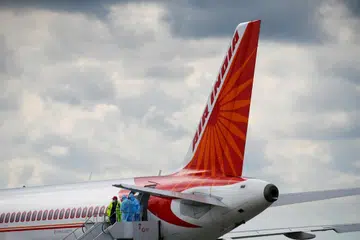
That's a blow to the airline and hospitality industries - already among the biggest casualties of the pandemic. Business travellers, who buy premium-class or more-expensive refundable tickets, rang in as much as three-quarters of airlines' pre-pandemic profits while accounting for only 12 per cent of seats, according to PwC.
The hotels sector, which draws about two-thirds of its revenue from business travellers, could see a dip of as much as 18 per cent by 2022 as virtual meetings replace 27 per cent of corporate travel volumes, a Morgan Stanley study shows.
The world's biggest airlines collectively lost a whopping US$126 billion in 2020 and are set to lose another US$48 billion this year, according to the International Air Transport Association, their lobby.
Airlines are trying to stay optimistic. Delta CEO Ed Bastian said about 80 per cent of the carrier's large corporate clients have indicated that as much as 90 per cent of their pre-Covid business travel will eventually return.
"I don't expect we're going to see a degradation in the aggregate of business demand over time," he said in an interview. "The more people are connected in person, the more opportunities are created. I don't see this being a significant body-blow to the industry as prognosticated by some."
Travelling thousands of miles to meet with customers to discuss key issues across a table or over a meal made business sense before the pandemic and that hasn't changed, said Warren East, the CEO of Rolls-Royce Holdings Plc, which makes aircraft engines.
"Covid-19 has definitely taught people that some of the mad regular dashes across the Atlantic hither and thither aren't necessary," he said, speaking at a net-zero event on June 17. "But when you peel back beyond that superficial analysis, you realise people were doing it because they thought it delivered real benefit to them."
There may also be competitive pressures to keep flying, Air France-KLM CEO Ben Smith said in an interview. "I hear many of our corporate customers saying that the day they lose an account because they weren't somewhere face-to-face will immediately bring them back to the way operations were before."
Airlines are banking on a recovery sparked by pent-up demand after about 18 months when executives couldn't visit customers - hopes that are being dented by the spread of the delta variant.
Deutsche Bank's global head of Investment Banking Coverage and Advisory, Drew Goldman, said that while the bank's client-related business travel will return to about 90 per cent of pre-pandemic levels, trips for internal meetings will probably be a shadow of what they were before - at 25-30 per cent.
In Singapore, UOB Ltd, South-east Asia's third-biggest bank, plans to cut its travel budget by as much as 50 per cent, and will limit trips to cases "where face-to-face interaction is essential", said Dean Tong, head of group human resources.
While airlines grapple with the possibility of fewer business customers, some of those clients are happy not to be zipping around the world all the time.
"A nice side effect of fewer long-haul business trips is less stress for the people who fly," Hans-Ingo Biehl, the head of VDR, the German Business Travel Association, said in an interview. A study by the Baylor College of Medicine found frequent fliers have the same cancer risk as obese people. Also, companies have found that jet lag hurts productivity.
"There are a lot of myths and fantasy about travel, but it's really very tiring," said Michelin CEO Florent Menegaux. "We should do it only when it's absolutely necessary. I travel a lot and I can tell you it's physically gruelling and takes a heavy toll." BLOOMBERG
Decoding Asia newsletter: your guide to navigating Asia in a new global order. Sign up here to get Decoding Asia newsletter. Delivered to your inbox. Free.
Share with us your feedback on BT's products and services