

China billionaires chasing electric-car talent power salaries
Beijing
CHINA's biggest iPhone maker, largest e-commerce company and leading Internet-video producer are all in the hunt to build electric cars - and to grab the small pool of available talent to build them.
All of this is great news for marketing professional Ronan Lu, 32. The bidding wars see some workers earning double their peers' salaries and others landing jobs with minimal experience, according to recruiters.
"Many companies offered me job opportunities with good payment, but I chose LeEco because I believe it has great potential," said Mr Lu, who left Toyota Motor Corp to join LeEco's car division in Beijing last month.
"Startup EV (electric vehicle) companies usually can offer a higher salary than traditional carmakers. You can get good rewards from stock holdings in such companies."
More than 200 Chinese companies - with backers including Terry Gou, Ma Huateng, Jack Ma and Jia Yueting - are developing 4,000 models of new-energy vehicles and unveiling prototypes at motor shows and home-electronics expos. Traditional carmakers and a bevy of startups see opportunity in the government's commitment to boost yearly sales of NEVs (new-energy vehicles) by a factor of 10 in the next decade.
China surpassed the US last year to become the world's biggest market for NEVs - a fleet comprising electric vehicles, plug-in hybrids, and fuel-cell cars. Domestic carmakers sold 331,092 units in 2015, according to the state-backed China Association of Automobile Manufacturers.
In a country with some of the worst urban air pollution on the planet and a rapidly urbanising populace, the government has set a sales target of 3 million units a year by 2025. China also is accelerating construction of charging stations to serve 5 million electric vehicles by 2020.
"Internet companies that want to make cars are prying talents from us, and other rival carmakers are also trying to lure them away," said Wang Jun, vice- president of Chongqing Changan Automobile Co. "It's not only bolstered human-resource costs but also changed people's expectations about their future."
The positions in top demand include designers, software developers and engineers focusing on systems architecture and creating "smart cities", said Shirley Xia, a car-industry recruiter in Beijing for Aimsen & Company.
Recently, Ms Xia and seven colleagues suspended all projects for 45 days to search for an engineer to design charging poles for electric vehicles. Their client, a car parts maker, wanted someone with at least three years of experience but settled for a candidate with half that.
"For some positions that emerged only over the past couple of years, there aren't that many talents in the market," Ms Xia said. "It's challenging for us to find candidates."
Salaries for key research-and- development workers have risen 30 per cent this year, with some reaching one million yuan (S$202,000), said Jennifer Feng, chief HR expert at Shanghai- based 51job Inc. That's almost 16 times the national average for urban Chinese, based on data from the National Bureau of Statistics.
Park Piao left Changan Automobile to run the R&D department for startup Zhiche Auto in Shanghai. Zhiche's CEO is Shen Haiyin, who formerly worked for Chinese e-commerce company 360.com.
"I received quite a lot of offers from all kinds of companies before I decided to join Zhiche," said Mr Piao, 38. "A startup company can be more focused on EV products and thus can achieve innovations more quickly."
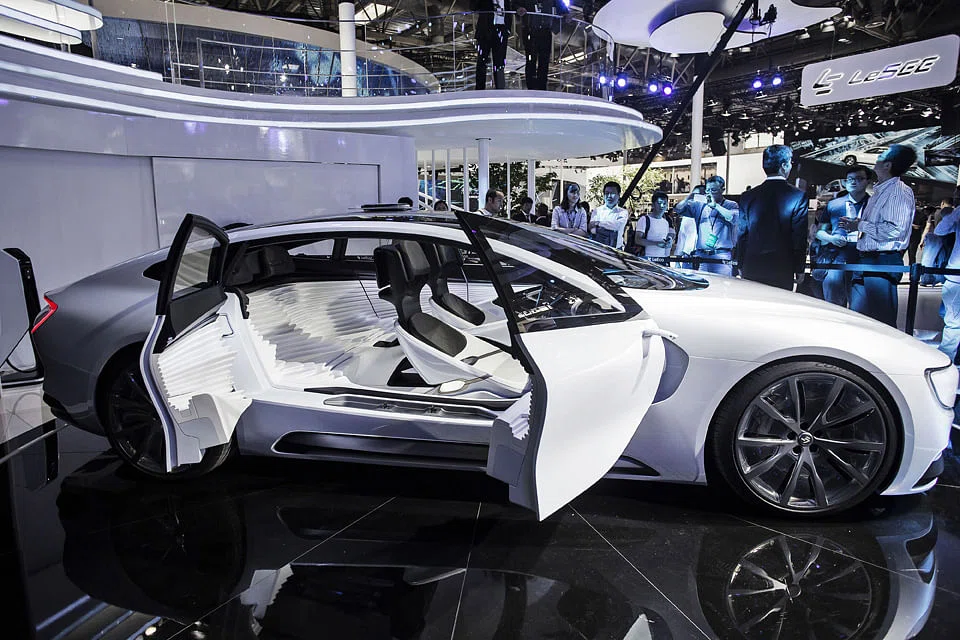
Zhiche displayed a concept electric SUV before the Beijing Auto Show this year, complete with DeLorean-style doors that flip up. Zhiche plans to release the car next year.
There's also strong demand for branding and marketing specialists to help make household names out of startups with sights on initial public offerings.
"Part of this EV startup bubble can be explained by hot money," said Jochen Siebert, managing director of JSC Automotive Consulting in Singapore. "It reminds me a bit of the 1990s, when almost everything with Internet or e-commerce was supported by private equity, and the stocks went through the roof." Bloomberg
TRENDING NOW

Simba admits exceeding spectrum limits amid failed M1 deal; full-year profits surge 277%
Temasek’s Wan Chee Foong to helm PIL, Lars Kastrup to be board adviser

He built the Vingroup empire. Now South-east Asia’s richest man is handing some key roles to his sons
One-third of Singapore-listed firms at risk in severe AI downturn: MAS

