

China considers financial aid for airlines hit by oil shock: sources
Subsidies, tax breaks, mergers, and state-backed low-interest loans are options being explored
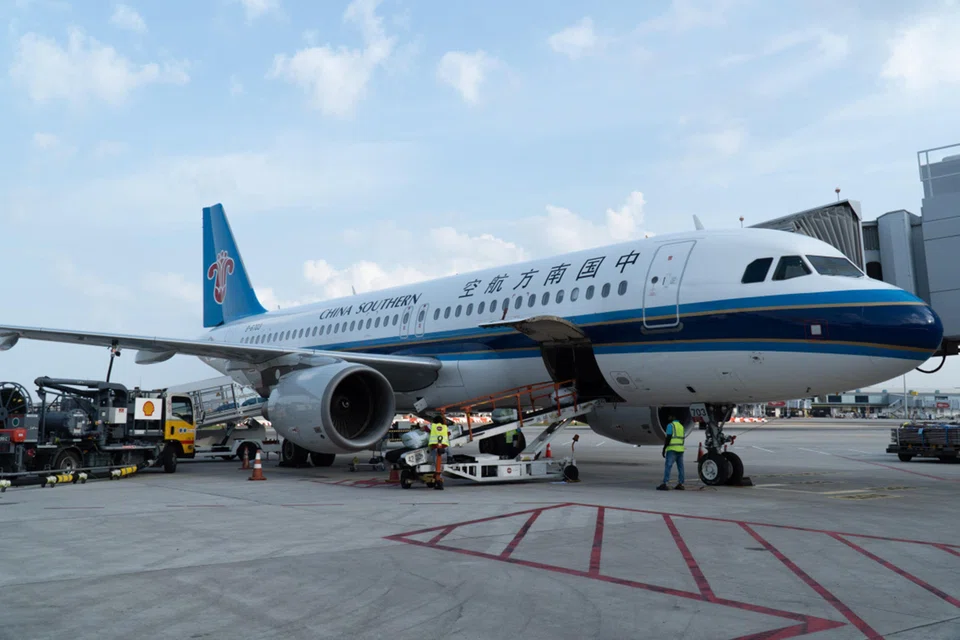
[BEIJING] China is considering financial relief and other measures for its struggling state-run airlines as the Iran war sends fuel costs soaring, according to people familiar with the matter, in what could be the industry’s biggest lifeline since the Covid pandemic.
Government subsidies, preferential tax treatment and state-backed low-interest loans are options being explored by authorities, said the people, who asked not to be identified due to the sensitivity of the matter. Mergers are also being considered, they said.
Deliberations are at a preliminary stage, and no decisions have been made, the people said. China’s top three airlines did not respond to a request for comment. The State-owned Assets Supervision and Administration Commission and the Civil Aviation Administration of China did not respond to faxes seeking comment.
Airlines worldwide are facing their biggest crisis since the pandemic hammered travel, including in China, where strict domestic curbs effectively brought travel to a halt. The last time China bailed out the industry, the government provided tens of billions of US dollars in emergency loans to local carriers, discounted charges and subsidised loss-making domestic flights.
Despite moves to shore up the industry, China’s biggest players – China Southern Airlines, China Eastern Airlines and Air China – have struggled to return to profit since Covid began. The so-called Big Three cumulatively lost about 209 billion yuan (S$39 billion) from 2020 to 2025, with just China Southern eking out a profit in one of those years.
Shares of the three Chinese carriers pared losses in Hong Kong on Thursday (Apr 9) after the Bloomberg report.
More recently, fuel prices have surged as the Iran war roils energy markets and piles stress on the aviation sector – particularly because the lack of hedging by Chinese carriers make them vulnerable to sudden spikes in fuel costs. Their net debt-to-equity levels were above 200 per cent at the end of December, which is relatively high when compared with peers in the region, according to Nathan Gee, head of Asia-Pacific transport research at Bank of America.
“Elements of the Covid playbook could return. During Covid, the Chinese government supported airlines through cost relief,” said Gee. “Further consolidation of smaller airlines by the Big Three cannot be ruled out given the additional financial stress ahead.”
China has historically subsidised its airlines, fuelling the industry’s rapid expansion. But it is also led to overcapacity as carriers fly unprofitable routes and intense domestic competition pushes fares lower. The Big Three received more than 120 billion yuan in government grants and subsidies in the decade through 2025, according to data compiled by Bloomberg News from their annual reports.
SEE ALSO

While officials deliberate over how to best support state-run carriers through the latest tumult, they may get some reprieve from the energy crisis in coming months should a tentative ceasefire hold and more ships cross the Strait of Hormuz.
“The Big Three are all carrying higher cash today than in 2019 despite the streak of accounting losses since the pandemic, though all have much higher debt loads,” said Bloomberg Intelligence analyst Eric Zhu, who added that the carriers aren’t approaching financial distress. “The jet fuel surge is looking more and more like a short-term shock given the peace news.” BLOOMBERG
Decoding Asia newsletter: your guide to navigating Asia in a new global order. Sign up here to get Decoding Asia newsletter. Delivered to your inbox. Free.
Share with us your feedback on BT's products and services
TRENDING NOW

Britain’s mansion tax shows the difficulty of targeting wealth

Once staunchly pro-China, Malaysian Chinese businesses are now distancing themselves from Beijing

The only common thing in S-E Asia is that we all eat rice: Cisco’s Asean president

Singapore data centre operator DayOne opts for US IPO at likely US$20 billion valuation

