

China's plant-closing cascade may cut 1.7m cars
Should sales there fall 20% from last year, that would threaten to end the country's run as the world's largest car market, a rank it's held for more than a decade
 Add BT as a preferred source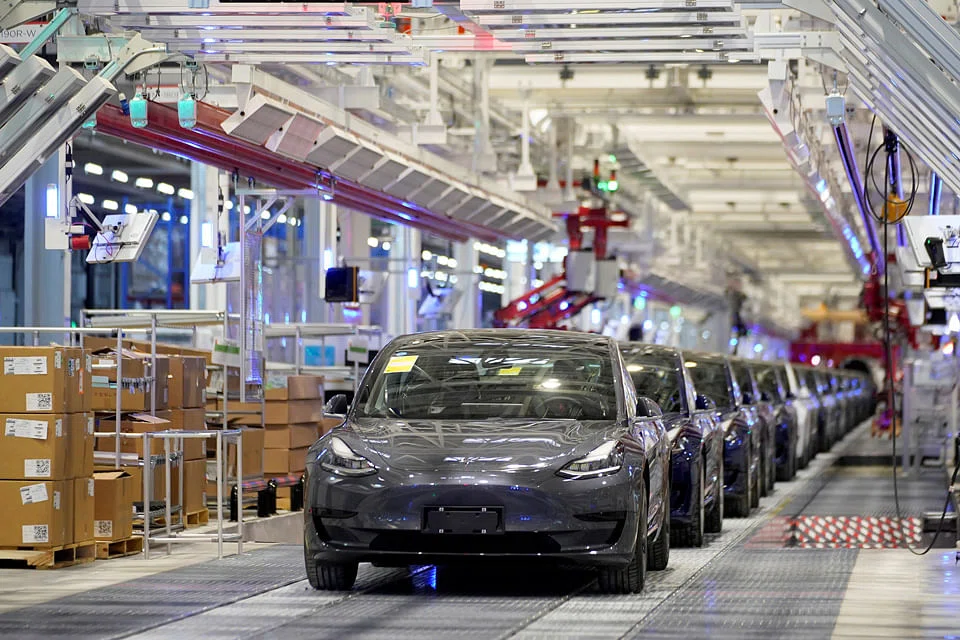
Paris
FORGET about clinging to hopes that China, the world's largest car market, will recover from its unprecedented two-year slump anytime soon.
Expectations were already bleak as the year began, with IHS Markit predicting a 10 per cent drop in first quarter production. Now, the influential research firm sees a scenario in which the coronavirus spreading rapidly across the country triggers a cascade of plant closings that lasts into mid-March and reduces output by more than 1.7 million cars - a decline of another 32 per cent.
China's car sales already were heading for the lowest in at least five years before the outbreak forced authorities to lock down the epicentre city of Wuhan. Now, it is unclear when consumers will come back to showrooms as 14 provinces and cities that accounted for almost 70 per cent of the country's GDP shut businesses and factories until at least the second week of February.
''The risks are enormous because of the sheer weight of China in the global market and its importance to trade,'' said Jean-Louis Sempe, a Parisbased analyst at Invest Securities.
''Predicting the seriousness of the epidemic is very difficult, but there's no doubt the impact could be huge on factories, supply chains and domestic car sales.''
Though concrete estimates on the financial toll of the coronavirus outbreak are still scarce, it is clear the final cost will far outweigh that of the 2003 Sars epidemic, when China's auto market was one-sixth the size it is today and smaller than that of Japan. Companies from Tesla to Volkswagen AG and Toyota Motor have warned they anticipate disruptions.
Should passenger-vehicle sales in China fall 20 per cent from last year's 21.4 million units, that would threaten to end the country's run as the world's largest car market, a rank it's held for more than a decade.
General Motors and Honda Motor are among the manufacturers with factories in the Wuhan region, while state-owned Dongfeng Motor is headquartered in the city of about 11 million people.
Nissan Motor and Peugeot-maker PSA Group also have assembly plants in Wuhan or the broader Hubei province and are partners with Dongfeng. Robin Zhu, an analyst at Sanford C. Bernstein & Co., singled out Dongfeng PSA as ''by far the most exposed'' because of the high proportion of vehicles it makes in the area.
''Investors will need to brace for a slowdown in broader activity levels in China,'' he said in a Jan 27 note. ''We expect the Chinese auto industry to endure a traumatic next few months.''
Carmakers probably will dial back production by 15 per cent in China this quarter after extending holiday shutdowns because of the virus, supplier Aptiv said Thursday. Aptiv, whose customers include GM and Volkswagen, expects its own production to be down 11 per cent from a year ago.
The government extended the annual Chinese New Year holiday break by several days to curb potential exposure. Tesla was among the companies saying they are monitoring potential supply-chain interruptions for cars built outside China, as well.
''This will be horrendous in the supply chain, it's going to be awful for companies and it will show in their quarterly reports and global strategy,'' said Rosemary Coates, a supply chain consultant and executive director of the Reshoring Institute, a non-profit focused on expanding manufacturing in the US. ''It's going to show and it's going to hurt.''
The epidemic comes at a delicate time for the car industry, which faces sales slumps beyond China, and pressure to make heavy investments in electric and self-driving cars. Compounding the danger for carmakers is the overall economic slowdown, with the virus potentially shaving more than 1 percentage point off firstquarter growth in China's GDP.
China also is the world's biggest market for electric vehicles (EV). The demand for EVs and traditional premium models will suffer the most because sales of those vehicles are concentrated in the biggest cities, which happen to be the ones most affected by the epidemic, Mr Zhu said.
The effect is felt far beyond the Wuhan region. Tesla expects a potential 10-day delay in production rampup at its new Shanghai plant because of the government-required shutdown.
GM, Toyota and Volkswagen also closed their plants at least through Feb 9, taking heed from several provinces that advised companies not to resume operations any sooner than the extended holiday break.
Of mainland China's 31 provinces, 11 have extended the Chinese New Year holiday period for all non-essential business, including Shanghai, Guangdong, Chongqing and Zhejiang, according to IHS. The provinces are normally responsible for more than two-thirds of the country's vehicle production. If they are only idled until Feb 10, it will cost the industry about 350,000 units of lost production, the researcher projected Friday.
Each month of lost production in China would erode operating profit by about 6.1 per cent at Honda and 11 per cent at Nissan, JPMorgan Chase & Co. estimates. The Chinese operations of Japan-based Aisin Seiki and Koito Manufacturing are among the most exposed to a production stoppage, JPMorgan said in a Jan 30 note.
In Germany, Wuhan's links to the global industry were driven home this week when auto-parts supplier Webasto AG shut its headquarters in the Munich suburb of Stockdorf after at least four staff members became infected following the visit of a Chinese colleague.
''If work stoppages are extended we could start to see production disruptions in other parts of the world,'' said Sig Huber, a senior managing director at the consultancy Conway Mackenzie and former global director of purchasing at Fiat Chrysler Automobiles NV.
While industries such as textiles are able to relocate production quickly, the heavy equipment required in carmaking means it could take auto manufacturers two or three years to move a plant, said Reshoring Institute's Ms Coates. BLOOMBERG
Share with us your feedback on BT's products and services
TRENDING NOW
Simba ordered to pay S$700,000 in damages to indoor skydiving operator Altitude Xperience for trespass

Malaysian tycoon Vincent Tan’s sell-downs point to pruning rather than an exit plan

What’s wrong with Orchard Road? Experts weigh in on the street’s cachet and its future

Scaling Berli Jucker’s retail empire – daughter of Thai beer billionaire seeks growth outside home country

