

China's second-hand car market revs up
Uptake comes despite cultural preference for new items
Beijing
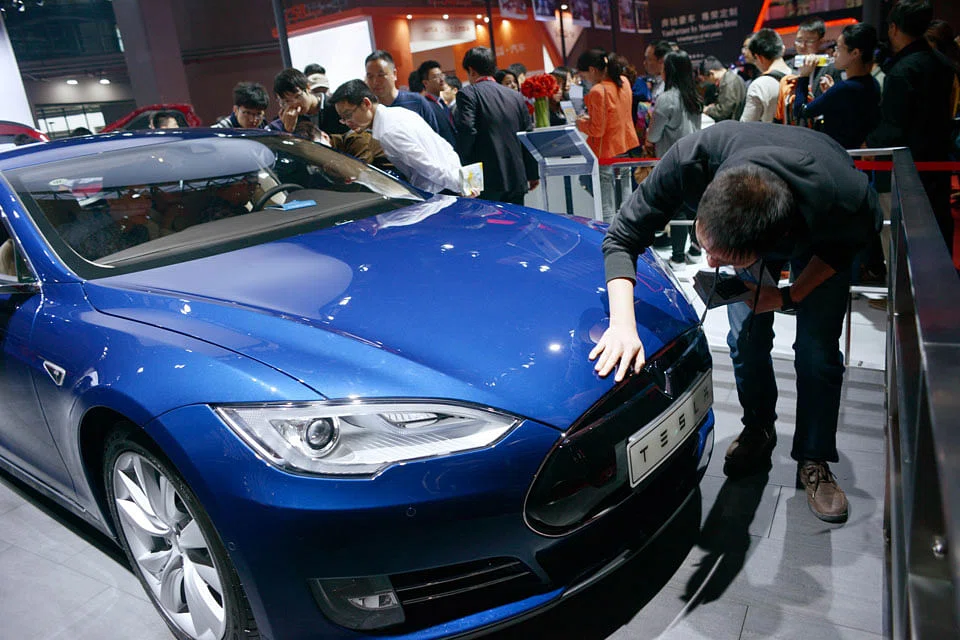
THE vast majority of cars in the world's biggest car market are purchased new, but a second-hand trade is beginning to emerge in China despite traditional buyer reluctance - and foreign manufacturers are hoping to benefit.
In China, one used car is sold for every four new vehicles, the opposite of Europe and the US, where around three used cars are sold to every new one.
Even though more than 23 million vehicles were sold in the country last year, more than 65 per cent of car buyers in China are still purchasing for the first time and simply do not have one to trade in or sell in return.
At the same time there is a strong cultural preference for new items, rather than those tarnished by previous ownership, and without regulations, scepticism over the quality of used vehicles abounds.
But the market is maturing and restrictions on new vehicle registrations are gradually changing attitudes. "Only 10 years ago the mere idea of a used car simply did not exist for Chinese dealers," said Mathieu Vennin, a senior executive for French carmaker Peugeot.
Last year, used car sales jumped 16.3 per cent to 6.05 million vehicles, according to the China Automobile Dealers Association. In contrast, sales of new vehicles only grew 6.9 per cent, recording a marked slowdown.
"It's (used car sales) an area we want to work with our dealers," said Mark Fields, president and CEO of Ford Motors. "Especially now, as buyers of a first car are moving to their second vehicle, there are opportunities." Almost all used car transactions are still made privately - one expert said that 95 per cent are by small independent dealers, who trade as if they are private owners, without paying sales taxes. But big name manufacturers are looking to enter the market by reselling their own products second-hand, complete with quality guarantees.
"This helps build more credibility in the used car market that was nonexistent before," Lin Huaibin, an expert with IHS Automotive, told AFP. Volvo Cars is the latest to set up such a scheme, following the leads of Nissan, Audi and Peugeot, which has 700 certification centres around the country.
Premium brands - those selling for US$33,000 to US$197,000 - suffered the most during the economic downturn, but spy an opportunity in the used car arena.
"We have more and more customers who are replacing their cars and we have to be prepared for this kind of business, because now when you sell a new car, you get a used car back," Dietmar Voggenreiter, president of Audi China, told AFP. "It's also a way to bring more customers to the premium car segment by the used cars, and with certified used cars, it brings them to the service network of Audi and so on," he added.
The sluggish economy has also helped persuade some to buy second-hand - with prices for even a one-year-old vehicle 25 per cent lower than new.
"The boom in the used market is bringing us a new type of buyer, some of whom have never even owned a car," said Ian Robertson, sales manager at BMW.
Namrita Chow, principal analyst at the IHS Institute in London, said for manufacturers such as the German builder, "focusing on people with comparatively lower incomes, it is also boosting its penetration in China" without devaluing the status of its new vehicles. "By attracting those who do not have the means to buy a brand new car, the manufacturers hope to introduce new customers to their brand," she said. AFP
TRENDING NOW

He built the Vingroup empire. Now South-east Asia’s richest man is handing some key roles to his sons
China’s Pinglu Canal likely to benefit Singapore, other South-east Asia ports in the long term

Suntec Reit to increase Singapore focus, sell three Australia properties
Despite the de-dollarisation debate, demand for dollar liquidity in Asia is growing

